

Dairy and yogurt products vary widely in texture, preparation method and consumption style.
A spoonable yogurt, a freshly blended milkshake and a refrigerated drinkable yogurt should not be packaged in the same way. Each product requires a container and closure system suited to its viscosity, filling method, storage conditions and intended customer experience.
COPAK supplies clear PET cups and PET cans for yogurt shops, frozen yogurt stores, cafés, dairy beverage businesses, foodservice operators, distributors and private-label projects.
PET cups provide a practical format for freshly served yogurt, frozen yogurt, milkshakes, parfaits and yogurt-based desserts. PET cans can be considered for selected drinkable yogurt, flavored milk and refrigerated dairy beverage projects.
The final packaging should be selected around the actual product rather than the general category name “dairy.”
Dairy Products Have Different Packaging Requirements
Dairy and yogurt packaging may need to accommodate:
- Plain yogurt
- Flavored yogurt
- Greek-style and thick yogurt
- Drinkable yogurt
- Cultured dairy beverages
- Flavored milk
- Chocolate milk
- Coffee-flavored milk
- Plant-based milk drinks
- Yogurt smoothies
- Milkshakes
- Frozen yogurt
- Yogurt parfaits
- Dairy desserts
- Products containing fruit, cereal or other inclusions
These products differ in viscosity, filling behavior and drinking or eating method.
A thick yogurt may require a wide opening and spoon access. A drinkable yogurt requires controlled flow through the drinking opening. A milkshake may need space for foam or toppings. A dairy beverage containing fruit pieces or cereal requires separate evaluation of particle size and closure design.
Packaging selection should begin with the finished product and how the customer will consume it.
Two PET Packaging Formats for Dairy Applications
COPAK offers two main packaging directions for dairy and yogurt applications:
- PET cups for freshly prepared, spoonable and takeaway products
- PET cans for selected sealed and drinkable dairy beverages
These formats serve different purposes.
PET cups are commonly associated with immediate service, flexible portion sizes and visible toppings. PET cans are more relevant to pre-filled beverages that can flow and be consumed through an easy-open can lid.
Not every yogurt product is suitable for PET can packaging.
PET Cups for Yogurt and Dairy Products
COPAK’s clear PET cup range includes products presented for yogurt, frozen yogurt, ice cream, milk, milkshakes and other takeaway food and beverage applications. Flat and dome lid options are available for selected cup series.
PET cups can be considered for:
- Freshly portioned yogurt
- Frozen yogurt
- Yogurt parfaits
- Yogurt with granola
- Yogurt with fruit
- Milkshakes
- Yogurt smoothies
- Dairy desserts
- Ice cream and dairy-based desserts
- Sample portions
- Takeaway breakfast products
- Café and foodservice dairy products
The transparent cup wall allows customers to see the color, consistency, layers and toppings.
This visibility is particularly useful for parfaits, fruit yogurt, frozen yogurt and dairy desserts where presentation influences product selection.
Flat Lids for Compact Dairy Packaging
Flat lids can provide a compact format for products filled below the cup rim.
They may be suitable for:
- Plain yogurt portions
- Fruit yogurt
- Yogurt-based breakfast cups
- Drinkable dairy products served with a straw
- Milkshakes without high toppings
- Products placed in takeaway bags or cup holders
The lid design should match the way the product will be eaten or consumed.
A straw opening intended for a fluid drink may not work for thick yogurt. A spoonable product may require a lid that can be removed easily without interfering with the contents.
The cup and lid should be evaluated as a matched combination.
Dome Lids for Toppings and Layered Products
Dome lids provide additional space above the cup rim.
They can be considered for:
- Frozen yogurt with toppings
- Yogurt parfaits with fruit
- Yogurt with granola or cereal
- Milkshakes with whipped cream
- Dairy desserts with decorative ingredients
- Promotional products with visible layers
The additional space can help preserve the appearance of toppings and reduce contact between the product and the lid.
The selected dome height should be checked against the actual topping quantity. Excess space may increase packaging volume, while insufficient space may damage the presentation or cause ingredients to contact the lid.
Packaging for Spoonable Yogurt
Spoonable yogurt normally requires a wide container opening.
The buyer should consider:
- Product thickness
- Portion size
- Spoon dimensions
- Ease of removing the lid
- Fruit or cereal inclusions
- Required topping space
- Cup stability during eating
- Storage and stacking arrangement
- Product presentation
- Takeaway handling
Thick yogurt may not settle in the same way as a liquid beverage. Filling equipment and portion accuracy should be evaluated using the actual product.
Highly viscous products may also retain more product on the cup wall. Container shape and opening width can affect the customer’s ability to access the full portion.
Packaging for Frozen Yogurt
Frozen yogurt packaging should support both serving and presentation.
COPAK’s clear PET ice cream cup range is presented for frozen yogurt, ice cream, parfaits and similar products, with flat and dome lid options available for selected formats.
Frozen yogurt businesses should consider:
- Serving temperature
- Portion size
- Topping quantity
- Spoon access
- Lid clearance
- Condensation
- Short-term storage before consumption
- Takeaway distance
- Cup rigidity when held
- Carton and inventory organization
The cup should be tested under the actual serving conditions.
A cup that performs well at normal room temperature should still be evaluated with the intended frozen or chilled product.
PET Cups for Milkshakes and Yogurt Smoothies
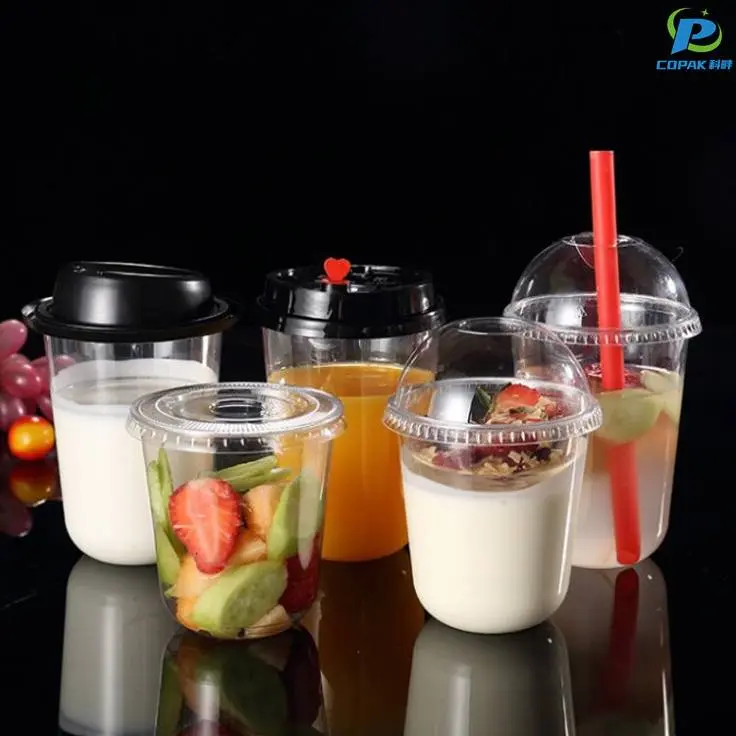
Milkshakes and yogurt smoothies behave differently from spoonable yogurt.
They are usually consumed through a straw or direct-drinking opening, making viscosity and ingredient size important.
The buyer should evaluate:
- Finished viscosity
- Foam level
- Ice content
- Fruit pulp
- Seeds
- Protein powder
- Cereal or other inclusions
- Straw diameter
- Lid opening
- Expected drinking time
A thick milkshake may require a larger straw opening than a standard cold dairy drink.
Testing should use the finished recipe. Water-based testing does not reproduce the flow behavior of a yogurt smoothie or milkshake.
PET Cans for Drinkable Yogurt and Dairy Beverages
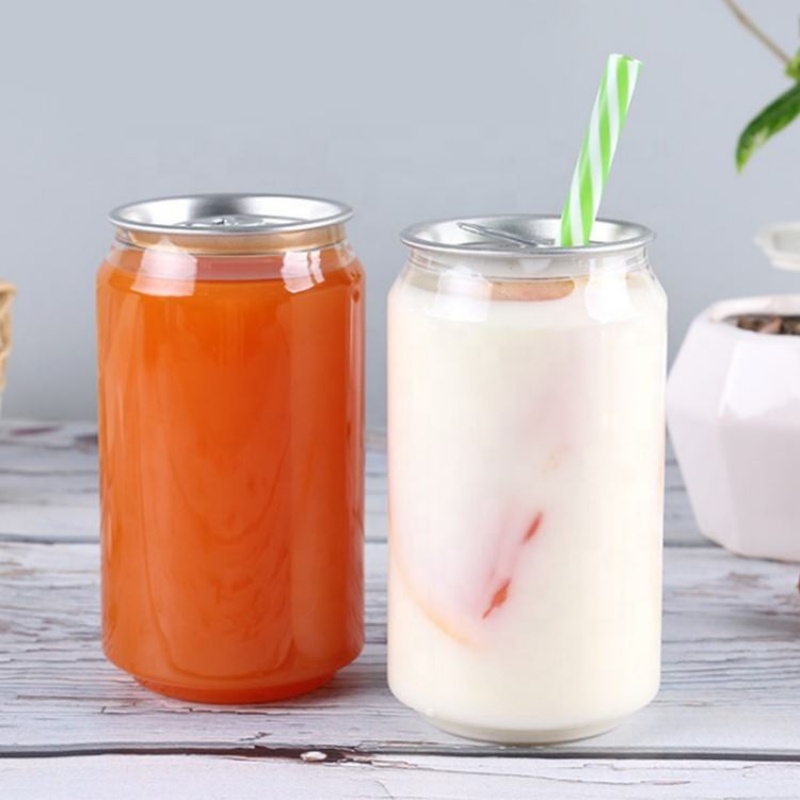
COPAK PET cans combine a transparent PET body with an easy-open aluminum lid. Compatible sealing equipment is also available for PET can projects.
PET cans can be considered for selected:
- Drinkable yogurt
- Cultured dairy beverages
- Flavored milk
- Chocolate milk
- Coffee-flavored milk
- Plant-based milk beverages
- Light yogurt smoothies
- Dairy protein drinks
- Refrigerated café beverages
- Grab-and-go dairy drinks
- Event beverages
- Private-label chilled drinks
The clear can body shows the beverage color and texture, while the easy-open lid provides a sealed can-style presentation.
The product must be sufficiently fluid for the planned filling and consumption method.
PET cans should not automatically be selected for conventional spoonable yogurt.
Can Thick Yogurt Be Packed in a PET Can?
Highly viscous or spoonable yogurt is generally not the most practical match for an easy-open can format.
Potential difficulties include:
- Slow filling
- Inconsistent fill levels
- Product remaining inside the container
- Difficulty consuming the product through the opening
- Large fruit pieces blocking the drinking path
- Poor customer access to the bottom of the container
A lighter drinkable yogurt or yogurt beverage may be more suitable.
The final decision should be based on trials using the actual formulation, filling equipment, lid and intended drinking method.
A product described as “yogurt” may range from a spoonable food to a fluid beverage. The packaging format should follow the product’s actual behavior.
Dairy Products with Fruit, Cereal or Particles
Fruit yogurt, breakfast products and dairy drinks may contain:
- Fruit pulp
- Fruit cubes
- Seeds
- Granola
- Cereal
- Chocolate pieces
- Jelly
- Protein particles
- Other visible inclusions
For PET cups, the opening should allow easy filling and spoon access.
For drinkable products, the largest particle should be considered when selecting the straw, drinking opening and filling equipment.
PET cans are more suitable for filtered or controlled drinkable formulations than for products containing large pieces.
The complete product should be tested after standing and refrigeration because ingredients may float, settle or absorb liquid over time.
Filling Temperature Must Be Confirmed
The filling temperature must be defined before selecting a PET cup or PET can.
Standard PET packaging intended for cold food and beverage applications should not automatically be treated as suitable for:
- Hot filling
- In-container pasteurization
- Retort processing
- Steam treatment
- Other elevated-temperature processes
The buyer should provide:
- Product temperature at filling
- Temperature after mixing or fermentation
- Cooling method
- Time between cooling and filling
- Time between filling and closing
- Storage temperature
- Transportation temperature
- Planned thermal treatment, if any
Container shape and closure performance may be affected by conditions outside the intended operating range.
The complete process requires validation before commercial production.
Cold-Chain Management
Many dairy and yogurt products depend on controlled refrigerated handling.
The packaging container does not create or replace a cold chain.
The product owner should define:
- Required storage temperature
- Allowable handling time outside refrigeration
- Refrigerated display conditions
- Transportation method
- Warehouse conditions
- Retail handling procedures
- Consumer storage instructions
Packaging tests should reproduce the intended cold-chain conditions as closely as practical.
Condensation, repeated handling and movement inside refrigerated transport may affect labels, cartons and presentation even when the primary container remains unchanged.
Packaging Does Not Determine Product Safety or Shelf Life
A PET cup or PET can cannot establish the safety or shelf life of a dairy product by itself.
Product stability may be affected by:
- Dairy or plant-based formulation
- Water activity
- Acidity
- Sugar content
- Live cultures
- Fruit ingredients
- Processing method
- Filling hygiene
- Cooling speed
- Closure integrity
- Storage temperature
- Distribution time
- Light and oxygen exposure
COPAK can supply packaging components, while the dairy producer remains responsible for validating the complete filled product.
Microbiological testing, process validation and shelf-life studies should be completed according to the product and target market.
No shelf-life claim should be based only on the appearance or material of the container.
Separation and Sediment in Dairy Beverages
Some dairy beverages naturally separate during storage.
Possible changes include:
- Cream rising
- Protein sediment
- Fruit particles settling
- Cocoa settling
- Layer formation
- Changes in foam
- Thickening over time
Packaging cannot correct instability caused by the formulation or processing method.
The beverage producer should evaluate whether the product requires mixing instructions, formulation adjustments or a specific storage method.
A clear PET container makes product separation visible. This can support product transparency, but it may also reveal changes that would be less visible in an opaque package.
The visual behavior of the product should be tested throughout the intended storage period.
Light Exposure and Transparent Packaging
Clear PET packaging provides direct product visibility.
It can highlight:
- Yogurt color
- Fruit layers
- Milkshake texture
- Dairy beverage consistency
- Toppings
- Portion size
- Flavor differences
Some dairy formulations may change under prolonged light exposure.
The product should be evaluated under its expected commercial conditions, including refrigerator lighting, store lighting, transportation and storage duration.
Labels, printed areas, sleeves, secondary cartons or controlled display conditions may be considered when reduced light exposure is required.
Selecting the Correct Capacity
Capacity should be based on the finished product and serving method.
Actual filling trials should be completed before approving the final capacity.
For yogurt and dessert cups, consider:
- Net product quantity
- Fruit and topping volume
- Required headspace
- Spoon access
- Lid height
- Serving size
- Cup stability
- Stacking requirements
- Retail or menu price point
For milkshakes and yogurt smoothies, consider:
- Beverage volume
- Foam
- Ice
- Fruit content
- Straw size
- Lid profile
- Cup-holder compatibility
- Takeaway handling
For PET cans, consider:
- Target fill quantity
- Required headspace
- Product foam during filling
- Can and lid dimensions
- Sealing machine setup
- Refrigerator shelf dimensions
- Carton arrangement
PET Cup or PET Can: Which Should You Choose?
The packaging format should follow the product texture and sales model.
Choose PET Cups When:
- The product is spoonable
- Yogurt is portioned at the point of sale
- Customers add fruit, cereal or toppings
- Frozen yogurt is served after ordering
- Milkshakes are prepared fresh
- Several portion sizes are required
- Flat or dome lids are preferred
- The product will be consumed shortly after preparation
Choose PET Cans When:
- The product is fluid and drinkable
- Beverages are filled before the customer orders
- A sealed grab-and-go format is needed
- Products are displayed in a refrigerator
- The business has a controlled filling and sealing process
- A can-style presentation fits the brand
- The project involves a chilled private-label beverage
- The formula can be consumed through an easy-open lid
The two formats can be used by the same business.
A yogurt shop may use PET cups for spoonable products and PET cans for prepared drinkable yogurt or flavored milk.
PET Can Sealing Requirements
PET cans used with easy-open aluminum lids require compatible sealing equipment.
The PET can, lid and sealing machine should be treated as one system.
The buyer should confirm:
- Can dimensions
- Can opening
- Aluminum lid specification
- Filling method
- Required production output
- Manual, semi-automatic or automatic operation
- Product changeover needs
- Cleaning requirements
- Seal inspection procedure
- Operator training
- Maintenance arrangements
COPAK provides PET can sealing machine options for beverage projects.
An empty-container test should be followed by a production trial using the actual dairy beverage and intended filling conditions.
Takeaway and Refrigerated Distribution
Dairy products may be handled through stores, takeaway services, refrigerators and cold-chain distribution.
The complete package should be evaluated for:
- Lid fit
- Seal consistency
- Cup rigidity
- Stability during carrying
- Condensation
- Label adhesion
- Refrigerator placement
- Carton arrangement
- Movement during transportation
- Consumer opening
- Spoon or straw compatibility
A dense yogurt cup and a fluid milk beverage place different forces on the package during movement.
Testing should use the actual filled weight and expected transportation process.
Custom Printing and Product Identification
COPAK offers custom printing for selected PET cup products. PET can projects may also use labels, stickers or sleeve-based decoration according to project requirements.
Branding may include:
- Company logo
- Product name
- Yogurt flavor
- Milk or plant-based ingredient identification
- Serving instructions
- Preparation or filling date area
- Measurement marks
- QR code
- Promotional design
- Seasonal graphics
- Private-label branding
Clear areas can be retained to show fruit layers, yogurt consistency or beverage color.
Designs should be reviewed on the actual container. A flat artwork file may appear differently when wrapped around a curved cup or can.
Packaging for Different Business Models
Yogurt Shops
PET cups support portioned yogurt, fruit toppings, cereal and takeaway service. Flat or dome lids can be selected according to the product presentation.
Frozen Yogurt Stores
Clear PET cups display the frozen yogurt and toppings. Cup size, dome height and spoon access should match the serving format.
Cafés and Beverage Shops
PET cups can be used for fresh milkshakes and yogurt smoothies. PET cans can support selected pre-filled dairy beverages in refrigerated displays.
Bakeries and Breakfast Businesses
PET cups can hold yogurt parfaits, fruit yogurt and breakfast combinations for takeaway service.
Dairy Beverage Producers
PET cans may support selected refrigerated drinkable yogurt, flavored milk and dairy beverage products after formula, process, sealing and storage validation.
Hotels and Catering Businesses
PET cups can be used for breakfast yogurt, desserts and event servings. PET cans can be considered for sealed chilled beverages in suitable service programs.
Packaging Distributors
A coordinated range of PET cups, lids, PET cans and sealing equipment can serve yogurt shops, cafés and beverage-production customers.
Private-Label Brands
Clear containers, custom decoration and different serving formats can support branded yogurt, milkshake and chilled dairy beverage projects.
Information to Prepare Before Requesting a Quotation
Detailed product information helps COPAK recommend a more suitable package.
Buyers should prepare:
- Product name
- Dairy, yogurt or plant-based classification
- Spoonable or drinkable format
- General formulation
- Product viscosity
- Presence of fruit, cereal or particles
- Largest particle size
- Target filling volume
- Actual filling temperature
- Required PET cup or PET can
- Preferred flat or dome lid
- Required straw or spoon
- Filling method
- Sealing equipment requirement
- Required order quantity
- Custom printing or labeling requirements
- Storage temperature
- Distribution method
- Target market
- Sample requirements
A change in formulation, viscosity, filling temperature, cup, lid or sealing process may require a new packaging trial.
Why Choose COPAK?
COPAK supplies clear PET cups, flat and dome lids, custom-printed cup options, PET cans with easy-open aluminum lids and PET can sealing equipment. Its PET cup range includes products presented for milk, yogurt, frozen yogurt, milkshakes, ice cream and other cold food and beverage applications.
Buyers can discuss several connected packaging components with one supplier:
- Clear PET cups
- Multiple cup sizes and shapes
- Flat lids
- Dome lids
- Frozen yogurt and dessert cup formats
- Custom-printed PET cups
- Transparent PET cans
- Easy-open aluminum lids
- Label and decoration options
- PET can sealing equipment
- Sample evaluation
- Export packaging
The final recommendation can be adjusted according to product texture, serving method, filling process, closure and purchase volume.
Compatibility should be confirmed through actual product testing before mass production.
Select Packaging Around Product Texture and Consumption
Dairy and yogurt products cannot be grouped under one packaging decision.
PET cups provide an accessible format for spoonable yogurt, frozen yogurt, milkshakes, parfaits and products with toppings.
PET cans provide a distinctive sealed format for selected drinkable yogurt, flavored milk and chilled dairy beverage projects.
Share the product viscosity, filling temperature, serving method, storage requirements and branding needs with COPAK. The team can help compare suitable PET cups, PET cans, lids and sealing options for the project.
Frequently Asked Questions
Are PET cups suitable for yogurt?
PET cups can be used for selected cold yogurt and takeaway applications. The cup size, opening and lid should match the product thickness, portion size and eating method.
Can COPAK PET cups be used for frozen yogurt?
COPAK offers clear PET cup formats presented for frozen yogurt, ice cream, parfaits and similar cold products. The selected cup should be tested under the intended serving conditions.
Which lid is better for yogurt with toppings?
A dome lid can provide additional space for fruit, cereal, granola or other toppings. A flat lid may be suitable when the product remains below the cup rim.
Can yogurt cups be printed with our logo?
COPAK offers custom printing for selected PET cup products. Artwork, colors, printing area and order requirements should be confirmed before production.
Are PET cans suitable for drinkable yogurt?
PET cans may be considered for selected fluid drinkable yogurt products. The formula, viscosity, filling process, sealing and refrigerated storage conditions require testing.
Can thick Greek-style yogurt be packed in a PET can?
A highly viscous spoonable yogurt is generally better suited to a wide-opening cup. It may be difficult to fill and consume through an easy-open can lid.
Can PET cans be used for flavored milk?
PET cans may be considered for selected chilled flavored milk projects. Product safety, filling hygiene, sealing, storage and shelf life must be validated by the beverage producer.
Does PET packaging determine the shelf life of yogurt?
No. Shelf life depends on the formula, processing, filling hygiene, closure, storage temperature and distribution conditions. The filled product requires separate validation.
Can standard PET cups be used for hot-filled dairy products?
Standard cold-use PET cups should not automatically be treated as suitable for hot filling. The actual temperature and process must be reviewed before the packaging is approved.
Do PET cans require a sealing machine?
Yes. PET cans used with easy-open aluminum lids require compatible sealing equipment. The can, lid and machine should be tested as one system.
Can fruit pieces be added to yogurt in PET cups?
Yes, depending on the product design. The cup opening, filling method, lid clearance and spoon access should match the fruit size and topping quantity.
Are PET cans suitable for yogurt containing large fruit pieces?
Large pieces may interfere with filling and drinking through the can opening. Filtered or controlled drinkable formulations are generally easier to package in a can-style container.
Should samples be tested before placing a bulk order?
Yes. Samples should be tested with the actual yogurt or dairy beverage, filling temperature, lid or seal, storage method and transportation conditions.
Can one business use both PET cups and PET cans?
Yes. PET cups can be used for spoonable and freshly prepared products, while PET cans can be used for selected pre-filled drinkable dairy beverages.
Post time: Jul-27-2026