


Foodservice beverage packaging has to perform across preparation, service, carrying, delivery and customer consumption.
A package that looks suitable on a product shelf may not work efficiently during a busy café service period. A cup selected for in-store use may require a different lid or handling test before it is used for delivery. A sealed beverage prepared in advance follows a different operating process from a drink made after the customer orders.
COPAK supplies clear PET cups and PET cans for cafés, restaurants, beverage shops, bakery chains, food courts, hotels, catering businesses, delivery operations, distributors and private-label beverage projects.
PET cups support made-to-order cold drinks, flexible serving sizes and fast takeaway service. PET cans provide a sealed format for selected pre-filled beverages, refrigerated displays, events and grab-and-go programs.
The packaging system should be selected around the complete foodservice workflow, not only the appearance of an individual container.
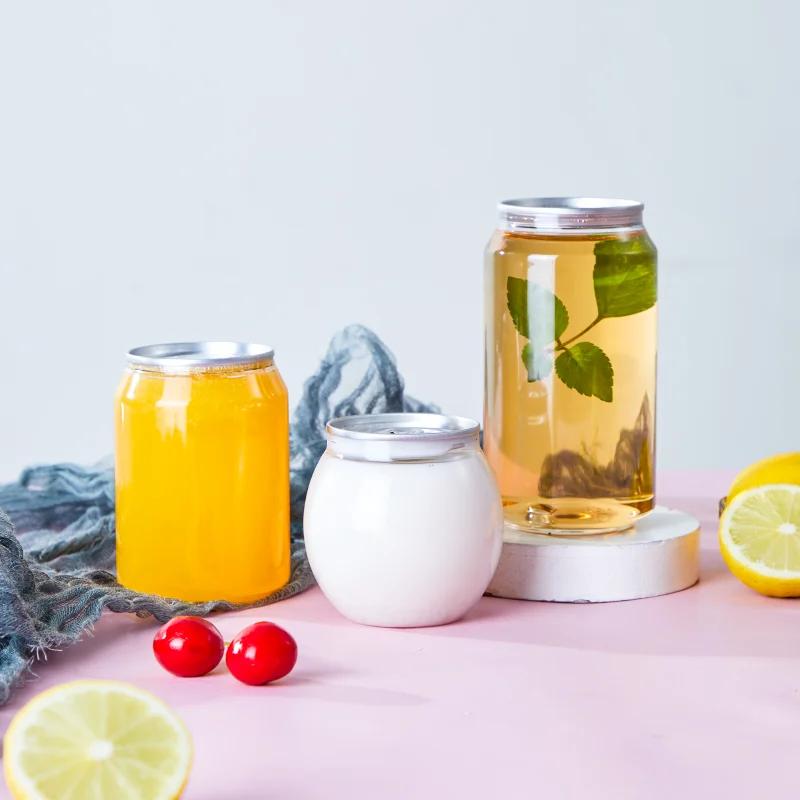
Foodservice Packaging Starts with the Service Model
Foodservice businesses may use several beverage service models at the same location:
- Drinks prepared after the customer orders
- Drinks assembled from pre-portioned ingredients
- Beverages filled during off-peak hours
- Products displayed in a refrigerator
- Orders collected at a counter
- Takeaway orders carried by customers
- Drinks transported by delivery drivers
- Event beverages prepared in batches
- Products distributed across several stores
- Private-label drinks supplied to hospitality businesses
Each model places different demands on the container and closure.
Made-to-order drinks require speed and flexibility. Delivery orders require attention to lid retention and movement. Refrigerated grab-and-go products require a controlled filling and closing process. Multi-location businesses need consistent specifications that can be managed across several sites.
COPAK PET cups and PET cans can be used as two connected parts of a foodservice beverage packaging system.
Two Packaging Formats for Different Foodservice Tasks
PET Cups for Made-to-Order and Takeaway Service
PET cups are the main packaging format for beverages prepared at the point of sale.
They can be considered for:
- Iced coffee
- Iced tea
- Bubble tea
- Milk tea
- Fruit tea
- Fresh juice
- Smoothies
- Milkshakes
- Lemonade
- Yogurt drinks
- Cold dairy beverages
- Seasonal café drinks
- Dessert-style beverages
- Event and catering drinks
Different cup capacities and lid formats allow the business to build a packaging range around its menu.
PET Cans for Pre-Filled and Grab-and-Go Drinks
PET cans can be used for selected beverages prepared before the customer orders.
They can be considered for:
- Pre-filled cold brew coffee
- Refrigerated tea drinks
- Chilled fruit beverages
- Milk tea
- Light dairy drinks
- Café grab-and-go products
- Hotel welcome beverages
- Event drinks
- Seasonal beverage collections
- Branded promotional drinks
- Private-label refrigerated beverages
PET cans should be used as part of a controlled filling and sealing process. The can body, easy-open lid and sealing equipment need to be evaluated together.
The beverage formula and planned storage conditions must also be confirmed before regular production.
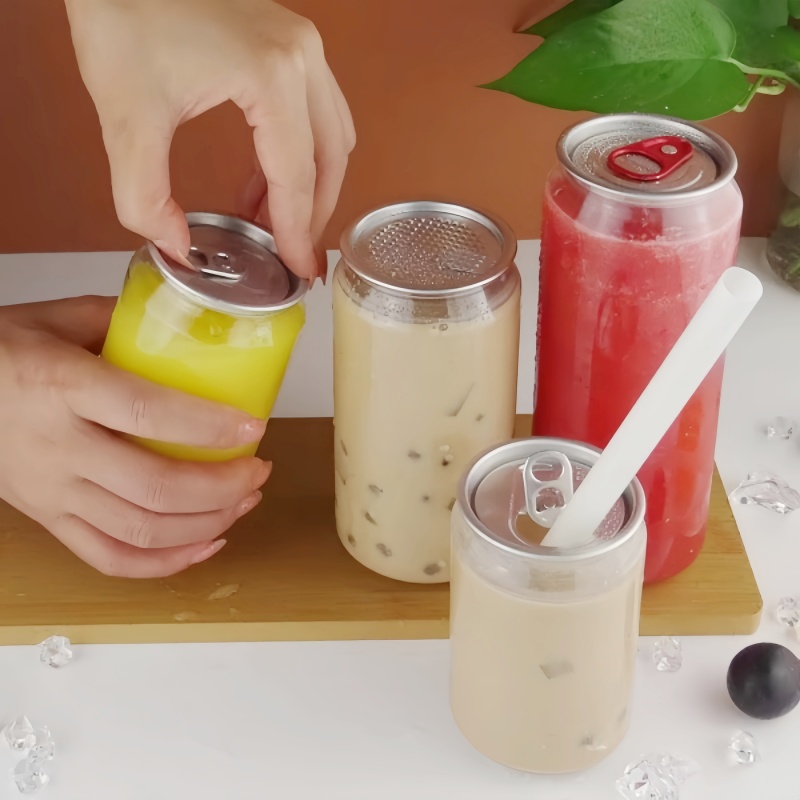
PET Cups as the Core Foodservice Format
For most cafés, restaurants and takeaway beverage businesses, PET cups will remain the main packaging choice.
They support:
- Fast preparation after ordering
- Multiple menu sizes
- Ice and topping customization
- Standard or wide straws
- Flat and dome lid options
- Clear product presentation
- Counter service
- Customer pickup
- Delivery orders
- Custom brand printing
The most suitable cup should be selected according to the beverage, serving size, closure and operating environment.
Choosing a cup only by its nominal capacity may create problems with ice volume, toppings, lid clearance or cup-holder compatibility.
Building a Practical Cup Size System
A foodservice business does not always need a different cup specification for every drink.
A controlled size system can make purchasing, storage and service easier.
Buyers should review:
- Small, regular and large menu sizes
- Final beverage volume
- Ice volume
- Foam and topping space
- Cup opening diameter
- Lid compatibility
- Straw requirements
- Cup-holder dimensions
- Storage space
- Carton quantity
- Expected sales mix
Several cup capacities may share a common top diameter within a selected product series. When compatibility is confirmed, this may allow several cups to use the same lid specification.
A simplified lid range can reduce sorting errors at the service counter. It can also reduce the number of components that store teams need to purchase, store and identify.
Compatibility should be checked using actual samples. A similar stated diameter does not guarantee that products from different series will fit correctly.
Flat Lids for Efficient Counter Service
Flat lids provide a compact format for many standard cold drinks.
They may be considered when:
- The beverage remains below the cup rim
- No high topping space is required
- A standard straw is used
- A direct-drinking opening is preferred
- Cups need to fit drink carriers
- Compact takeaway handling is important
- The business needs fast lid application
The drinking opening should match the product.
A lid suitable for clear iced tea may not work well with a thick smoothie or a drink containing fruit pieces. The straw diameter, ingredient size and drinking method should be confirmed during product testing.
The lid should also be tested by the staff who will use it. A closure that is difficult to apply consistently may slow service during busy periods.
Dome Lids for Toppings and Visual Presentation
Dome lids provide additional space above the cup.
They can be considered for:
- Smoothies with fruit toppings
- Milkshakes with whipped cream
- Coffee drinks with cold foam
- Tea drinks with cream topping
- Frozen or dessert-style beverages
- Seasonal drinks with decorative ingredients
The dome height should match the actual product presentation.
Too little clearance may cause the topping to contact the lid. Excessive clearance may increase storage volume without improving the customer experience.
The opening and straw should also match the beverage. Large toppings should not be expected to pass through a standard straw slot.
Clear PET Packaging for Menu Presentation
Clear PET cups allow customers to see the beverage before drinking it.
This can support the presentation of:
- Coffee and milk layers
- Tea color
- Fruit pieces
- Juice clarity
- Smoothie texture
- Tapioca pearls
- Foam
- Syrup gradients
- Seasonal ingredients
- Portion size
Clear packaging is especially useful for drinks whose appearance influences the purchase decision.
The operator should still consider the product’s behavior during the expected service period. Some beverages separate, settle or change appearance after standing. Packaging cannot correct instability caused by the recipe or preparation method.
The finished drink should be reviewed after the expected pickup, delivery or display time.
Packaging for High-Volume Service Periods
A café or restaurant may prepare a large number of orders within a short period.
Packaging decisions can affect:
- Staff movement
- Order assembly
- Lid application
- Cup identification
- Stock access
- Service speed
- Error rates
- Counter organization
A practical packaging system should allow staff to identify each size and lid quickly.
Businesses can consider:
- Limiting unnecessary cup diameters
- Grouping matching cups and lids
- Separating flat and dome lids clearly
- Creating fixed packaging sets for major menu categories
- Using printed size marks or internal product codes
- Keeping high-volume items near the preparation area
- Testing lid application with trained and new staff
Packaging should support the operating process rather than creating an extra decision at every order.
Takeaway Orders Collected by Customers
Customer-collected drinks may still pass through several handling stages.
The drink may be:
- Placed on a pickup counter
- Carried in one hand
- Inserted into a drink carrier
- Placed in a vehicle cup holder
- Transported in a takeaway bag
- Consumed while walking
The complete cup system should be checked for:
- Lid fit
- Cup rigidity
- Stability when held
- Resistance to normal squeezing
- Straw fit
- Condensation
- Compatibility with carriers
- Ease of opening
- Customer drinking experience
Testing should use the finished beverage, including ice and toppings.
A cup tested with water alone may behave differently when filled with a heavier smoothie, milkshake or drink containing solid ingredients.
Beverage Packaging for Delivery Orders
Delivery places different demands on packaging from counter service.
A drink may be exposed to:
- Repeated movement
- Tilting
- Road vibration
- Stacking with food
- Changes in temperature
- Condensation
- Extended time before consumption
- Handling by several people
The business should test the complete delivery setup, including:
- Cup
- Lid
- Straw
- Film or secondary closure when used
- Drink carrier
- Takeaway bag
- Tamper-evident element when required
- Food containers packed beside the drink
The test should reproduce the expected route and delivery time as closely as practical.
Lid fit alone does not guarantee successful delivery performance. Cup position, carrier design and bag arrangement also affect stability.
A tall drink in an oversized bag may move more than the same drink held inside a fitted carrier.
Separating Made-to-Order and Grab-and-Go Service
Some foodservice businesses use one packaging format for every sales channel. This can limit operational flexibility.
A two-format system can create clearer roles:
Made-to-Order Service
Use PET cups when:
- The drink is prepared after ordering
- Customers choose ice, sugar or toppings
- Several cup sizes are needed
- The beverage is consumed soon after preparation
- Flat or dome lids are required
- The product is mainly sold through the counter or delivery
Grab-and-Go Service
Use PET cans when:
- Beverages are prepared in planned batches
- The product is filled before the customer arrives
- A sealed format is required
- Drinks are stored in a refrigerator
- A can-style opening supports the product concept
- The business wants a separate pre-filled product line
- A controlled sealing process is available
Using two formats can help the customer distinguish between customized drinks and ready-prepared products.
It can also help a café serve customers who do not want to wait for a made-to-order beverage.
PET Cans for Refrigerated Display Programs
PET cans combine a clear PET body with an easy-open aluminum lid.
The transparent body can display the drink color and ingredients, while the lid creates a sealed can-style presentation.
Foodservice businesses may use PET cans in:
- Café refrigerators
- Hotel minibars
- Breakfast service areas
- Bakery display cabinets
- Food courts
- Event counters
- Corporate catering
- Convenience-style service areas
- Promotional beverage programs
The operator should define how long the product will remain in the display and under what conditions.
A refrigerated display program requires more than a container. It may involve:
- Product preparation
- Filling hygiene
- Filling temperature
- Headspace control
- Sealing
- Date coding
- Refrigerator management
- Stock rotation
- Product testing
The packaging supplier can provide the container and sealing components. The beverage operator or producer remains responsible for validating the filled product.
PET Can Sealing Equipment
PET cans with easy-open aluminum lids require compatible sealing equipment.
The buyer should confirm:
- Can dimensions
- Can opening specification
- Lid specification
- Filling method
- Required output
- Manual, semi-automatic or automatic operation
- Available operating space
- Product changeover requirements
- Cleaning procedure
- Operator training
- Seal inspection method
- Maintenance planning
COPAK can supply PET can sealing machine options alongside PET can projects.
The can, lid and machine should be tested as one packaging system.
An empty-can trial can help confirm basic machine setup, but it does not replace a production test using the actual beverage, fill level and operating conditions.
Foodservice Packaging and Filling Temperature
The filling temperature must be confirmed before a PET cup or PET can is approved.
Standard PET cold beverage packaging should not automatically be treated as suitable for:
- Hot coffee
- Hot tea
- Hot filling
- Pasteurization inside the container
- Retort processing
- Other high-temperature treatments
The buyer should provide:
- Actual temperature at filling
- Beverage temperature after preparation
- Cooling process
- Time between preparation and filling
- Time between filling and closing
- Storage temperature
- Delivery or distribution conditions
Packaging used outside its intended temperature range may respond differently during filling, closing or handling.
Any process involving elevated temperature requires separate validation.
Cold Drinks with Ice, Foam and Toppings
Menu descriptions do not always show the full space required inside a cup.
A drink may include:
- Liquid beverage
- Ice
- Foam
- Whipped topping
- Fruit
- Tapioca pearls
- Jelly
- Syrup
- Cream
- Decorative ingredients
The finished product volume should be measured after preparation.
This helps determine:
- Cup capacity
- Required headspace
- Lid profile
- Straw opening
- Topping clearance
- Carrying weight
A cup selected only from the liquid recipe may be too small once ice and toppings are added.
Product teams should test the complete recipe before fixing the final packaging size.
Custom Printing for Foodservice Brands
A beverage cup frequently leaves the store with the customer.
Custom printing can turn the package into a visible brand touchpoint across takeaway, delivery, events and social media.
COPAK can support custom printing for selected PET cup products. PET can projects may use suitable label, sticker, printing or sleeve-based decoration according to project requirements.
Possible design elements include:
- Brand logo
- Product category
- Flavor identification
- Size marks
- Measurement lines
- QR codes
- Loyalty program information
- Social media details
- Seasonal graphics
- Promotional campaigns
- Drinking instructions
- Private-label branding
The design should preserve enough clear area when product visibility is important.
Artwork should be reviewed on the actual curved container. A design that looks balanced on a flat file may appear compressed, distorted or poorly positioned after printing.
Packaging Standardization for Multi-Location Businesses
Restaurant groups and beverage chains need packaging that can be managed across several locations.
Standardization may cover:
- Cup sizes
- Top diameters
- Lid types
- Straw specifications
- Product codes
- Carton labels
- Printing layouts
- Store ordering units
- Minimum stock levels
- Approved substitutes
A clear specification system can reduce the risk of one store ordering an incompatible lid or using the wrong cup for a menu item.
Before a packaging range is rolled out, the business can conduct tests at a limited number of locations.
Feedback should be collected from:
- Purchasing teams
- Warehouse staff
- Store managers
- Baristas and drink makers
- Delivery teams
- Customers
The final choice should work for both procurement and daily store operation.
Storage and Back-of-House Organization
Foodservice packaging occupies space before it reaches the customer.
Buyers should consider:
- Carton dimensions
- Quantity per carton
- Cup nesting
- Lid storage
- Protection from dust
- Protection from excessive heat
- Stock rotation
- Separation of similar sizes
- Back-of-house shelf dimensions
- Frequency of store deliveries
A packaging product with a low unit cost may still create operational costs if it uses excessive storage space or requires too many separate components.
The purchasing team should evaluate the complete packaging system rather than the cup price alone.
Packaging for Events and Catering
Events may require faster serving, temporary storage and transportation to a location outside the normal business premises.
PET cups can support:
- Freshly served iced drinks
- Beverage stations
- Hotel functions
- Weddings
- Corporate events
- Outdoor catering
- Promotional sampling
PET cans can support:
- Pre-filled event drinks
- Branded welcome beverages
- Sponsor promotions
- Refrigerated service
- Product launches
- Limited-edition beverage concepts
Event tests should consider:
- Transport to the venue
- Temporary storage
- Ice availability
- Serving speed
- Waste collection
- Customer movement
- Opening and drinking conditions
The packaging should match the actual event setup rather than normal store conditions alone.
Packaging Solutions for Different Foodservice Businesses
Cafés and Coffee Shops
PET cups support iced coffee, iced tea and made-to-order seasonal drinks. PET cans can be used for selected pre-filled cold brew and refrigerated products.
Bubble Tea and Beverage Shops
PET cups support customized ice, sugar and topping choices. PET cans can support pre-filled milk tea, fruit tea and promotional beverage ranges.
Restaurants
PET cups can extend the restaurant’s takeaway and delivery beverage service. PET cans can be considered for selected prepared drinks displayed in refrigerators.
Bakeries
PET cups can support coffee, tea, juice and smoothies sold with bakery products. PET cans can create a refrigerated grab-and-go beverage range.
Fast-Casual and Quick-Service Chains
A standardized PET cup and lid system can support service speed across several stores. Pre-filled PET cans may be used for selected limited or refrigerated products.
Hotels
PET cups can support breakfast, poolside, café and event service. PET cans can be considered for minibars, welcome drinks and prepared beverage programs.
Catering and Event Companies
PET cups suit on-site beverage service. PET cans can help with selected drinks prepared before the event.
Packaging Distributors
A coordinated range of PET cups, lids, PET cans and sealing equipment can serve cafés, restaurants, drink shops and small beverage producers.
Private-Label Beverage Brands
PET cans and customized cups can support hospitality, retail-style and promotional beverage projects under a dedicated brand identity.
Testing a Foodservice Packaging System
A reliable test should reproduce the intended use.
A packaging decision should be reviewed again if the recipe, cup size, lid, filling temperature or delivery method changes.
For PET cup projects, test:
- Actual beverage
- Ice quantity
- Toppings
- Cup fill level
- Lid application
- Straw fit
- Hand carrying
- Cup holders
- Takeaway bags
- Delivery route
- Expected consumption time
For PET can projects, test:
- Actual beverage
- Filling temperature
- Fill level
- Headspace
- Lid and can compatibility
- Sealing equipment
- Seal inspection
- Refrigerated storage
- Carton packing
- Transportation
- Customer opening
Information to Prepare Before Requesting a Quotation
Detailed information helps COPAK recommend a more suitable packaging combination.
Buyers should provide:
- Business type
- Beverage categories
- Made-to-order or pre-filled service model
- Target cup or can capacity
- Ice and topping requirements
- Preferred flat or dome lid
- Straw size
- Actual filling temperature
- Daily or planned production volume
- Required order quantity
- Number of store locations
- Delivery use
- Refrigerated display requirements
- PET can sealing equipment requirements
- Custom printing or labeling needs
- Target market
- Packaging and shipping preferences
- Sample requirements
A clear list of current cup, lid and serving sizes can also help identify where the packaging range may be simplified.
Why Choose COPAK?
COPAK supplies PET cups, PET cans and related packaging components for cold foodservice and beverage applications.
The product range allows buyers to discuss several connected parts of the project with one supplier:
- Clear PET cold drink cups
- Multiple cup capacities and shapes
- Flat lids
- Dome lids
- Custom-printed PET cups
- Transparent PET beverage cans
- Easy-open aluminum lids
- Label and decoration options
- PET can sealing equipment
- Sample evaluation
- Export packaging
COPAK can recommend products according to beverage type, serving volume, closure method, operating model and order requirements.
Samples and actual-use tests should be completed before mass production or rollout across multiple locations.
Build the Packaging System Around the Operation
Foodservice beverage packaging should support the way the business prepares, sells and delivers drinks.
PET cups are the main choice for made-to-order beverages, menu customization, takeaway and delivery.
PET cans provide a separate sealed format for selected pre-filled drinks, refrigerated displays and grab-and-go programs.
A well-planned system may use both formats without giving them the same role.
Share your menu structure, serving sizes, lid requirements, delivery process, pre-filled beverage plans and branding needs with COPAK. The team can help compare suitable PET cups, PET cans, lids and sealing options for the project.
Frequently Asked Questions
Are PET cups suitable for takeaway beverages?
PET cups can be used for many cold takeaway drinks, including iced coffee, tea, juice, smoothies, milkshakes and bubble tea. The cup, lid and straw should match the beverage and service method.
Which lid is better for takeaway drinks?
A flat lid may suit standard cold drinks filled below the rim. A dome lid may be better for drinks with foam, whipped cream, fruit or other toppings.
Can PET cups be used for beverage delivery?
They can be considered for delivery, but the complete system should be tested with the actual drink, lid, carrier, bag and expected delivery route.
How can a restaurant reduce the number of lids it purchases?
The restaurant can evaluate cup series that use common top diameters. Compatibility must be confirmed before several cup capacities are assigned to the same lid.
Can COPAK cups be printed with a restaurant or café logo?
COPAK offers custom printing for selected PET cup products. Artwork, print area, colors, quantities and production requirements should be confirmed before ordering.
What is the difference between takeaway and grab-and-go packaging?
Takeaway drinks are often prepared after the customer orders. Grab-and-go drinks are normally filled and closed in advance, then placed in a refrigerator or display area.
Are PET cans suitable for grab-and-go drinks?
PET cans may be considered for selected pre-filled cold beverages. The formula, filling process, sealing, storage and expected sales period should be validated.
Do PET cans need a sealing machine?
Yes. PET cans used with easy-open aluminum lids require compatible sealing equipment. The can, lid and machine should be tested together.
Can a café use both PET cups and PET cans?
Yes. PET cups can support made-to-order drinks, while PET cans can support pre-filled cold brew, tea or other refrigerated products.
Can standard PET cups be used for hot coffee?
Standard PET cold drink cups should not automatically be used for hot beverages. The actual container and temperature requirements must be confirmed before use.
How should a buyer choose the correct cup capacity?
The buyer should calculate the final volume of the beverage, ice, foam and toppings, then allow enough space for the selected lid and carrying conditions.
Does the lid alone prevent spills during delivery?
No. Delivery performance also depends on cup fit, fill level, carrier design, bag arrangement, beverage weight and transportation conditions.
Should a chain test packaging before using it in every store?
Yes. A limited store trial can identify problems involving staff handling, storage, lid matching, delivery and customer use before a wider rollout.
What details should be supplied when requesting samples?
Provide the beverage type, cup capacity, lid preference, straw size, filling temperature, delivery method, customization needs and expected order quantity.
Can PET cans be used for carbonated or pressurized drinks?
Suitability should not be assumed. The container, lid, sealing process, internal pressure and storage conditions must be confirmed for the specific project.
Post time: Jul-27-2026