


A PET can packaging project depends on more than the can itself. The PET can body, easy-open aluminum lid and sealing machine must work as one system. A mismatch in can dimensions, lid specifications, machine tooling or operating settings may lead to unstable sealing, damaged containers, production interruptions or packaging that does not perform as expected during handling.
COPAK provides can sealing machine options for beverage shops, cafés, central kitchens, beverage startups and production facilities using PET cans. The machine should be selected according to the can and lid combination, production volume, beverage characteristics, filling process, available workspace and required level of automation. A sealing machine should not be purchased only by comparing speed or price. The equipment must fit the complete packaging process.
Why the Sealing Stage Matters
Sealing is the point where the PET can body and aluminum lid become a finished package. During the sealing cycle, the machine applies controlled mechanical action to form the lid around the can opening. The exact tooling and adjustment must match the selected container and closure. A stable sealing process supports:
- Consistent closure formation
- Reduced leakage risk
- Cleaner production
- Repeatable package appearance
- Faster order preparation
- Better handling during refrigeration and transportation
- A recognizable easy-open can experience
- More efficient batch production
The sealing machine does not determine beverage safety or shelf life by itself. Product formulation, filling hygiene, processing, storage temperature, closure integrity and distribution conditions must be evaluated as part of the complete filled-product validation process.
Beverage Businesses That May Need a PET Can Sealer
PET can sealing equipment may be used by:
- Bubble tea shops
- Juice bars
- Coffee shops
- Tea shops
- Smoothie businesses
- Restaurants
- Bakeries
- Hotels
- Event and catering companies
- Central kitchens
- Beverage startups
- Private-label beverage brands
- Small beverage factories
- Contract beverage packers
- Packaging distributors
The equipment requirement will differ between a café sealing several prepared drinks and a factory running scheduled production batches. The service model should be defined before the machine configuration is selected.
Beverage Applications
PET can sealing machines can support selected packaging projects involving:
- Milk tea
- Fruit tea
- Cold brew coffee
- Iced coffee
- Ready-to-drink tea
- Fruit juice
- Lemonade
- Light smoothies
- Flavored milk
- Drinkable yogurt
- Plant-based beverages
- Protein drinks
- Functional beverages
- Event drinks
- Seasonal beverage collections
- Refrigerated grab-and-go products
The beverage must be suitable for the selected PET can, easy-open lid and filling process. Products containing large fruit pieces, heavy foam, high viscosity or ingredients that settle rapidly may require additional filling and consumption trials. Carbonated, nitrogen-infused or otherwise pressurized beverages require separate confirmation of the container, lid, machine setup and expected internal pressure.
The PET Can, Lid and Machine Form One System
A can sealer cannot be evaluated separately from the packaging components. The buyer should confirm:
- Can opening diameter
- Can body diameter
- Can height
- Can rim structure
- Aluminum lid specification
- Lid profile
- Seaming tooling
- Support platform height
- Filling volume
- Required headspace
- Product weight
- Planned production speed
Two cans with a similar capacity may have different diameters or heights. A machine adjusted for one can and lid combination should not be assumed to work with another format without checking the tooling and setup. Samples of the actual PET can and lid should be used during machine evaluation.
How PET Can Sealing Works
A typical sealing cycle includes the following steps:
- The beverage is filled into the PET can.
- The operator or feeding system places the aluminum lid on the can opening.
- The can is positioned inside the sealing station.
- The machine holds the container and lid in the required position.
- Seaming rollers form the lid edge around the can rim.
- The completed container is removed or transferred to the next station.
- The seal is inspected according to the buyer’s quality-control procedure.
The exact sequence depends on the machine design and level of automation. A tabletop machine may require manual can placement and removal. A production-line machine may use automatic feeding, positioning, sealing and discharge.
Non-Rotation Sealing for PET Cans
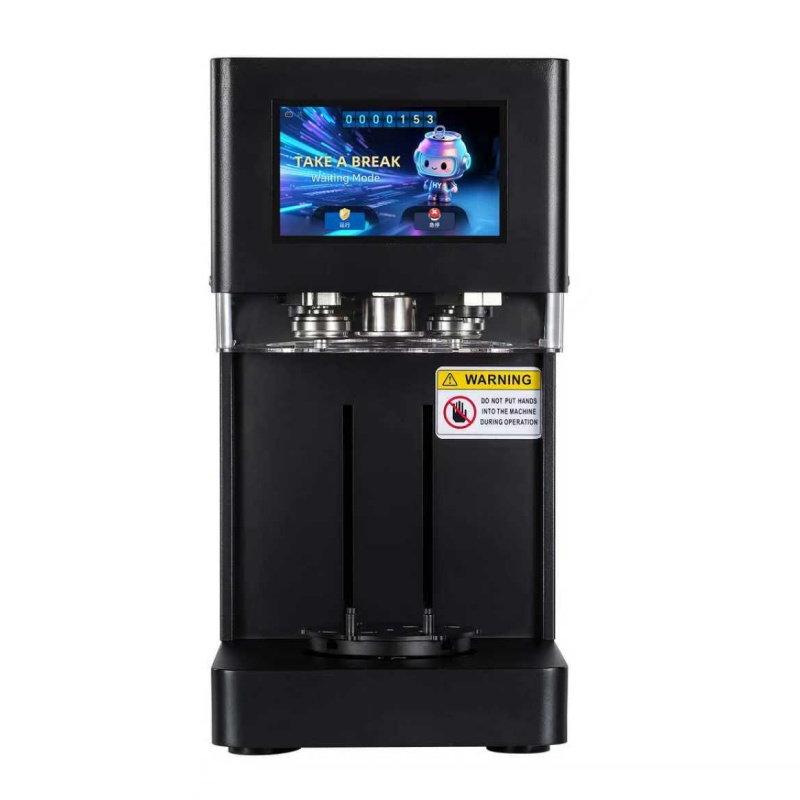
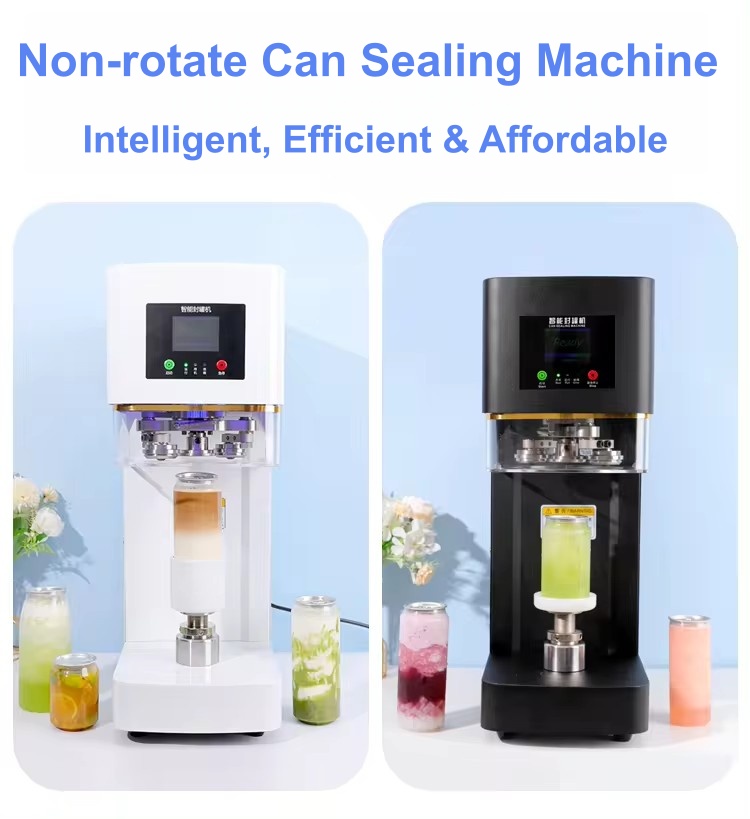
Some PET can sealing machines use a non-rotation design. In this arrangement, the PET can body remains stationary while the sealing components move around the lid. COPAK presents its automatic touchscreen tabletop model as a non-rotation machine designed for PET cans. This design may be useful when:
- The beverage contains foam
- The filled can is close to its target fill level
- The product contains small inclusions
- Spillage during rotation needs to be reduced
- The clear PET body should remain visually clean
- The operator needs a stable tabletop process
- The product is filled manually
A non-rotation design does not remove the need for correct filling, headspace and machine adjustment. The actual beverage should be used during the production trial.
Choosing the Right Automation Level
The required automation level depends on daily output, labor availability, production layout and future growth plans.
Tabletop Automatic Can Sealer
A tabletop automatic machine can be suitable for:
- Cafés
- Beverage shops
- Pilot projects
- Product testing
- Event beverage preparation
- Small production rooms
- Short production batches
- Businesses launching a PET can range
The operator usually places the can and lid into the machine, starts the cycle and removes the sealed package. This format uses less space than a full production line and can provide a more controlled process than a fully manual machine.
Semi-Automatic Sealing System
A semi-automatic system can be considered when:
- Production volume is higher than normal shop service
- Operators can handle loading or unloading
- Several product batches are produced each day
- The business needs flexibility between can formats
- Full line integration is not yet required
The buyer should confirm which steps are automated and which steps still require manual work. The term “semi-automatic” may describe different machine configurations, so the workflow should be reviewed before purchase.
Fully Automatic Can Sealing System
A fully automatic system may be more suitable for:
- Scheduled beverage production
- Central kitchens
- Medium or large production facilities
- Continuous filling operations
- Businesses requiring automatic feeding and discharge
- Projects connected to other packaging equipment
Line integration may involve:
- Can feeding
- Beverage filling
- Lid feeding
- Lid placement
- Sealing
- Date coding
- Inspection
- Labeling
- Carton packing
The equipment supplier should review the layout, production target and connection points before the system is confirmed.
COPAK Automatic Touchscreen Can Sealer
COPAK currently presents an automatic touchscreen can sealer under model CP100D-25. Published specifications include:
| Item | Published Information |
|---|---|
| Model | CP100D-25 |
| Automation | Automatic |
| Drive type | Electric |
| Voltage | 110V/220V |
| Sealing diameter | 45–100 mm |
| Sealing height | 30–180 mm |
| Sealing cycle | Approximately 2 seconds per can |
| Interface | Touchscreen |
| Support | Online and video technical support |
| Published warranty | One year |
These values come from COPAK’s current product page and should be reconfirmed during quotation because machine configuration, tooling and project requirements may affect the final offer. The published diameter and height range should not be treated as confirmation that every container inside those ranges is automatically compatible. The can rim, lid profile, tooling and actual sealing trial still need to be checked.
Selecting a Machine by Production Demand
The buyer should calculate production demand from the real operating schedule. Useful information includes:
- Cans required per hour
- Cans required per shift
- Number of working shifts
- Number of product varieties
- Time available for changeover
- Expected production growth
- Planned maintenance time
- Number of operators
- Filling speed
- Downstream packing speed
The fastest machine is not always the best choice. A sealer that works faster than the filling and loading process may remain idle. A machine with insufficient output may become the main production bottleneck. The target should be a balanced line where filling, lid placement, sealing and packing operate at compatible speeds.
Can Size and Format Changes
Many beverage businesses plan to use more than one PET can capacity. A product range may include different:
- Fill volumes
- Can heights
- Can diameters
- Body shapes
- Lid types
- Label formats
The buyer should ask:
- Can the machine handle every planned can?
- Does each format require different tooling?
- How is the support platform adjusted?
- How long does a format change take?
- Which adjustments can operators complete?
- Which adjustments require a technician?
- Can settings be stored and recalled?
- How are incorrect settings prevented?
A machine described as adjustable still needs a confirmed operating range for the actual containers. Send physical can and lid samples when possible.
Beverage Filling and Headspace
The sealing machine begins its work after the beverage has been filled. An unstable filling process can create sealing problems even when the machine is correctly adjusted. The buyer should control:
- Fill level
- Product foam
- Liquid on the can rim
- Fruit pieces near the opening
- Lid placement
- Required headspace
- Delay between filling and sealing
- Product temperature
An overfilled can may spill during lid placement or sealing. An underfilled can may not meet the intended product specification. Foam can make the fill level difficult to judge and may contaminate the sealing area. The filling process and sealing process should be tested together.
Filling Temperature
The actual filling temperature must be provided before the packaging system is approved. Standard PET beverage cans and sealing equipment should not automatically be treated as suitable for:
- Hot filling
- In-container pasteurization
- Retort processing
- Steam treatment
- Other elevated-temperature processes
The buyer should provide:
- Beverage temperature at filling
- Temperature after preparation
- Cooling method
- Time between cooling and filling
- Time between filling and sealing
- Storage temperature
- Planned thermal processing
- Distribution conditions
High-temperature processing can affect the PET container, lid, seam and product. Any heat-treatment process requires separate technical validation.
Carbonated and Pressurized Beverages
A machine capable of closing a PET can is not automatically suitable for every pressurized beverage project. Carbonated and nitrogen-infused products may create internal pressure during filling, storage and transportation. The project should confirm:
- Container pressure suitability
- Easy-open lid suitability
- Seaming specification
- Filling method
- Product temperature
- Carbonation or gas level
- Expected internal pressure
- Storage temperature
- Transportation conditions
- Required package testing
The buyer should tell COPAK clearly when the product is carbonated, nitrogen-infused or otherwise pressurized. A still-beverage trial does not validate the same package for a pressurized product.
Workspace and Installation Planning
The machine must fit the production environment. Before ordering, check:
- Machine dimensions
- Operator working area
- Loading and unloading space
- Table or floor support
- Electrical supply
- Air supply when required
- Drainage requirements
- Cleaning access
- Emergency access
- Ventilation
- Distance from filling equipment
- Space for finished products
- Space for empty cans and lids
A compact machine may still require additional space for containers, lids, trays and inspection. The operator should be able to work without reaching across moving components or blocking another production task.
Electrical and Utility Requirements
COPAK’s published CP100D-25 information lists 110V/220V electric operation. The final voltage and plug configuration should be confirmed for the destination market before production and shipment. The buyer should confirm:
- Local voltage
- Frequency
- Plug type
- Power capacity
- Grounding requirements
- Compressed air requirements, if applicable
- Operating environment
- Spare electrical protection
- Installation responsibility
Do not assume that a machine can be connected immediately after arrival without checking local electrical conditions. Electrical installation should be completed by qualified personnel according to applicable local requirements.
Operator Interface and Production Records
A clear control interface can reduce setup mistakes and simplify routine operation. COPAK’s touchscreen model is presented with a touchscreen interface and production-count display. Useful interface functions may include:
- Start and stop controls
- Production count
- Operating status
- Fault messages
- Parameter access
- Stored settings
- Maintenance reminders
- Emergency stop status
The available functions depend on the selected machine. The buyer should request a control-interface demonstration before confirming the equipment.
Seal Inspection
A finished can should be inspected according to an agreed quality-control process. Routine checks may include:
- Lid position
- Visible seam uniformity
- Can body condition
- Lid damage
- Product leakage
- Can stability
- Easy-open function
- Seal consistency across a production batch
The required seam measurements and acceptance criteria should be based on the selected can, lid, tooling and technical guidance supplied for the project. Do not copy acceptance values from an unrelated metal can or another lid format. Inspection frequency may be increased:
- At production startup
- After a format change
- After machine adjustment
- After maintenance
- When a new batch of cans or lids is introduced
- When leakage or visible inconsistency is detected
Records can help identify whether a problem is isolated or recurring.
Common Sealing Problems
Lid Is Not Positioned Correctly
Possible causes may include:
- Incorrect lid placement
- Wrong lid specification
- Can not centered
- Feeding system misalignment
- Product or residue on the rim
Stop production and confirm the packaging components before adjusting the machine.
Seal Is Visibly Uneven
Possible causes may include:
- Incorrect tooling adjustment
- Worn components
- Can or lid variation
- Incorrect support height
- Container not positioned correctly
The machine should be inspected by trained personnel.
Product Leaks After Sealing
Possible causes may include:
- Incomplete seam formation
- Damaged can rim
- Damaged lid
- Contamination in the sealing area
- Incorrect tooling
- Excessive handling after sealing
Leaking products should be isolated from sale until the cause is identified.
Can Body Is Scratched or Distorted
Possible causes may include:
- Incorrect support or guide adjustment
- Excessive mechanical contact
- Unsuitable rotating process
- Misaligned handling equipment
- Damaged containers before sealing
The can should be inspected before and after the sealing stage.
Beverage Spills During Sealing
Possible causes may include:
- Excessive fill level
- Too little headspace
- Product foam
- Can movement
- Incorrect lid placement
- Delay between filling and sealing
The filling and sealing processes should be reviewed together.
Cleaning and Hygiene
The sealing machine operates near an open beverage container. A cleaning plan should cover:
- Product-contact risk areas
- Lid placement area
- Can support platform
- External machine surfaces
- Spilled beverage
- Removable guides or trays
- Surrounding worktable
- Floor area
- Cleaning tools
- Cleaning records
The machine supplier’s instructions should be followed. Electrical and moving components should not be cleaned using methods that could damage the equipment or create an electrical hazard. The machine should be stopped and made safe before cleaning or maintenance.
Preventive Maintenance
Routine maintenance helps keep the machine operating consistently. A maintenance plan may include:
- Cleaning after production
- Inspection of rollers and tooling
- Checking fasteners
- Checking guides and supports
- Lubrication where specified
- Inspection of electrical connections
- Testing safety functions
- Checking unusual noise or vibration
- Replacement of worn parts
- Reviewing production and fault records
Maintenance frequency should follow the selected machine’s manual and actual production intensity. Operators should not modify sealing components without training or technical guidance.
Spare Parts and Technical Support
Before purchasing a can sealer, ask which parts may require replacement during normal operation. Useful questions include:
- Which parts are considered consumables?
- Which spare parts are supplied with the machine?
- How are additional parts ordered?
- What information is required to identify the part?
- Is remote setup support available?
- Are operating videos available?
- What is included in the warranty?
- Which issues require on-site service?
- How should tooling be stored?
- What documentation is supplied?
COPAK’s current CP100D-25 page lists online support and video technical support. The exact service scope should be confirmed in the quotation.
From Pilot Production to Commercial Output
A beverage brand may start with a limited number of sealed cans and later expand. The initial machine choice should consider:
- Current daily demand
- Expected growth
- Available labor
- Planned can formats
- Future filling equipment
- Space for a larger line
- Budget for tooling
- Product development needs
A compact automatic machine may support market testing and initial sales. Growth may later require:
- Faster filling
- Automatic lid feeding
- Conveyor integration
- Date coding
- Inspection equipment
- Labeling
- Carton packing
- A higher-output sealer
The business should avoid purchasing a machine that cannot support its confirmed can and lid system. It should also avoid investing in a production line that is much larger than the realistic filling and sales plan.
Information to Prepare Before Requesting a Quotation
Provide COPAK with the following information:
- Beverage type
- Carbonated or non-carbonated status
- Presence of foam or particles
- Beverage viscosity
- Filling temperature
- PET can capacity
- Can diameter
- Can height
- Can opening specification
- Aluminum lid specification
- Physical can and lid samples
- Required output per hour
- Required output per day
- Number of product formats
- Manual or automatic filling method
- Preferred automation level
- Available workspace
- Local voltage and frequency
- Destination country
- Required technical support
- Target purchase schedule
Photos, drawings and samples can reduce the risk of selecting incompatible equipment.
Why Work with COPAK?
COPAK supplies PET beverage cans, easy-open aluminum lids and can sealing machine options. Its website currently presents:
- PET beverage cans
- Easy-open lid combinations
- Automatic touchscreen can sealers
- Semi-automatic machine options
- Fully automatic machine options
- Non-rotation sealing equipment
- Packaging and machine coordination
- Online and video technical support for the published touchscreen model
COPAK also states that PET cans and sealing machines can be arranged as part of the same purchasing and shipping project. Sourcing the can, lid and machine through a coordinated project can simplify compatibility discussions. Final approval should still be based on actual samples, machine trials and the buyer’s production conditions.
Build the Sealing Process Around the Product
A can sealing machine should be selected around the beverage, container, lid and production workflow. A café may need a compact automatic machine for small batches. A central kitchen may need a semi-automatic process that supports several daily production runs. A beverage factory may need a fully automatic sealing system connected to filling, inspection and packing equipment. Share the beverage information, PET can dimensions, lid specification, production target and local electrical requirements with COPAK. The team can review the project and recommend a suitable can sealing configuration.
Frequently Asked Questions
What is a PET can sealing machine?
A PET can sealing machine joins an easy-open metal lid to the rim of a PET can. The machine and tooling must match the selected can and lid.
Can one sealing machine handle different PET can sizes?
Some machines can be adjusted for several can heights or diameters. Compatibility depends on the machine range, tooling, can rim and lid. Every planned format should be confirmed before purchase.
What is a non-rotation can sealer?
A non-rotation sealer keeps the can body stationary while the sealing mechanism moves around the lid. This design may help reduce product movement and contact with the clear PET body.
Is a tabletop can sealer suitable for a beverage shop?
A tabletop automatic sealer may suit cafés, bubble tea shops, pilot projects and small-batch operations. The required daily output and available working space should be checked first.
When should a business consider a fully automatic machine?
A fully automatic system may be suitable when the business requires continuous production, automatic feeding, line integration or higher scheduled output.
Does COPAK offer an automatic touchscreen can sealer?
COPAK currently lists the CP100D-25 automatic touchscreen can sealer. Its published specifications should be reconfirmed during quotation.
Can the machine seal aluminum cans as well as PET cans?
Compatibility should be confirmed for the specific machine, tooling, aluminum can and lid. Do not assume that a PET can setup can seal every metal can format.
Can the machine seal carbonated beverages?
Machine operation alone does not confirm suitability for carbonated products. The PET can, lid, seam, filling process and expected internal pressure must all be validated.
Can the machine be used for milk tea?
It can be considered for suitable milk tea products filled into compatible PET cans. Fill level, foam, particles and storage requirements should be tested.
Can the machine seal juice and coffee cans?
A compatible sealer can be used for selected juice, coffee and tea projects. The packaging components and filling conditions must match the equipment setup.
Does a sealed PET can automatically have a long shelf life?
No. Shelf life depends on the beverage formula, processing, filling hygiene, sealing, storage and distribution. The finished product requires separate validation.
How should the sealing quality be checked?
Checks may include lid position, visible seam consistency, leakage, container condition and opening performance. Detailed acceptance criteria should be developed for the actual can and lid system.
Is a sample sealing test required?
Yes. Testing with the actual PET can, lid and beverage is strongly recommended before regular production.
What voltage information should the buyer provide?
Provide the local voltage, frequency and plug requirement. COPAK’s published CP100D-25 model lists 110V/220V, but the final electrical configuration must be confirmed.
Does COPAK provide technical support?
The current CP100D-25 product page lists online support and video technical support. The exact support package should be confirmed in the commercial quotation.
What information is needed for a machine quotation?
Provide the can diameter, height, opening, lid specification, beverage type, filling temperature, required output, voltage, automation preference and destination market.
Post time: Jul-27-2026