



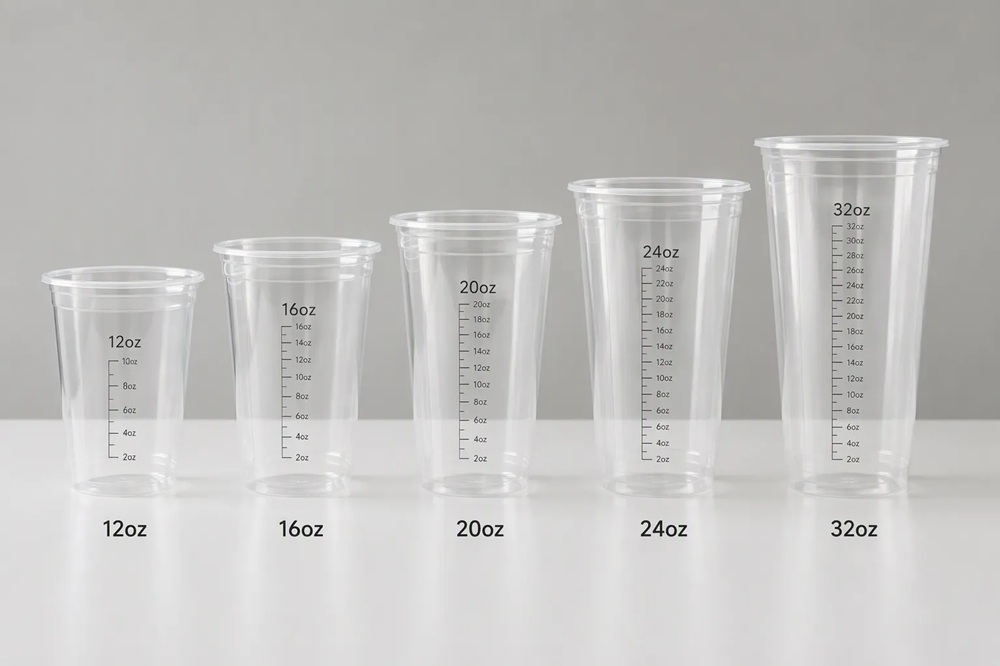
The best disposable cup sizes depend on beverage type, portion goals, and customer expectations. This guide covers five plastic cup measurements: 12oz, 16oz, 20oz, 24oz, and 32oz. Each capacity serves a specific cup size purpose. COPAK offers a complete pet cup sizes range from 100% food-grade PET. Customization options let you brand each cup.
Key Takeaways
- Match cup size to your beverage type. Use 12oz for small drinks, 16oz for medium, 20-24oz for large, and 32oz for shareable portions.
- Fill cups to 80-90% of their brimful capacity. This headspace prevents spills and helps lids fit correctly.
- Check the rim diameter, not the oz label, when choosing lids. 12oz and 16oz cups often share the same lid size.
PET Cup Sizes: A Breakdown
12oz and 16oz: Everyday Essentials
The 12oz and 16oz cups are the standard in cafés, QSRs, and convenience stores. The 12oz size works well for bubble tea, iced tea, and small iced coffee portions. It also serves as the standard for fountain soda regular servings and juice-based drinks. The 16oz cup offers 33% more volume. This capacity increase boosts perceived value and supports premium pricing. The 16oz size is the versatile middle ground for cold beverage programs, fitting smoothly into café and QSR menus. It is also the standard for grande iced coffee servings in many coffee chains.
16oz provides 33% more volume than 12oz.
The table below shows typical applications.
| Cup Size | Primary Business Applications | Recommended Beverages |
|---|---|---|
| 12oz | Boba tea shops, iced tea providers, fast-casual restaurants | Bubble tea, iced tea, smoothies |
| 16oz | Coffee shops, smoothie stores, cafes, quick-service restaurants | Iced coffees, smoothies, sodas |
This size serves as the industry convergence point across smoothies, iced coffee, and bubble tea. It balances portion size with practical handling. This size also minimizes inventory complexity because it fits standard lid sizes and cup holders.
20oz and 24oz: Value and Volume
The larger cups in this range cater to customers seeking more liquid. These cups are popular for smoothies, milkshakes, loaded teas, and large iced coffees. They also suit event catering and self-serve stations. The 20oz size is common for bubble tea in 700ml servings, while the 24oz cup holds exactly 3 cups of liquid. This clarity helps operators communicate portion sizes. The 20oz and 24oz cups are particularly effective in self-serve stations, where customers expect a substantial volume for their purchase. These sizes reduce the need for refills, improving operational efficiency. Catering businesses use these cups for corporate events, festivals, and pop-up activations. Self-serve stations in convenience stores also rely on these larger cups to maximize per-transaction revenue.
24oz equals 3 cups.
COPAK manufactures these cups from 100% food-grade PET. The cups are crystal clear and crack-resistant, available from 3oz to 32oz. Their smooth rolled rim ensures a perfect lid fit. COPAK’s PET cups are 100% BPA-free and non-toxic, guaranteeing safety for all consumers.
This size guide helps operators match plastic cup sizes to their menu. Accurate plastic cup measurements ensure proper portion control. Understanding pet cup sizes allows businesses to optimize inventory. The 16-20 oz. plastic cups category is especially popular for smoothies and iced drinks. Selecting the correct disposable cup sizes improves customer satisfaction. A plastic cup size chart can compare dimensions and capacities.
The Heavyweights: 32oz and Beyond
32oz for Shareable and Specialty Drinks
The 32oz cup holds exactly 4 cups of liquid. This capacity positions it as the go-to choice for shareable drinks, large smoothies, and specialty beverages. COPAK markets this size as the “Jumbo PET Cup,” a clear signal of its intended use for generous portions. Businesses use these cups for:
- Large smoothies meant for two people
- Shareable fountain drinks at movie theaters and stadiums
- Deli-style containers for salads, poke bowls, and acai bowls
- Meal prep containers for catering and events
The 32oz PET cup also functions as a versatile food container. Its clear material showcases the product inside, which encourages repeat purchases. The sturdy construction resists cracking during transport. The leak-resistant seal with lids locks in freshness. These cups are fully recyclable, supporting sustainability commitments. They work well for frozen desserts, pasta salads, and catering platters.
Comparing Sizes: Dimensions and Capacity
Understanding plastic cup measurements helps operators manage inventory efficiently. The table below compares top diameters across common sizes.
| Cup Size (oz) | Top Diameter (mm) |
|---|---|
| 12 oz | ~95 mm |
| 16 oz | ~95 mm |
| 20–24 oz | ~102 mm |
| 32 oz | Wider mouth for fountain-fill nozzles |
The 12oz and 16oz cups share a similar top diameter. This simplifies lid inventory because one lid size fits both. The 20oz and 24oz cups feature a wider mouth at approximately 102mm. This wider opening accommodates fountain-fill nozzles and ice scoops. The 32oz cup continues this trend with an even broader rim.
This size guide helps operators match cup dimensions to their dispensing equipment. Accurate plastic cup measurements prevent mismatched lids and wasted product. The 32oz cup’s larger opening also makes it easier to add toppings or garnishes. Businesses should verify their cup holders and dispensers accommodate these wider diameters before bulk ordering. The guide confirms that larger sizes require more storage space but deliver higher perceived value per serving.
Common Plastic Cup Sizes and Their Uses
Matching Cup Size to Beverage Type
Selecting the right cup size begins with understanding your menu. The 12oz cup serves espresso-based drinks, regular coffee, and standard cold beverages. The 16oz size accommodates iced coffee, smoothies, and milkshakes. For bubble tea and milk tea with toppings, the 20oz cup provides adequate room for ice and pearls. The 24oz capacity suits large smoothies, slushies, and fountain sodas. The 32oz cup handles jumbo sodas, extra-large smoothies, and shareable layered drinks.
| Cup Size | Typical Beverage Pairing |
|---|---|
| 12oz | Regular coffee, latte, tea, cold drinks |
| 16oz | Large hot drinks, smoothies, iced drinks |
| 20oz | Large iced drinks, milk tea, smoothies |
| 24oz | Large beverages, close to 700ml formats |
| 32oz | Large takeaway bowls, family portions, bulk drinks |
The most common plastic cup size for cold beverages remains 16oz. This capacity balances portion satisfaction with manageable material usage. Operators serving multiple drink types should stock several sizes to match customer expectations. A plastic cup size chart helps staff select the correct container quickly.
Portion Control and Cost Efficiency
Larger cups reduce refill frequency but increase material cost per unit. Operators must weigh these factors against customer expectations. A 32oz cup costs more than a 16oz cup, yet it may justify a premium price point. The guide recommends testing portion sizes before committing to bulk orders.
- 16oz cups for small drinks
- 20oz cups for medium drinks
- 24oz cups for large drinks
Standard drink serving volumes follow industry patterns. Small portions range from 3-7oz for sampling. Medium sizes span 8-12oz for daily beverage service. Large servings from 16-20oz suit iced coffees and smoothies. The 24-32oz range covers shareable beverages and concession stands.
Operators should calculate cost per serving against perceived value. A larger disposable cup sizes option may attract customers seeking value. However, excessive portion sizes can erode profit margins. The key is matching plastic cup measurements to actual consumption patterns. Businesses serving self-serve fountain drinks often prefer 20oz and 24oz cups. These sizes reduce trips to the dispenser and improve throughput. For catering events, the 32oz cup offers versatility as both a beverage container and a food bowl. Understanding common plastic cup sizes allows operators to optimize inventory and control costs effectively.
Practical Considerations for PET Cups
Brimful Capacity vs. Practical Fill Level
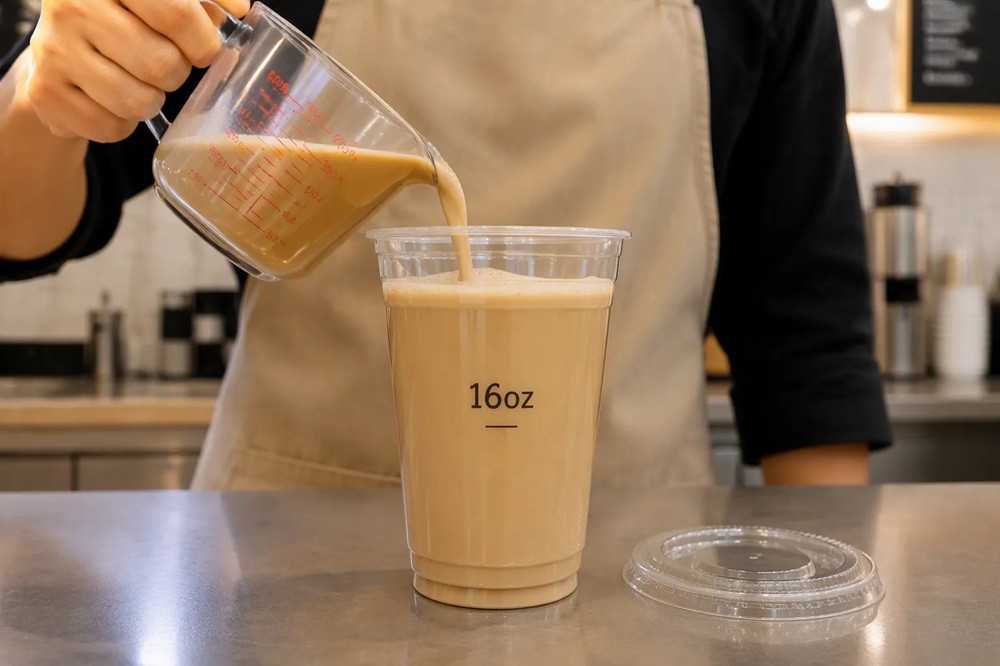
When a supplier lists a cup’s size, they refer to its brimful capacity—the absolute maximum volume the container holds when filled to the very edge. This measurement serves as a standardized reference point across the industry. However, serving customers at brimful capacity creates operational problems. Liquids slosh during transport, lids fail to seat properly, and carbonated beverages expand and overflow. The practical fill level represents the real-world serving size, typically 80-90% of the total brimful capacity. This headspace accommodates lids, prevents spills, and allows room for ice or whipped cream toppings.
Always leave a little space at the top of the cup. This helps prevent spills and keeps your serving area clean. Filling cups to the brim wastes product and creates mess; a practical fill provides safe headspace and better portion control.
Operators should train staff to fill cups to the 80-90% mark rather than the rim. A 16oz cup, for instance, should receive approximately 13-14oz of liquid. This practice reduces waste, minimizes cleanup, and ensures consistent portion sizes across every transaction. For carbonated beverages, the headspace proves especially critical. The gap allows gas to escape without forcing liquid over the edge. Businesses serving bubble tea or smoothies with dense toppings should also account for ingredient volume when calculating practical fill levels. The 80-90% guideline applies universally across all cold cup sizes, from 12oz to 32oz.
Lid Fit and Rim Diameter Compatibility
Lid compatibility depends entirely on rim diameter matching. A lid designed for a 98mm rim will not seal properly on a cup with a different opening measurement. COPAK cups feature a smooth rolled rim that fits perfectly with COPAK lids, creating a leak-resistant seal. This design detail prevents embarrassing spills and keeps beverages secure during transport.
- The ProTakeOut flat lids are explicitly designed for PET cups with a 98mm rim diameter.
- This specification ensures a secure, leak-resistant fit as emphasized by the “Perfect Fit” feature.
- The lid diameter must match the container opening for a secure seal.
Operators managing multiple cup sizes should verify rim diameters before ordering lids. The 12oz and 16oz cups often share a 90mm top diameter, simplifying lid inventory. The 20oz and 24oz sizes may feature wider mouths at approximately 102mm. For tamper-proof protection, choose flat-rim cups from 16oz upward. These cups accommodate sealing film and provide visible evidence of tampering. The 32oz cup’s broader opening requires its own lid specification.
Accurate plastic cup measurements prevent mismatched lids and wasted product. This guide emphasizes that rim diameter compatibility directly impacts customer satisfaction. A poorly fitted lid leads to leaks, complaints, and lost revenue. COPAK’s rolled rim design also enhances drinking comfort while maintaining structural integrity. The pet material resists cracking at the rim, even under repeated lid application and removal. Businesses should request sample kits to test lid fit before committing to bulk orders. This verification step saves money and prevents operational headaches. Understanding the relationship between brimful capacity, practical fill levels, and rim diameters ensures smooth beverage service across all sizes.
Material Matters: PET vs. PP for Cold Drinks
Why PET is the Standard for Cold Beverages
PET dominates cold beverage service for one primary reason: visual appeal. The polymer’s natural transparency exceeds 90% light transmittance, allowing customers to see the vibrant colors of iced coffee, smoothies, and teas. This clarity elevates perceived product quality. Unlike polypropylene, PET maintains its crystal-clear appearance without yellowing or clouding over time. The material also offers rigidity and crack resistance, ensuring cups withstand ice, vigorous shaking, and transport.
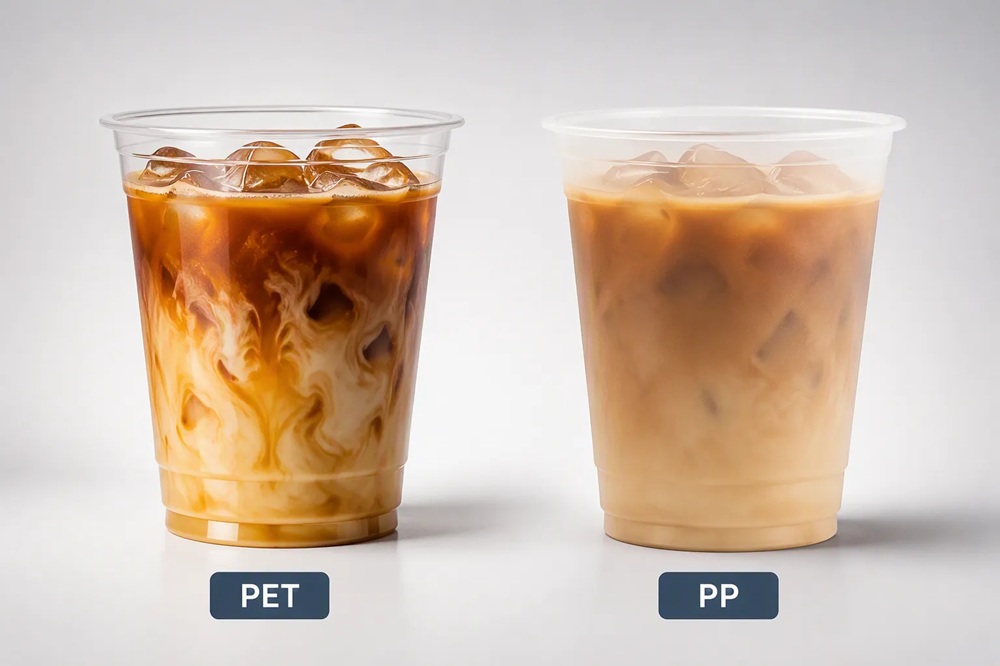
PET cups are known for their exceptional transparency, allowing consumers to see the beverage inside clearly. Unlike some plastics that yellow or become cloudy over time, PET maintains its transparency. Additionally, PET is one of the most widely recycled plastics; PET cups can be collected, processed, and repurposed into new products, and many municipalities have established recycling programs specifically for PET plastic.
COPAK’s PET cups meet rigorous food-safety standards. The manufacturer holds FDA, BRC, QS, SGS, LFGB, and ISO9001 certifications. These credentials verify that cups are 100% BPA-free and non-toxic. For operators tracking plastic cup measurements, PET’s dimensional stability ensures consistent capacity across every batch. The 12oz through 32oz sizes maintain precise brimful volumes, supporting accurate portion control.
When to Consider PP or Other Alternatives
Polypropylene serves a different operational niche. PP cups withstand temperatures up to 120°C (275°F), making them suitable for hot beverages. PET softens above 68°C (160°F), limiting its use to cold drinks only. PP also offers superior impact resistance; the flexible material bounces back rather than cracking on drops. This durability proves valuable in high-volume, fast-paced environments.
| Attribute | PET | PP |
|---|---|---|
| Appearance | Crystal-clear, high gloss | Translucent, less clear |
| Strength | Rigid, durable, crack-resistant | Lightweight, flexible, crack-resistant |
| Use Case | Cold beverages only | Cold and moderately hot drinks |
| Recyclability | Widely recyclable (Code #1) | Limited recyclability (Code #5) |
| Best For | Premium presentation (iced coffee, smoothies, teas) | Budget-friendly, high-volume service |
The choice depends on your menu. For cold beverage programs emphasizing presentation, PET remains the standard. For operations serving both hot and cold items, PP offers versatility. This guide recommends evaluating your full beverage lineup before selecting materials. Consider the 16oz and 20oz sizes for daily cold service; reserve PP for hot drink applications. The 32oz capacity works well in PET for shareable cold drinks. Ultimately, PET’s recyclability and clarity make it the preferred choice for most cold beverage businesses.
Finding the Best PET Cup Size for Your Business
Buyer’s Checklist: Key Decision Factors
Selecting the right size cup should i stock requires evaluating several factors. Every beverage-focused business must consider beverage type, portion goals, and cost per unit. A 2022 Specialty Coffee Association report shows that correctly sized cups reduced beverage waste by 8-12% compared to using a single large size.
Key decision factors include:
- Beverage type and size ladder: Start with the minimum number of sizes that support distinct recipes. A 12 oz cup works for regular cold drinks. A 16 oz or 20 oz cup suits iced beverages and smoothies.
- Portion control and cost: Oversized cups increase cost per serving. A correctly portioned 12 oz drink in a 16 oz cup appears half-empty, negatively affecting perceived value.
- Lid compatibility: Cup diameter determines lid fit. Always test the exact cup and lid SKU together under realistic conditions.
- Storage and logistics: Smaller cups nest more tightly. Bigger cups take up more back-of-house space.
- Sustainability: PET is recyclable. Smaller sizes reduce material usage per serving.
Lid fit is determined by the rim, not the oz label. Two 12 oz cups may have different top diameters and tolerances. Every extra size adds lids, sleeves, storage space, and training points. The best range is the smallest that protects menu quality.
Before bulk ordering, obtain physical samples. Test the cups for leak-proof and crack resistance. Ensure they meet daily commercial use demands.
Customization and Branding Opportunities
COPAK offers customization for your custom pet plastic cup size. Print your logo or branding in up to six colors. Low minimum order quantities make this accessible for businesses of all sizes. Larger cups provide more surface area for designs.
| Printing Method | Best For | Key Feature |
|---|---|---|
| Silk Screen | Simple 1-2 color designs | Strong, durable print |
| Offset | Intricate, detailed designs | High-quality finish |
| Digital | Small runs, personalized cups | Fast turnaround |
| Heat Transfer | Full-color, complex designs | Vibrant, high-quality finish |
COPAK uses 100% food-grade PET material. This material holds color and layering with clarity. The cups are recyclable. Eco-friendly PLA options are also available for businesses seeking compostable alternatives.
This size guide helps match cup dimensions to your menu. Accurate plastic cup measurements ensure proper lid fit. Contact COPAK for personalized consultation, sample kits, or bulk pricing on PET cups from 12 oz to 32 oz.
Selecting the right pet cup sizes balances beverage type, customer expectations, and operational efficiency. Accurate plastic cup measurements prevent waste and ensure satisfaction. Consider practical fill levels, lid compatibility, and material choice—PET for cold drinks, PP for hot. Every oz matters for portion control. Contact COPAK for personalized consultation, sample kits, or bulk pricing on 12oz to 32oz capacity options.
FAQ
How do I determine the right cup size for my menu?
Match each beverage to its standard portion. Use 12 oz for small drinks, 16 oz for medium, and 20-24 oz for large servings. The 32 oz size suits shareable portions.
Can I use the same lid for different cup sizes?
Lid compatibility depends on rim diameter, not capacity. The 12 oz and 16 oz cups share a 90mm top diameter. The 20 oz and 24 oz sizes require wider lids.
What is the practical fill level for PET cups?
Fill cups to 80-90% of brimful capacity. This headspace prevents spills and accommodates lids properly. A 16 oz cup should receive approximately 13-14 oz of liquid.
Post time: Aug-26-2026