



Compatibility is confirmed by running a structured plastic cup lid fit test on samples before any bulk order. This test checks fit, seal, and real-use performance for every pet cup lid and cup and lid pairing. A mismatch found after delivery means wasted inventory, line downtime, and leaks in customers’ hands. The steps below show how to test plastic cup lids, then confirm cup and lid compatibility with a pre-order checklist.
★ Key Takeaways
- ✓ Test sample cups and lids before you order in bulk. This simple step prevents wasted money and leaks.
- ✓ Measure the cup rim and the lid’s locking area. A snug fit with no gaps means the parts match.
- ✓ Get written confirmation of compatibility from your supplier. This record protects your purchase.
Why Compatibility Checks Matter
A lid fits a PET cup by rim geometry, not by the ounce number printed on the cup. Capacity does not establish rim geometry. Buyers must confirm the actual rim diameter and the lid locking structure match. Equal capacity does not prove the same top diameter, rim profile, or lid family. Ordering lids by nominal cup volume can create a fit failure when the rim systems differ.
| Rim | Published cup sizes | Published lid codes |
|---|---|---|
| 62 mm | 3 oz | Confirm matching lid |
| 78 mm | 6 oz to 10 oz | 78F, 78D |
| 90 mm | 10 oz to 24 oz | 90F, 90D, 90K |
| 95 mm | 9 oz to 24 oz | 95F, 95D, 95K |
| 98 mm | 12 oz to 24 oz | 98F, 98D, 98K |
| 117 mm | 8 oz to 32 oz | 117F, 117D |
A 90 mm cup and a 98 mm cup belong to different rim families. The eight-millimeter difference changes the sealing interface. A lid chosen only by drink capacity can fail to fit.
⚠ Common Signs of a Poor Match
Fit problems can occur even when rim size is nominally the same. Mold differences and quality variation between production runs affect how well the lid locks and seals. A mismatched locking edge shows up quickly in handling.
Watch for these symptoms: loose lids, gaps at the rim, lids that snap on but leak, and lids that pop off in transit. Each symptom points to a different cause. A gap suggests a rim measurement error. A leak after a clean snap suggests a seal problem at the cup’s top rim.
The Cost of Skipping the Test
A mismatch found after a bulk order is expensive. Wasted inventory, line downtime, and leaks in customers’ hands all follow one wrong specification. Replacement lids for an incompatible cup rim cannot be corrected by reordering the same code.
A short sample test costs far less than a rejected pallet. Confirm the exact cup and lid codes with current compatibility data and assembled samples. Never assume cross-supplier or cross-series interchangeability from ounces alone.
Running the Plastic Cup Lid Fit Test
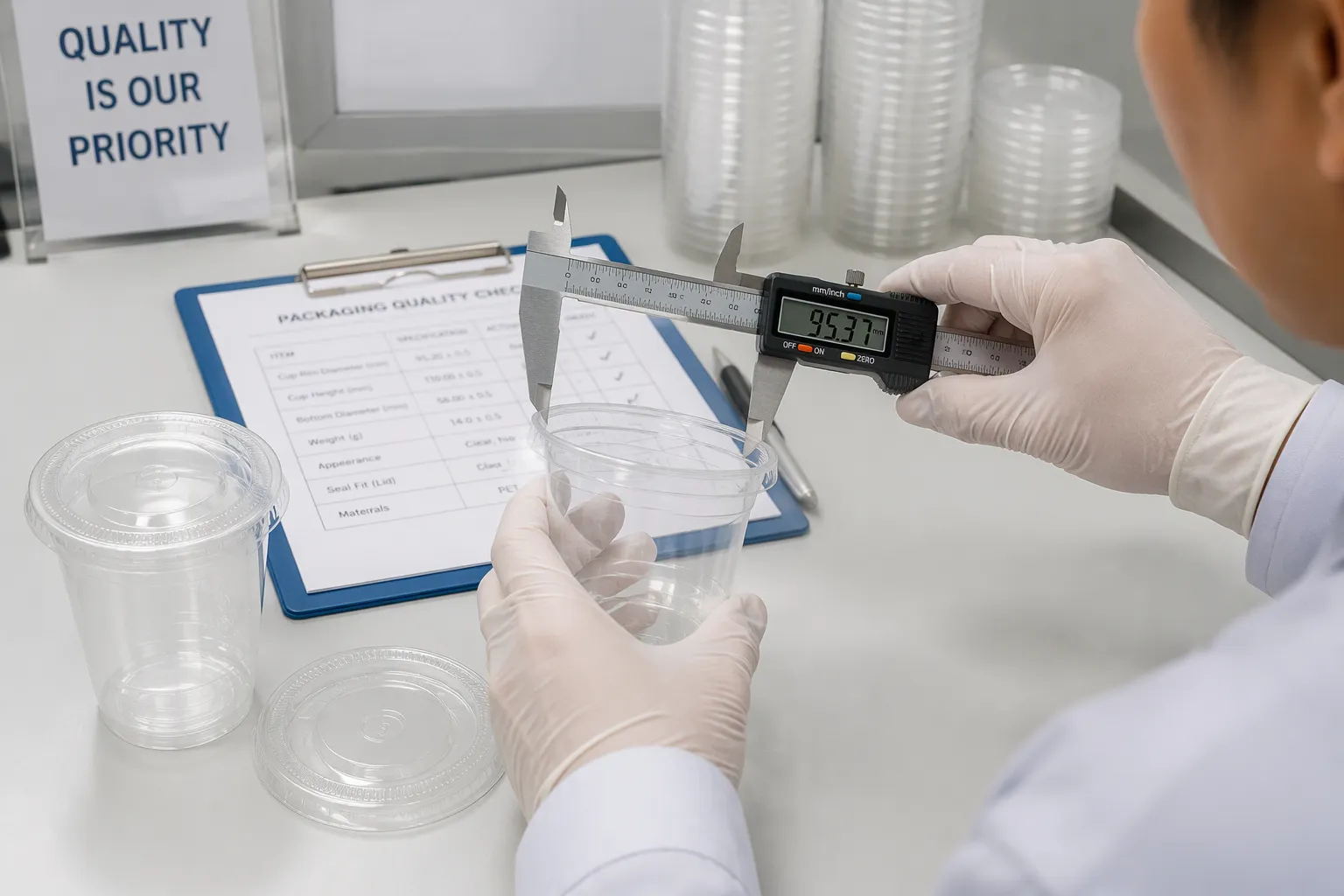
Samples, Inspection, and Dimension Checks
Request samples of the exact cup and lid models and test the combination with the normal service setup before committing to a bulk order. Approve production-intent molded parts rather than prototypes. Record container and lid revisions, resin grades, colors, and decoration. This record keeps the plastic cup lid fit test repeatable.
- Inspect each sample visually for flash, ovality, and visible defects after the specified conditioning period.
- Measure the cup rim: top rim diameter, rim profile, and wall thickness.
- Measure the locking area inside the PET cup lid at the exact diameter that engages the cup’s top rim.
- Compare the two sets of numbers. The fit should be snug with no gaps.
A rim measurement that differs from the drawing nominal signals a problem. Confirm the actual rim dimensions against the lid’s locking geometry. The top rim dimensions and profile must match the lid family, not just the ounce label. Repeat the rim measurement on a second sample from the same lot to confirm consistency. Check the rim dimensions and profile of the cup against the PET cup lid specification sheet. A PET cup lid from a different mold may not match.
Snap-Fit, Tilt, and Real-Use Tests
Run the physical checks in sequence. Each step tests a different failure mode.
- Snap-fit check: seat the lid and record seating force, closure success, and complete engagement. Do not chase the highest pull-off force; excessive retention can overload capping equipment.
- Tilt test: tilt the filled cup and watch the cup rim for gaps or partial release.
- Leakage resistance: test sealing separately in the relevant orientation, time, and temperature.
- Transportation stability: evaluate upright storage, side movement, stacking, delivery vibration, and manual carrying. Inspect for rupture, cracking, and closure release.
- Straw-slot check: confirm the slot aligns and accepts the straw without stressing the seal.
Test plastic cup lids as finished assemblies, including any liner or tamper feature. A sample fit that passes the snap test but leaks under tilt fails the plastic cup lid fit test. Repeat the fit check after conditioning to compare immediate and aged performance. Document every result against agreed pass and fail criteria.
The goal is lids that fit through the full distribution cycle. A secure fit on the line means little if the lid releases in transit. A PET cup lid that passes on one cup may fail on another cup and lid set with a different rim profile. Confirm the fit holds after conditioning, and confirm the fit survives a loaded transit trial. Each PET cup lid sample should be checked against the cup and lid assembly it will ship with. Run the plastic cup lid fit test on the exact cup and lid pairing, and treat compatibility as proven only when fit, seal, and handling all pass. Record that compatibility in writing before the purchase order. Suppliers who produce lids that fit the full cycle will support this record.
Confirming Fit Before Bulk Ordering
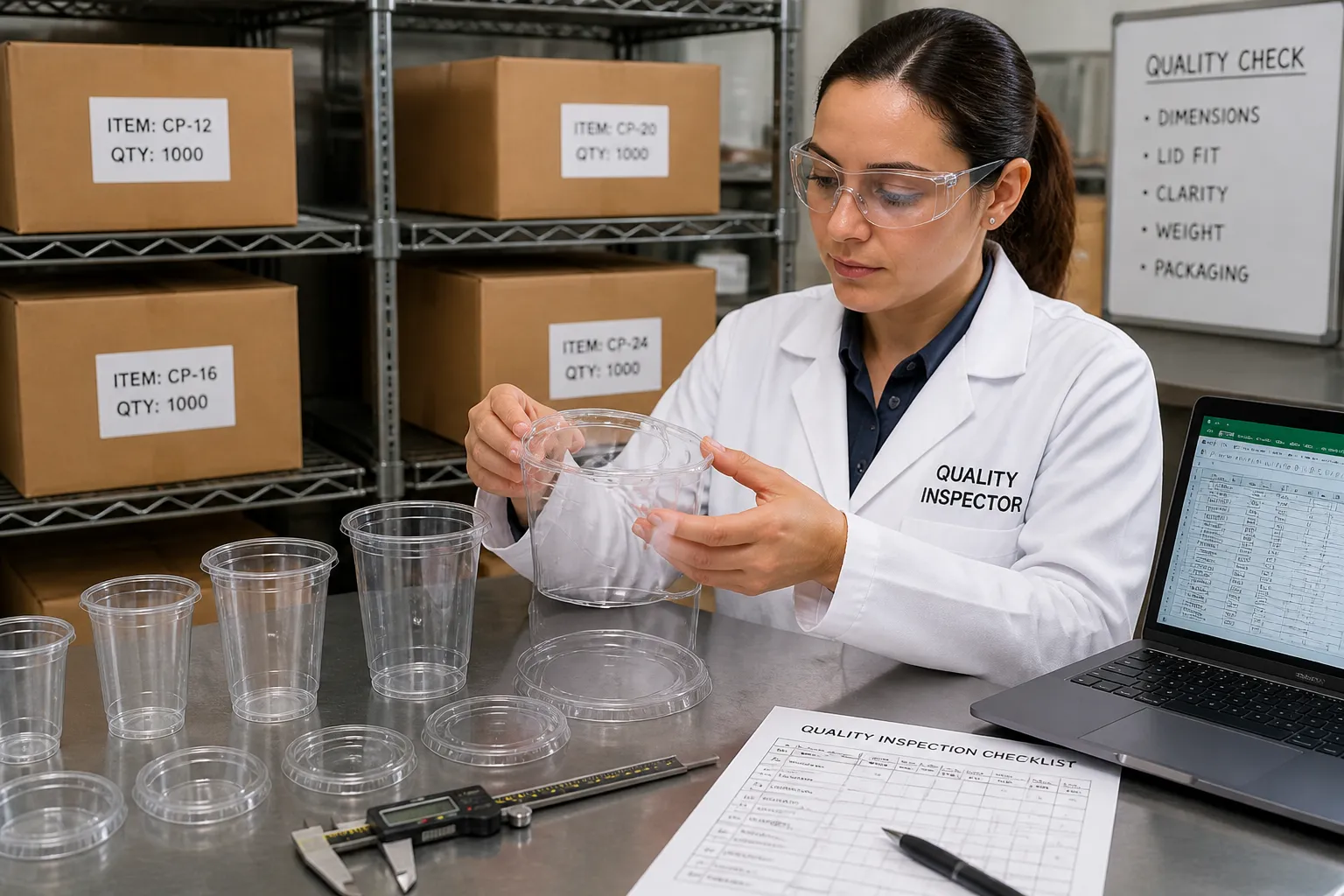
Verifying Exact Cup and Lid Models
Replacement lids demand the exact cup model, not a capacity guess. Buyers should confirm the specific cup and lid combination before bulk ordering. A request for a lid for a 12 oz cup assumes capacity is enough information. It is not. Record the cup item number, the finished rim diameter, the compatible lid model, and the sample fit verification. This record protects future purchasing teams.
Supplier specifications illustrate what to confirm. Shanghai COPAK Industry Co., Ltd. offers food-grade PET Cup Lids in flat or dome styles, crystal-clear or custom printed, with diameters from 4.5mm to 98mm and a -30°C to 70°C range. Cartons hold 1000 pieces, and the minimum order quantity is 30,000 pieces. Treat these figures as one example of the details a buyer should verify, not as a standard for every supplier.
Diameter codes alone do not prove a match. A 78 mm pet cup lid, a 90 mm pet cup lid, a 92 mm pet cup lid, a 98 mm pet cup lid, and a 107 mm pet cup lid each serve a different cup rim. Confirm the lid model or item number, the compatible cup models, the stated diameter, the lid material, and physical samples of the proposed combination. This step matters most when cups and lids come from different factories.
The Pre-Order Checklist
| Item | Check |
|---|---|
| Capacity | Actual capacity in ounces and milliliters |
| Rim | Rim diameter and lid compatibility, with rim measurement within ±0.5 mm |
| Material | PET or PP, matched to beverage temperature |
| Fit results | Snap-fit and leakage results on the approved sample pair |
| Artwork | Logo, color, and artwork match to the approved sample |
| Record | Written compatibility confirmation or approved sample pair |
Straw hardware belongs on the list. Confirm the straw diameter suits the beverage type within the 6–14 mm range, and confirm the straw length exceeds cup height by at least 30 mm. Verify that lids that fit the cup also accept the straw without stressing the seal.
Cost decides the sequence. Sample testing carries a small price. A mismatched bulk shipment carries a far larger one through wasted inventory, line downtime, and leaks. The sample cost buys certainty for the whole order.
Test samples, measure rim and lid size, run snap and tilt tests, simulate use, then walk the checklist. Sample testing protects the order. Request sample cups and lids and run the plastic cup lid fit test before signing the purchase order. This proves the pet cup lid and cup and lid fit. Confirm compatibility, and protect compatibility.
FAQ
How do I confirm a pet cup lid matches my cup?
Test the exact pair. Measure the rim, run a snap-fit check, and complete a tilt test. A written compatibility record from the supplier confirms the cup and lid match.
Do cups with the same ounce size always share a lid?
No. Rim geometry decides fit. A 78 mm pet cup lid, a 90 mm pet cup lid, and a 92 mm pet cup lid each serve different rims. Confirm the model, not the capacity.
What if the pet cup lid snaps on but leaks?
The seal has failed. Recheck the rim profile against the lid locking area. A 98 mm pet cup lid may seat cleanly yet leak under tilt. Retest the pair before ordering.
Can one lid family cover several cup sizes?
Yes, within one rim family. A 98 mm pet cup lid may fit multiple capacities on the same rim. A 107 mm pet cup lid serves a different family. Verify each pairing.
How many samples should I test before a bulk order?
Test samples from the production lot, not prototypes. Run the full sequence on each cup and lid pair. Approve the sample pair in writing before the purchase order.
Does a printed or dome lid change fit?
Style does not change the locking geometry. A 92 mm pet cup lid in dome or flat form uses the same rim interface. Confirm the 98 mm pet cup lid and 92 mm pet cup lid samples physically.
Post time: Nov-26-2026