



Key Takeaways
- PET cups offer crystal clarity and full recyclability, making them ideal for premium cold drinks.
- PP cups provide flexibility and heat resistance, suitable for high-volume events and versatile use.
- Choose PET for visual appeal and sustainability; choose PP for durability and cost savings.
PET vs PP: Key Differences in Material
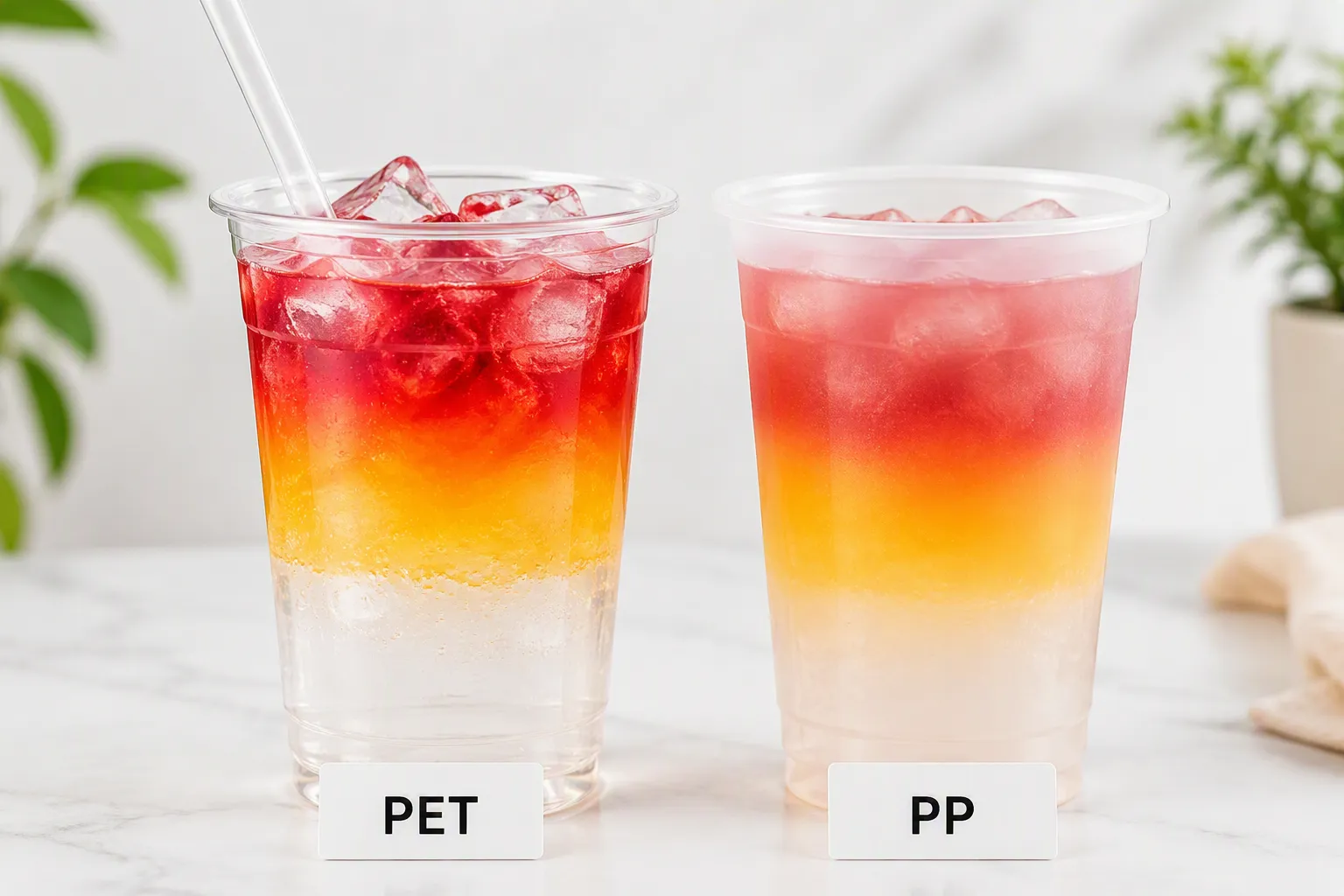
The material choice determines how your beverage looks, feels, and performs. Understanding the key differences between PET and PP helps you select the right cup for your cold beverage program. These two thermoplastics share the food-service category, yet their physical properties create distinct user experiences.
Clarity and Visual Appeal
PET plastic cups dominate the premium cold beverage segment for one primary reason: optical clarity. PET achieves light transmittance above 90%, approaching the 92% transparency of window glass. This glass-like quality transforms an ordinary iced coffee or layered smoothie into a visually striking product. COPAK’s PET cups exemplify this standard, offering crystal-clear sidewalls that showcase every layer, swirl, and garnish.
Polypropylene presents a different visual profile. PP transmits roughly 65% of light, producing a semi-matte, slightly hazy appearance. This reduced transparency suits applications where the beverage itself does not need to shine. However, for brands that rely on visual appeal to justify premium pricing, the difference between pp and pet cups becomes immediately apparent on the shelf.
Density further separates these materials. PET measures 1.31 g/cm³, while PP ranges from 0.90 to 0.91 g/cm³. This density gap contributes to PET’s firmer, more substantial feel in hand. Customers often perceive heavier cups as higher quality, an advantage for PET in branded beverage service.
Temperature and Flexibility
Temperature tolerance defines the practical boundary between these materials. PET has a glass transition temperature of approximately 70–80°C (158–176°F). Below this range, PET remains in a hard, glassy state, maintaining rigidity and shape integrity. Cold drinks typically sit well below this threshold, so PET cups hold their structure without deformation. The molecular structure also accommodates minor thermal contraction from cold contents without cracking.
PP offers a different thermal profile. Polypropylene safely handles beverage temperatures from 176°F to 212°F (80°C to 100°C), with a melting point between 160°C and 170°C. This heat resistance makes PP a dual-purpose option, suitable for both cold and warm beverages.
The cup will not melt or release chemicals at these temperatures. Some higher grades of polypropylene can even handle short bursts of heat above this range without breaking down.
This flexibility creates a practical trade-off. PET excels for cold drinks where clarity and rigidity matter most. PP provides versatility for operations that serve both cold and warm items from a single cup inventory. For businesses prioritizing clear presentation and premium aesthetics, PET remains the industry standard. For those needing one cup across temperature ranges, PP delivers functional adaptability.
The sustainability conversation also favors PET. PET plastic cups are 100% recyclable and can incorporate recycled content, supporting circular economy goals. Polypropylene recycling exists but operates at lower rates in most municipal programs. This recycling advantage strengthens PET’s position for eco-conscious brands evaluating pet cups vs pp cups for long-term packaging strategy.
Performance and Durability of PP Plastic Cups
Durability determines how a cup survives transport, stacking, and customer handling. PET offers impressive strength, yet its molecular structure creates a more brittle material. Polypropylene cups resist cracking and shattering under stress. This flexibility makes pp plastic cups a reliable choice for high-volume events where rough handling is common.
Impact Resistance and Flexibility
Impact resistance separates these materials in practical use. The notched Izod impact strength for PET typically ranges from 4–8 kJ/m². Polypropylene demonstrates exceptional toughness without a comparable numeric benchmark, bending rather than breaking upon impact. This property proves valuable for outdoor events, delivery services, and busy counter operations.
| Material | Notched Izod Impact Strength |
|---|---|
| PET | 4–8 kJ/m² (typical range) |
| PP | High (very tough) |
The flexibility of polypropylene cups extends beyond impact scenarios. These cups withstand squeezing, stacking pressure, and minor deformation without permanent damage. A dropped case of pp cups rarely produces cracked or split units. This resilience reduces waste and replacement costs during large gatherings. For businesses prioritizing operational efficiency, the durability of polypropylene cups translates directly into fewer customer complaints and lower inventory loss.
Sealing and Lid Compatibility
A secure seal prevents leaks and maintains beverage quality. COPAK PET cups feature a smooth rolled rim that pairs perfectly with lids and can also be sealed with film, preventing leaks and ensuring customer satisfaction. This design supports multiple closure options for different service models.
- 98mm Flat lids
- 98mm Dome lids
- 98mm Sip lids
Additional lid configurations include flat snap-on with sip opening, flat snap-on, dome lid with straw hole, flat or dome snap lid, dome lid, and heat-seal compatible options. This variety ensures compatibility across takeout, dine-in, and delivery channels. The rolled rim creates a consistent sealing surface, reducing the risk of leakage during transit. For cold beverage programs, this lid compatibility enhances the overall customer experience while maintaining product integrity. The sustainability angle also matters: PET’s recyclability supports circular economy goals, whereas polypropylene recycling infrastructure remains less developed. This distinction influences long-term packaging strategy for environmentally conscious brands.
Cost and Sustainability of PET Plastic Cups
Price Point and Budget Considerations
The initial purchase price often drives packaging decisions. PET plastic cups typically cost more than polypropylene alternatives at the wholesale level. Shop-supply guides quote around $90 per 1,000 PET cups versus about $60 for PP at the same size. This $0.03 per-unit difference seems small, yet it compounds across high-volume operations serving thousands of drinks daily.
Shop-supply guides quote around $90 per 1,000 PET cups versus about $60 for PP at the same size.
Bulk purchasing narrows this gap considerably. COPAK offers a low minimum order quantity of 1,000 pieces per carton, making premium pet cups accessible for small businesses. The table below shows representative bulk pricing for various PET cup sizes:
| Product | Size | Quantity per Case | Price per Case |
|---|---|---|---|
| Reliance™ Plastic Cups | 8 oz | 1000 | $57.33 |
| Reliance™ Plastic Cups | 9 oz | 1000 | $60.39 |
| Koda™ Plastic Cups | 12 oz | 1000 | $63.36 |
| Reliance™ Plastic Cups | 16 oz | 1000 | $70.41 |
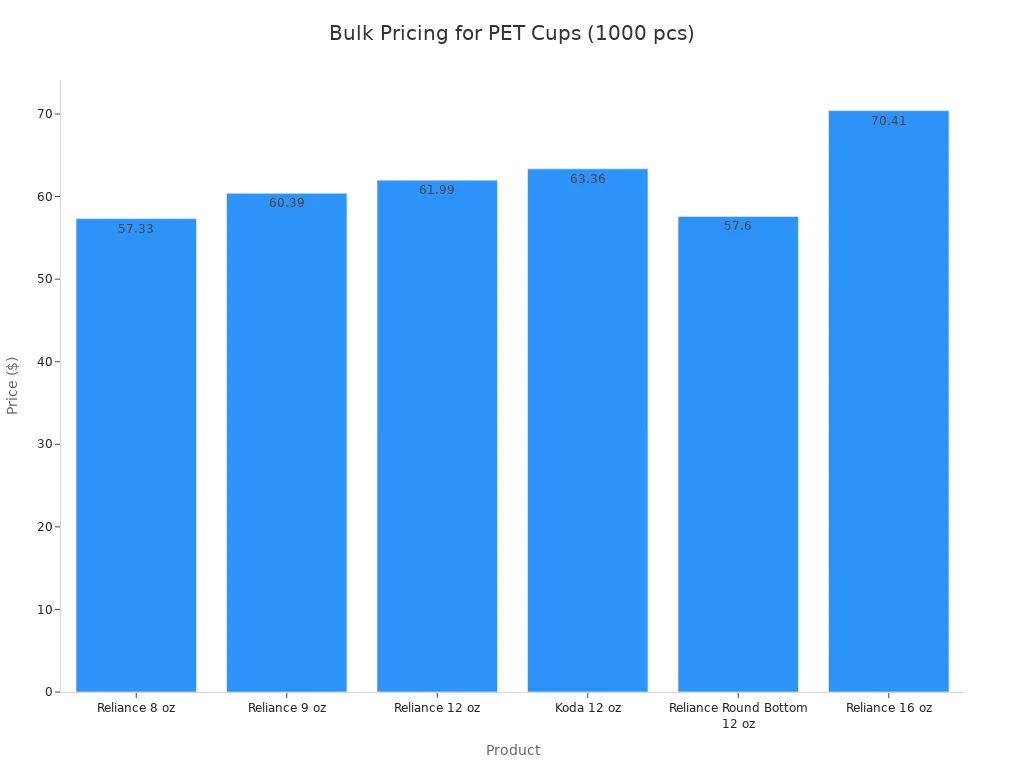
The premium look of PET justifies this investment for branded beverages. Customers perceive crystal-clear cups as higher quality, supporting premium menu pricing. For businesses selling smoothies, iced coffee, or specialty lemonades, the visual payoff outweighs the modest cost increase.
Recyclability and Environmental Impact
Sustainability concerns increasingly shape packaging choices. PET plastic cups offer a clear advantage in recyclability. These cups are 100% recyclable and can incorporate recycled content, supporting a circular economy. The recycling process for PET is well-established across municipal programs, with collection infrastructure widely available.
Polypropylene recycling exists but operates at lower rates in most communities. This disparity matters for brands tracking their environmental impact. Choosing PET demonstrates environmental friendliness without sacrificing performance. The material’s recyclability strengthens its position as an eco-friendly option for cold beverage service.
COPAK manufactures pet cups from recycled materials, closing the loop on sustainable materials. This approach reduces virgin plastic demand while maintaining food-grade safety standards. For eco-conscious brands, the sustainability story of PET aligns with consumer expectations. The environment benefits from reduced landfill waste, and businesses gain a marketing advantage.
The sustainability equation favors PET across multiple dimensions. Its recyclability, recycled content potential, and established recycling infrastructure make it the responsible choice. While PP offers durability, its environmental footprint lags behind. Brands prioritizing sustainability should weigh these factors carefully when selecting cold beverage packaging.
Decision Guide for Specific Use Cases
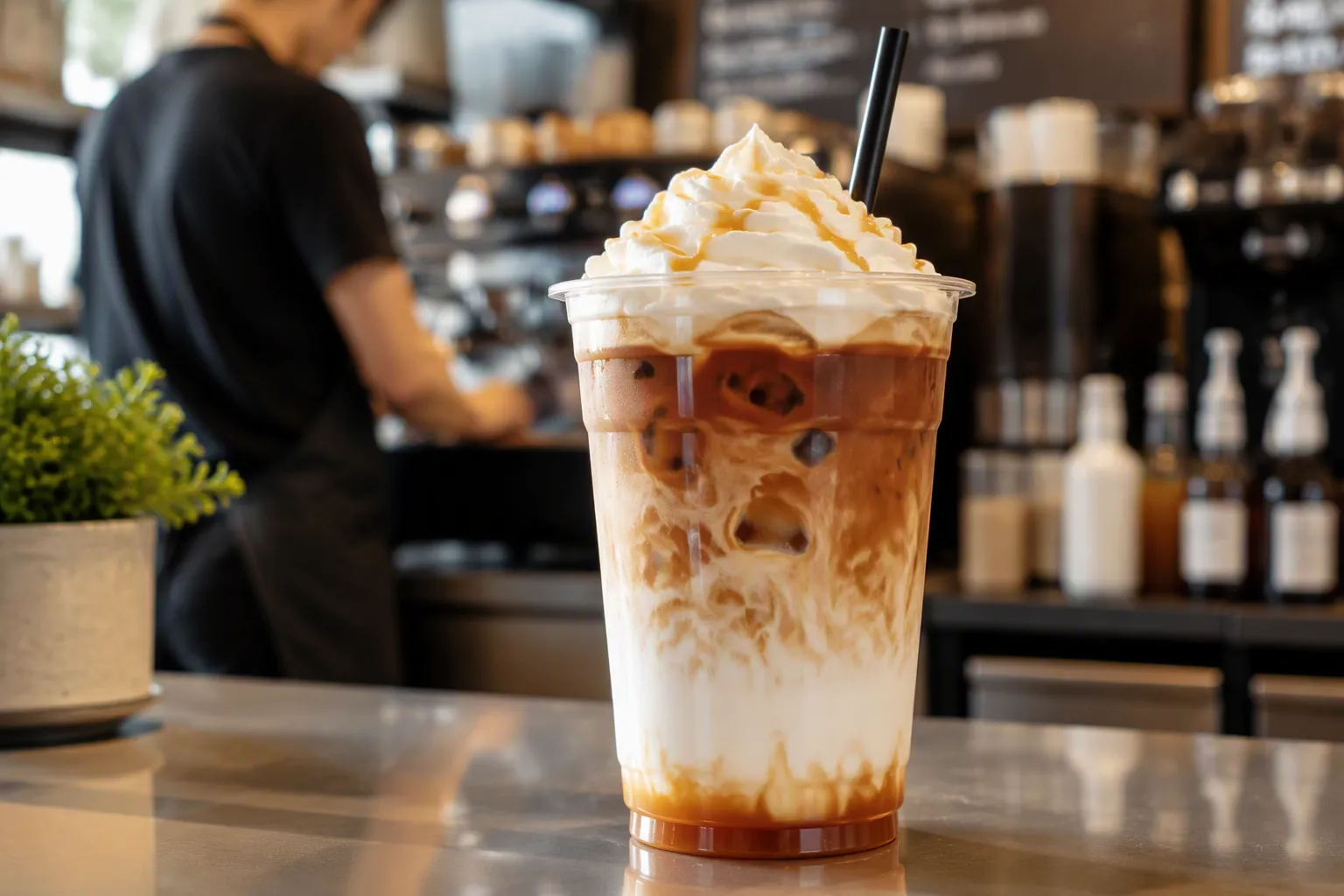
Selecting between PET and PP requires matching material properties to your specific service scenario. The right choice depends on whether you prioritize visual presentation, operational durability, or budget constraints. Each use case demands a different balance of these factors.
Best Choice for Iced Coffee and Smoothies
Premium iced beverages demand packaging that enhances the drinking experience. PET cups excel in this category because clarity directly influences perceived value. A layered frappuccino or a vibrant berry smoothie becomes a marketing asset when customers can see every ingredient. The glass-like transparency of PET transforms an ordinary drink into an Instagram-worthy product.
Coffee chains have standardized around specific cup sizes for iced offerings. The 16oz cup serves as the primary vessel for iced beverages in major chains. This size provides essential space for ice, milk, syrup, toppings, and visual layering. The extra capacity accommodates the volume that ice occupies while maintaining a satisfying portion size.
- 16oz cups are explicitly reserved mainly for iced beverages in coffee chains, distinguishing them from 8oz (premium hot drinks) and 12oz (standard takeaway coffee).
- For chain coffee brands specifically, 16oz is the size that supports large or iced beverages, confirming its prevalence in this segment.
- The 16oz cup is more common for iced coffee because it provides extra space needed for ice, milk, syrup, toppings, and visual layering—making it the practical choice for iced drinks in chains.
COPAK offers PET cups ranging from 3 oz to 24 oz, covering every portion requirement. The 16 oz and 20 oz sizes align perfectly with chain standards for cold beverages. These cups maintain structural integrity throughout service, resisting condensation damage and preserving the beverage’s temperature. For smoothie shops and coffee bars, PET delivers the premium presentation that justifies higher menu prices.
Best Choice for Events and High-Volume Use
Large gatherings present different priorities. Event organizers must balance cost control with guest experience. Polypropylene cups offer a lower price point and superior flexibility for high-traffic situations. The material’s resistance to cracking makes it suitable for outdoor venues, crowded concerts, and festival environments where rough handling occurs frequently.
PP plastic cups withstand stacking pressure and minor impacts without failure. This durability reduces replacement costs during events. A dropped case of polypropylene cups rarely produces damaged units. For operations serving thousands of drinks daily, this resilience translates into measurable savings.
However, brand image matters even at events. Corporate functions, product launches, and premium catered gatherings benefit from PET’s superior presentation. The crystal-clear appearance elevates the perceived quality of the beverage and the host brand. COPAK’s customization options, including up to 6-color logo printing, allow businesses to reinforce brand identity on every cup.
The sustainability conversation also influences event decisions. PET cups offer established recycling infrastructure, supporting circular economy goals. Polypropylene recycling exists but operates at lower rates in most municipal programs. For eco-conscious event planners, this recycling advantage strengthens PET’s position despite its higher upfront cost.
The decision ultimately depends on your priorities. Choose PET for visually-driven cold drinks where presentation drives revenue. Choose polypropylene when flexibility and cost efficiency outweigh aesthetic considerations. Evaluate your brand goals, environmental commitments, and budget constraints before committing to either material.
The pet cups vs pp cups decision hinges on priorities. PET excels in clarity and recyclability, making it the top choice for cold drinks where presentation matters. PP plastic cups offer superior flexibility and heat resistance, serving as a versatile, durable option. Polypropylene suits budget-conscious operations; PET supports sustainability goals. Both materials support recycling, though PET remains the stronger eco-friendly option. Choose PET for premium beverages; choose pp cups for versatility. Evaluate brand image, environment, and budget before deciding.
FAQ
What is the difference between pp and pet cups for cold drinks?
The difference between pp and pet cups for cold drinks centers on presentation. PET cups offer clarity. The other cups provide flexibility. The pet cups vs pp cups decision depends on priorities.
Which material offers better sustainability and recycling?
This material supports full recycling. Polypropylene recycling exists at lower rates. Sustainability advantages favor this option. PP cups offer flexibility. Polypropylene sustainability recycling lags.
Post time: Sep-01-2026