



Key Takeaways
Choose a cup with a thick wall and a smooth rolled rim. This design resists cracking and makes scooping easy.
Test the lid and cup together before ordering. A quick leak check and freezer trial prevent messy surprises.
Set clear freezer rules for temperature and stacking. Steady cold and proper stacking keep ice cream fresh and safe.
PET Ice Cream Cup Design Basics
Cup Shape and Wall Thickness
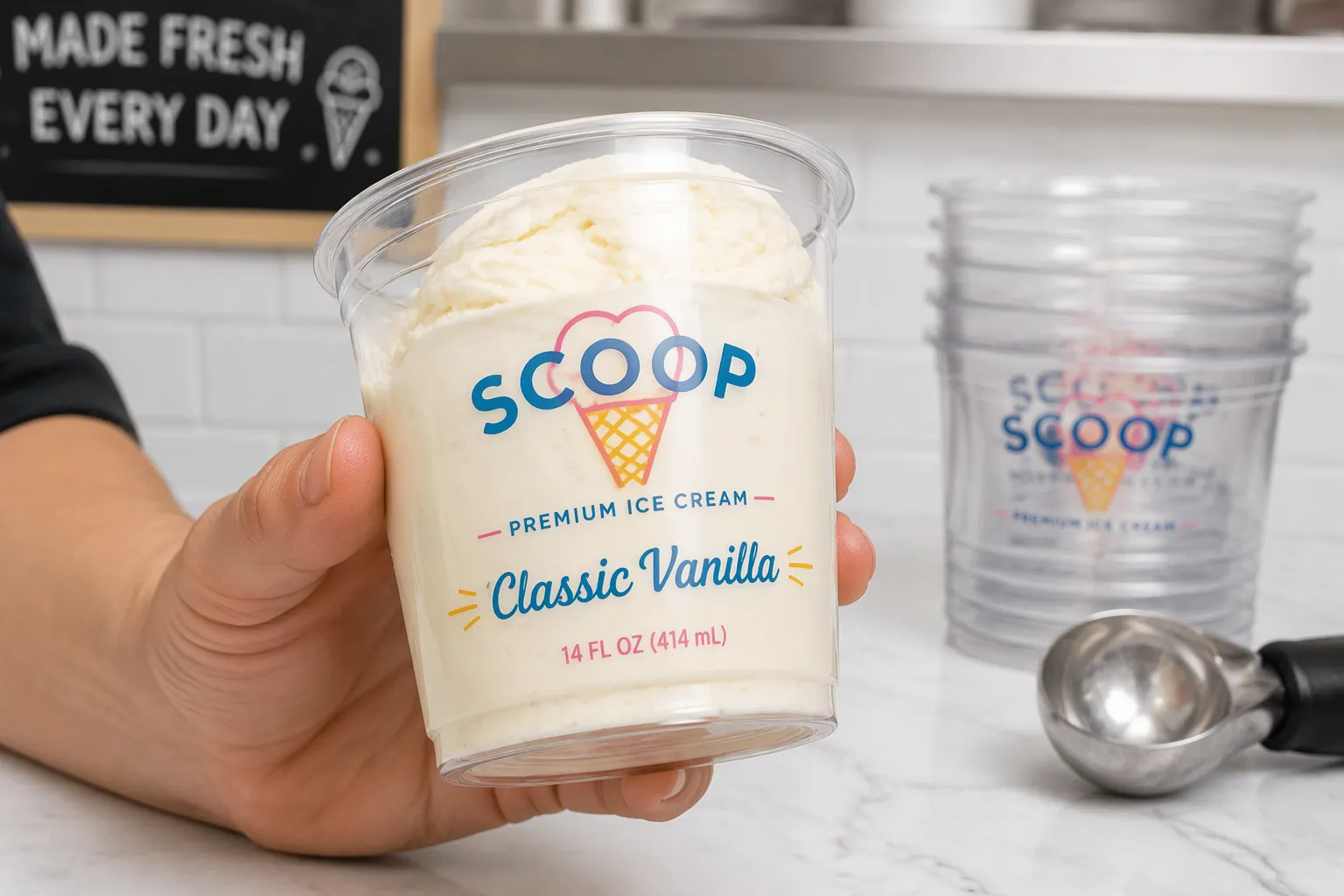
Cup geometry and wall thickness determine how a pet ice cream cup handles freezing, scooping, and service. A thicker wall adds rigidity and resists cracking when the cup moves from freezer to counter. The shape also guides scooping comfort. A round tub with a smooth interior lets staff press a scoop without catching edges. Clarity matters too. Clear walls let customers see the ice cream, which supports impulse sales and sampling.
Wall thickness affects working capacity. A heavier gauge reduces usable volume slightly, so buyers should confirm the fill line against the stated size. The same principle applies to headspace. Frozen ice cream expands, and the cup needs room above the fill line to prevent overflow and lid lift. Buyers comparing paper versus plastic ice cream containers should note that the material keeps a consistent wall and a visible fill level. A second working capacity check belongs in the freezer trial, where staff fill cups to the intended line and observe the result. Headspace also affects how the lid seats on the rim.
COPAK PET Cups illustrate one option. They are food-grade, BPA-free, and available from 3 to 32 oz with a smooth rolled rim. The rolled rim adds strength at the contact point and gives a clean edge for the closure. Buyers should request food contact compliance documentation and confirm food contact certifications before finalizing an ice cream container rfq. A sample run on the shop’s own ice cream reveals how the cup performs under real scooping pressure.
Printability and Branding
Print capability turns a plain cup into a branding surface. PET cups accept up to 6 colors of printing, which covers logos, flavor names, and promotional graphics. Retail freezers reward a clear brand block. Sampling programs benefit from printed portion cups that carry the shop name into the customer’s hand. Print quality also signals care and consistency to wholesale buyers.
Branding also supports ice cream packaging decisions at the chain level. A consistent printed cup across sizes builds recognition and simplifies reordering. Shops should test print placement against the fill line and the lid area. Graphics near the rim can distort on a curved surface. A proof on the actual cup confirms legibility before a full run. A simple mockup on a blank cup catches layout problems early.
Design choices feed directly into ice cream container selection. Shape, wall, print, and rim all interact with the lid system. A cup with a smooth rolled rim pairs predictably with matching lids and a secure seal. Buyers should treat the cup and lid as one unit during evaluation. That approach protects the product and the ice cream packaging investment. A well-matched pet ice cream cup also reduces rework at the packing station, where a poor seal wastes time and product.
Ice Cream Packaging Lid Fit and Seals
Lid Types and Sealing Options
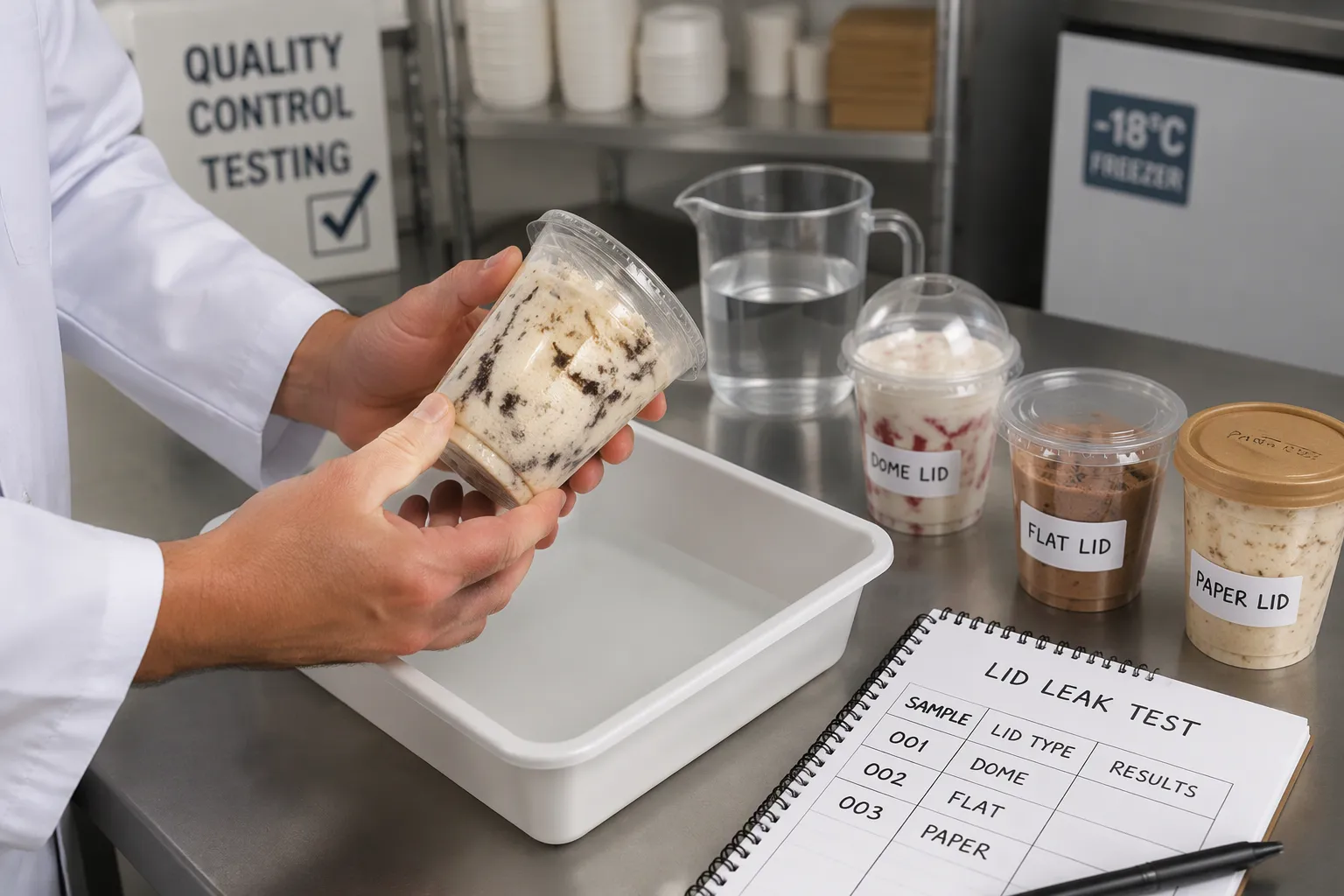
Lid choice shapes how a pet ice cream cup serves the customer. Dome lids leave room for tall scoops and toppings. Flat lids stack well, which suits frozen storage and delivery routes. Material matters as much as shape. Paper or plastic lids each bring tradeoffs. Paper lids offer a natural look, while pet plastic lids deliver clarity and a tight snap. Polypropylene lids add flexibility. Moisture-resistant construction protects the ice cream surface from frost and condensation.
A secure seal protects texture and flavor. Resealable lids let customers reopen the cup at home. Tamper-evident seals give retail buyers confidence. Sealing film creates a barrier for single-portion and sampling formats. Each option changes the closure strategy. Shops should match the closure to the serving occasion. A delivery order needs a stronger seal than an in-store tasting.
Compatibility and Leak Checks
Cup-and-lid compatibility deserves a test before any large order. Buyers should confirm that the lid snaps onto the rolled rim without force. A loose closure invites leaks and air gaps. A tight closure can crack the rim during freezing. Container-and-closure systems work best when one supplier makes both parts. That pairing simplifies the ice cream container rfq and reduces mismatch risk.
A simple leak check reveals problems early. Staff fill sample cups with water, apply the lid, and invert them over a tray. A short rest shows whether the seal holds. A freezing and temperature difference cycling test then simulates real storage. Cups move from freezer to counter and back again. The closure should stay seated through each cycle. Buyers should also confirm food contact certifications for every lid, membrane and tamper evidence component.
A production-equivalent validation plan turns these checks into a routine. The plan should mirror the shop’s actual fill level, headspace, and handling. Staff record results for each lid type and review them before committing. This step protects the ice cream packaging budget and the brand. A failed seal costs more than a careful trial. The same discipline applies to paper versus plastic ice cream containers, where lid fit varies by format. A validated closure keeps every cup of ice cream in perfect condition.
Ice Cream Container Storage and the Frozen Product-Package-Process System
Temperature and Stacking Loads
Storage ties temperature control, stacking efficiency, and portion sizing into one frozen product-package-process system. A round tub stacks predictably and uses freezer space well. Portion sizing shapes the plan: 4–8 oz suits tasting, and 8–16 oz suits full servings. Each ice cream container must hold its shape under load. A stable ice cream container protects the ice cream below it.
Freezing drives the storage rules. A cold chain with steady temperature protects texture. Temperature swings soften the ice cream and stress the seal. Staff should set clear freezer rules and check them daily. The closure must stay seated through every freezing cycle. A loose closure lets frost reach the surface. The frozen product-package-process system fails when any one link drifts.
Shelf Life and Freshness
Shelf life depends on moisture-resistant lids, stable construction, and disciplined storage. A tight seal blocks frost and preserves flavor. The closure and the ice cream container work as one barrier. Buyers should confirm the seal on every lid style before a full run. A production-equivalent validation plan turns these checks into routine practice.
Working capacity and headspace affect freshness. Ice cream expands during freezing, so the fill line needs room. A recommended working capacity leaves enough headspace for expansion. Staff should measure working capacity against the stated size. The measured finished-product density guides the fill target. Too little headspace lifts the closure. Too much headspace wastes freezer space. The freezing and temperature difference cycling test confirms the balance.
Recyclability supports ice cream container selection. PET is 100% recyclable, and recycled-PET options exist. Buyers can note these options in the ice cream container rfq. Frozen distribution rewards a light, stackable ice cream container. Filling and hardening compatibility belongs in every trial. A validated ice cream container system protects the ice cream and the packaging investment.
Match the ice cream container to the dessert and brand. Verify lid fit and seal before committing. Set clear storage rules for temperature and stacking. For ice cream container selection, follow this framework:
- Trial the ice cream cup with real product.
- Run a leak check.
- Confirm freezer performance.
This packaging approach protects every ice cream serving.
FAQ
Shops often raise practical questions about ice cream packaging before a first order. A few ice cream container questions come up repeatedly.
How does a shop choose the right ice cream container size?
Portion sizing guides the choice. COPAK PET Cups range from 3 to 32 oz. Small cups suit tasting, larger cups suit full servings. Test the ice cream container with product.
Which lid style suits ice cream service?
Dome lids fit tall scoops and toppings. Flat lids stack for frozen storage. Confirm the lid snaps onto the rolled rim without force. Test ice cream container and lid pairing.
How should staff check seals and storage for ice cream?
Fill cups with water, seal, and invert. Run freezing cycle test. Keep freezer temperature steady. Store each ice cream container below the load limit and check ice cream freshness daily.
Post time: Nov-18-2026