



Disposable Milk Tea Cups - China Manufacturer
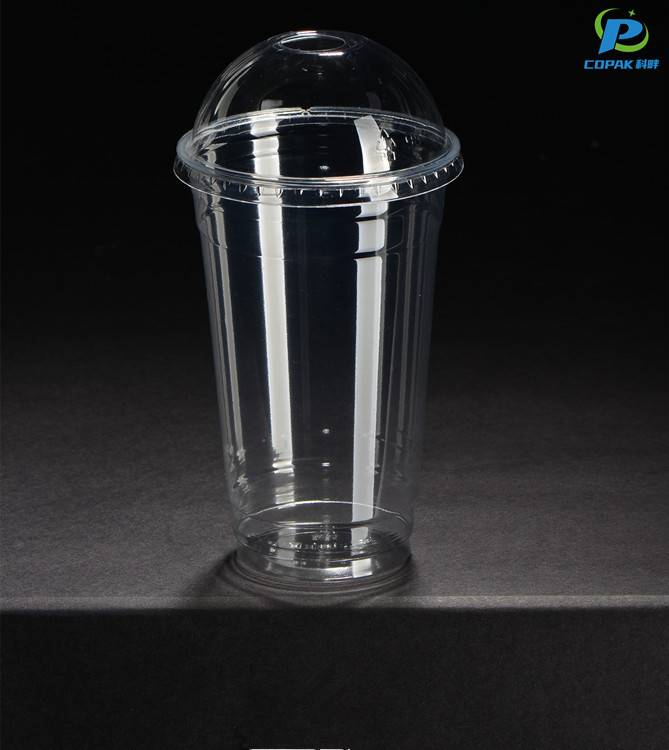
As a {China} {Manufacturer}, I know what B2B buyers need when sourcing packaging for hot beverages. I offer {Disposable Milk Tea Cups} that balance sturdy rigidity with light weight, perfect for take-away shops, bubble tea chains, and cafés. They are leak-proof and feature smooth rims, with comfortable sleeve compatibility and multiple capacity options. I can tailor every order with logo printing, color lids, and branded sleeves to boost your brand. Minimums are flexible for new outlets, and my lead times stay short to keep your rollout on track. Materials are food-grade, BPA-free, and easy to recycle, with full sanitary controls to ensure safety across mass production. Shipping from our factory in {China} means lower costs and faster delivery for global buyers. If you’re searching for a dependable partner who understands the market, I’m ready to discuss volumes, customization, and sustainable options for {Disposable Milk Tea Cups}.


Disposable Milk Tea Cups Industry Giant From Concept to Delivery
From initial concept to on-time global delivery, our team turns milk tea cup ideas into market-ready products. With integrated R&D, tooling and in-house prototyping, we guide material selection—PLA compostable, PCR or virgin PET/PP, double-wall constructions—and print technologies to match brand aesthetics and regulatory requirements. Flexible OEM/ODM services accommodate bespoke sizes, lid types, barrier coatings and full-color branding while prioritizing food-safe, recyclable and biodegradable options. Robust production lines, rigorous quality control, international certifications and experienced logistics partners ensure scalable volumes, competitive lead times and compliant export documentation. We support pilot runs, sample approval, pack optimization and after-sales follow-up to minimize risk and accelerate time-to-market for café chains, distributors and retail programs. Buyers seeking a reliable, sustainable supply chain partner for disposable milk tea cups will find end-to-end consistency, cost-efficiency and predictable delivery performance.
| Stage | Typical Materials | Avg Lead Time (days) | Typical Daily Throughput (units/day) | Energy Use (kWh / 1,000 units) | GHG Emissions (kg CO2e / 1,000 units) | Typical Defect Rate (%) | Material Recyclability (theoretical %) | Post-Consumer Recovery Estimate (%) | Common Standards / Compliance |
|---|---|---|---|---|---|---|---|---|---|
| Concept & Design | Paperboard (PE-lined), PP, PET, PLA prototypes; inks & adhesives | 30–120 | — (project phase) | 0–5 | 1–5 | — | Material-specific (paper with lining: 30–60% effective recovery potential) | 5–25 | Food contact safety testing; material compliance (food-contact regulations) |
| Materials Sourcing | Polymer pellets (PP/PET), paperboard with lining, PLA, inks, additives | 7–30 | — | 5–15 | 10–30 | — | PP/PET: 80–95% theoretical; coated paper: 40–80% | 5–20 | Material declarations; REACH/chemical compliance where applicable |
| Pre‑production & Tooling | Mold steel, tooling components, pilot materials | 14–60 | 20,000–200,000 | 1–5 | 2–6 | 0.5–2.0 | Not applicable (tooling materials recyclable at end of life) | — | Quality control protocols; pilot validation tests |
| Forming & Molding | PP, PET, PLA (thermoplastic cups) | 0–1 (continuous) | 50,000–300,000 | 10–30 | 15–35 | 0.5–3.0 | PP/PET: 80–95% | 5–25 | Food-contact compliance; process quality control (dimensional, seal tests) |
| Lids & Accessories | PP/PET lids, sealing films, straws (paper/PLA) | 0–2 | 40,000–200,000 | 8–20 | 8–20 | 0.5–2.0 | PP/PET lids: 80–95% | 5–30 | Sealing integrity tests; food-contact material compliance |
| Printing & Decoration | Water-based inks, UV inks, varnishes | 0–1 | 40,000–150,000 | 2–6 | 2–6 | 0.5–4.0 | Inks may affect recyclability; use recyclable-ink certifications | 5–25 | Ink safety & migration tests; print quality standards |
| Sterilization & Assembly | Steam/UV/heat-seal equipment; sealing films | 0–1 | 30,000–150,000 | 5–15 | 3–10 | 0.2–1.0 | Sealed composites reduce recycling quality | 3–15 | Hygiene & sterilization protocols; food-safety certifications |
| Packaging & Palletizing | Corrugated board, shrink/stretch film, pallets | 0–1 | Matches production | 1–4 | 1–5 | 0.1–0.5 | Cardboard: 70–90% recyclable; film: lower unless recycled independently | 30–70 (packaging materials) | Packaging material compliance; labeling for recycling |
| Distribution & Delivery | Transportation (truck/container), warehousing | 2–14 | — | 5–20 (transport eq. kWh/1,000) | 5–30 | 0.1–0.5 (damage) | No change to material recyclability | Varies by region: 5–40 | Distribution safety & handling standards; cold-chain not typically required |
| End‑of‑Life & Recycling | Post-consumer collection streams; sorting facilities | Variable (weeks–months) | — | 10–40 (recycling processes / avoided production) | -10 to 40 (net depends on recycled content and avoided virgin production) | Contamination rates 10–40% | PP/PET: 80–95% theoretical; coated paper: 30–70% | 5–30 (typical real-world recovery for cups/film streams) | EPR frameworks; municipal recycling standards; circularity reporting |
Related Products


Disposable Milk Tea Cups Products Your Trusted OEM Partner
Top Selling Products






- Related Blog
- Reviews
- Reviews
