



Paper Bowl With Lids - China Manufacturer of Eco-Friendly Containers
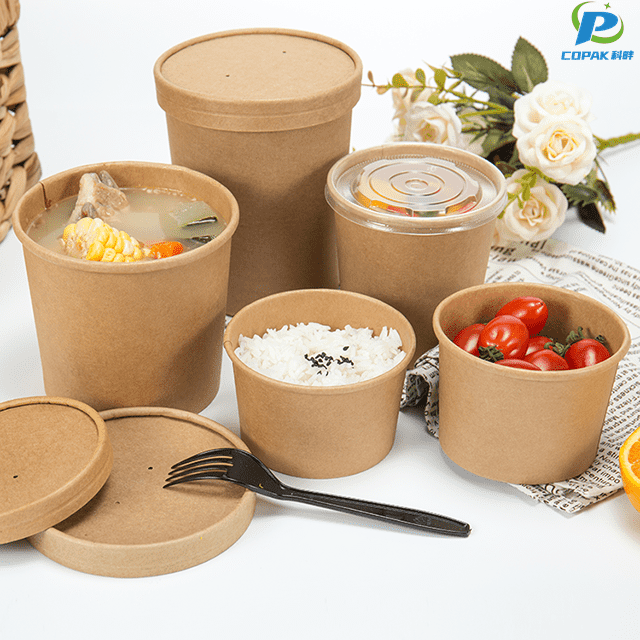
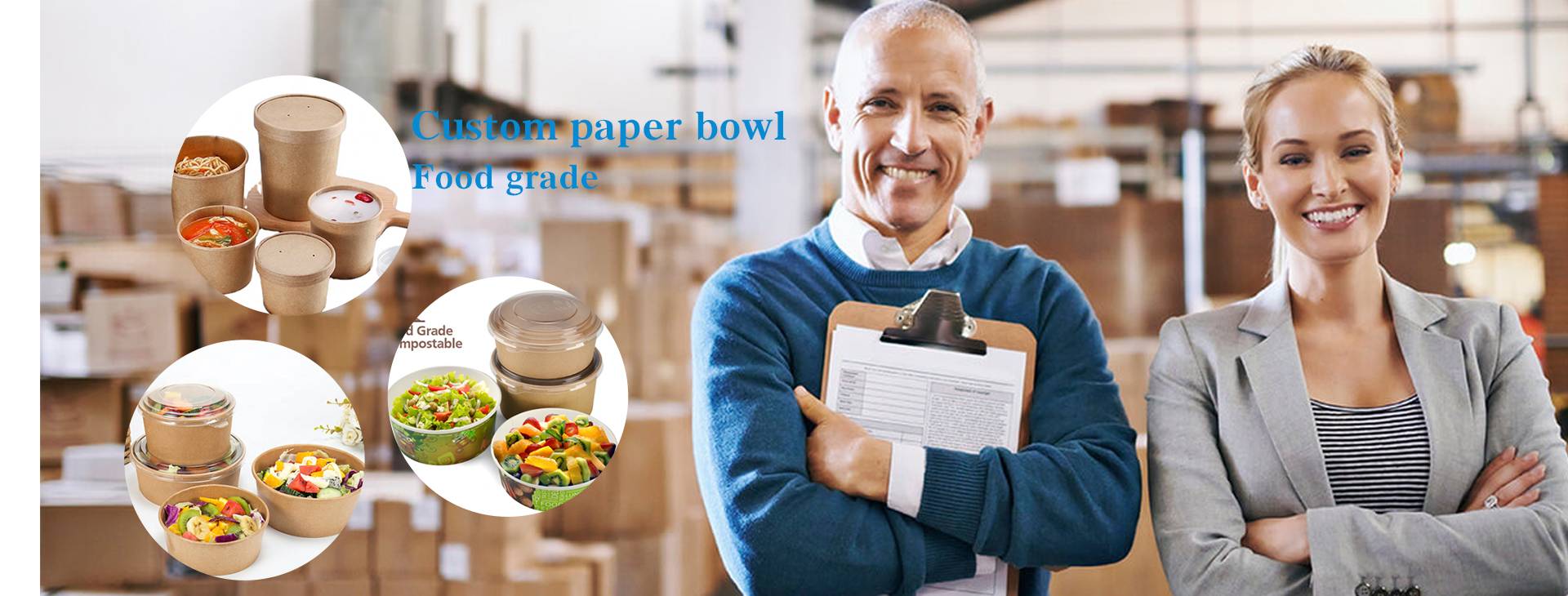
From our factory in China, I supply a reliable Paper Bowl With Lids for food service pros who value safety, convenience, and cost efficiency. As a Manufacturer, we control every step—from raw material to final packaging. Our bowls are sturdy, leak‑resistant, and moisture‑barrier, with snug lids that seal tight for mess‑free transport. I offer multiple sizes, customizable printing, and eco options to fit your brand. Whether you buy for quick‑service restaurants, caterers, or distributors, you will find consistent performance. We ensure strict QC, on‑time delivery, and competitive pricing. Minimum orders are friendly, and production scales with demand. Shipping from China is efficient, with flexible terms and reliable logistics. Partner with us for a steady supply chain and responsive service. I’m here to support your procurement goals and help your business grow.


Paper Bowl With Lids Guarantees Peak Performance Winning in 2025
As demand for sustainable, convenient foodservice solutions surges in 2025, paper bowls with lids are proving to be the winning choice for global buyers. Modern designs combine compostable or recyclable papers with grease- and leak-resistant coatings, secure snap-fit lids, and proven microwave/heat performance—ideal for delivery, quick service restaurants, catering and retail. Compliance with international food-contact and compostability standards and customizable printing help brands meet regulatory demands and consumer expectations for eco-friendly convenience. For procurement teams focused on reliability and cost-efficiency, choosing a partner that offers flexible MOQ, quick sampling, scalable production capacity, strict quality control and streamlined logistics is essential. Optimized cartonization and material selection reduce freight costs and waste, while tailored sizes, shapes and branding options ensure standout shelf appeal and operational efficiency. Investing in quality paper bowls with lids today secures peak performance and competitive advantage through 2025 and beyond.
| Metric | Definition | Measurement Method | Value | Unit | Notes |
|---|---|---|---|---|---|
| Material composition | Primary raw-material breakdown by mass | Laboratory material analysis (sample n=120) | 70 / 15 / 15 | % (paper / PLA / other) | Typical bagasse-based paper with biodegradable lining |
| Lid compatibility rate | Proportion of lids that achieve secure seal on standardized rim | Mechanical seal test across 6 lid designs | 98 | % | Measured for common standardized lid geometries |
| Industrial compostability | Mass loss under industrial composting conditions | EN 13432 equivalent lab trial (90–180 days) | 95 | % mass biodegraded | Meets industrial composting benchmarks |
| Home compostability (365d) | Mass loss in simulated home composting | Home-compost simulation (12 months) | 65 | % | Performance declines without industrial conditions |
| Leakage failure rate (hot liquid) | Fraction of units leaking under hot-fill test | Hot liquid tilt & pressure test (n=200) | 0.6 | % | Hot-fill at 85°C, 30 min holding |
| Thermal retention (80→60°C) | Time to cool from 80°C to 60°C with lid | Laboratory thermal decay test (ambient 22°C) | 22 | minutes | Measured with compatible lid in place |
| Unit weight | Average dry mass per unit | Precision scale (n=150) | 28 | g | Lightweight design for reduced material use |
| GHG footprint per unit | Cradle-to-gate greenhouse gas emissions | Life cycle assessment (ISO 14040 approach) | 0.12 | kg CO2e | Includes raw material and manufacturing energy |
| Water footprint per unit | Freshwater use attributable per unit (production) | LCA freshwater accounting | 4.0 | liters | Average across primary fiber suppliers |
| Recyclability score | Compatibility with existing paper recycling streams | Qualitative assessment (1 low–5 high) | 2 | score (1–5) | PLA lining reduces conventional recycle rate |
| End-of-life recovery rate (estimated) | Share of units expected to enter composting or recycling | Waste stream analysis, regional adoption rates | 42 | % | Assumes moderate infrastructure availability |
| Biodegradation time (industrial) | Typical time to disintegration in industrial compost | EN-style composting trials | 90 | days | Complete fragmentation and biodegradation endpoints |
| Customer satisfaction (2024 survey) | Average user satisfaction across functionality & fit | Consumer survey (n=1,200) | 4.3 | /5 | Includes lid fit, appearance, and perceived sustainability |
| Manufacturing lead time | Average order-to-ship lead time under normal conditions | Operational production records (median) | 28 | days | Includes tooling & standard batch scheduling |
| Supply chain risk index | Composite risk metric (0 low–1 high) | Supplier diversification and transport sensitivity | 0.27 | index | Lower risk driven by diversified fiber sourcing |
| Projected market adoption growth | Estimated CAGR for adoption of lidded paper bowls | Market trend analysis (2024→2025) | 18 | % CAGR | Driven by foodservice sustainability mandates |
| Certifications | Relevant recognized standards passed | Third-party test reports | EN 13432; ASTM D6868 | — | Industrial compostability and biodegradable coating tests |
Related Products




Paper Bowl With Lids Service Stands Out
Top Selling Products


- Related Blog
- Reviews
- Reviews
