



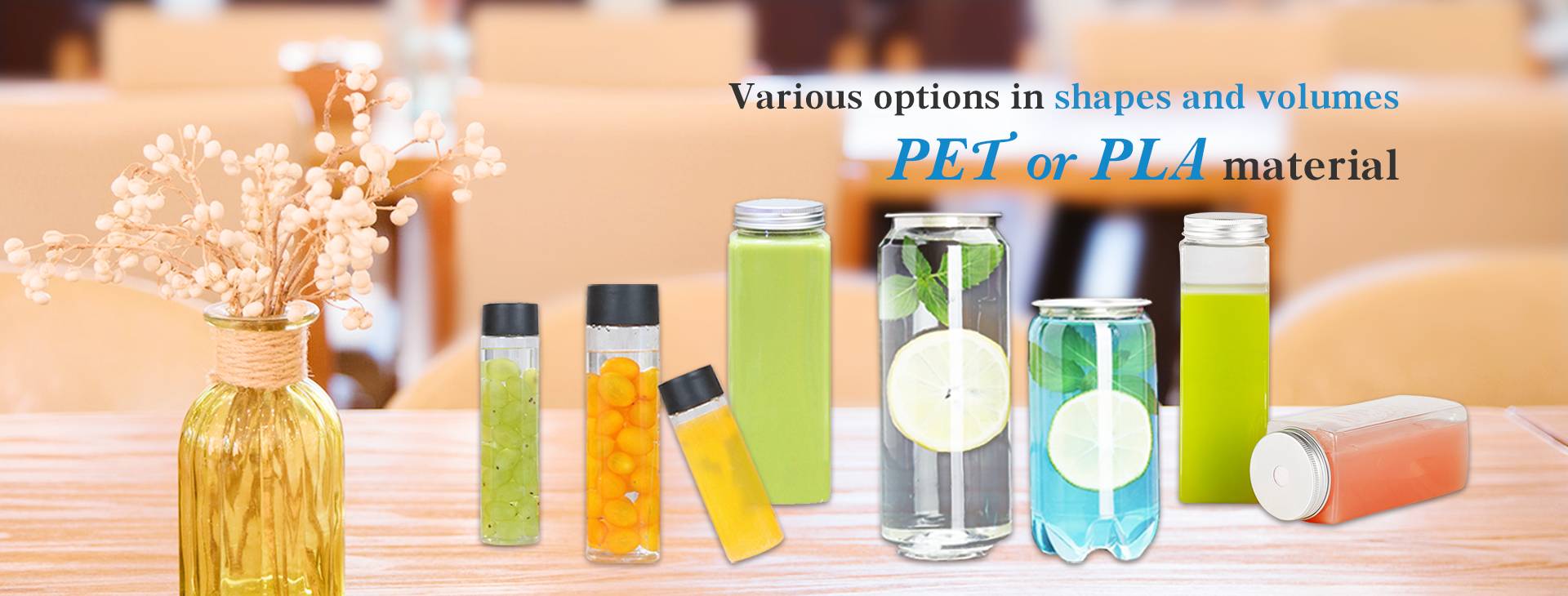
PET Bullet Bottle - China Manufacturer | High-Quality PET Containers
As a China-based manufacturer, I know what B2B buyers want when sourcing PET Bullet Bottle packaging. I stand by reliable supply, consistent weight, and clear, chemical-free PET that withstands cold and heat. My team can tailor the Bullet bottle with various neck finishes, volumes, and color caps to fit your line. I ship worldwide with fast lead times, strict QC, and carton-level traceability. You’ll get sampling options, competitive MOQs, and documentation for compliance. For brands seeking a compact, premium look, this bottle delivers a strong shelf presence without breaking your budget. We emphasize recyclability and food-grade safety, meeting international standards. If you are China-based or seeking a trusted supplier, I’m ready to discuss volumes, pricing, and private labeling. Let me show you how PET Bullet Bottle can improve your packaging mix, reduce costs, and speed your time to market.


PET Bullet Bottle Leads the Global Market Service Backed by Expertise
PET bullet bottles have emerged as a leading choice for global brands seeking lightweight, shatter-resistant and recyclable packaging. Backed by deep industry expertise, engineered PET formulations deliver excellent clarity, chemical resistance and barrier performance while supporting high-speed filling lines. Precision tooling and strict quality control ensure consistent wall thickness, reliable threading and airtight seals; products are manufactured to meet international standards including FDA and EU food-contact regulations. Flexible OEM options, custom colors, sizes and labeling solutions make these bottles ideal across personal care, pharmaceutical, food and industrial applications. Scalable production capacity, streamlined logistics and proactive after-sales support enable predictable lead times and cost-efficient supply. For global buyers prioritizing performance, sustainability and service, PET bullet bottles offer an optimized packaging solution that reduces weight, increases shelf appeal and simplifies recycling.
{ PET Bullet Bottle Leads the Global Market Service Backed by Expertise}
| Region | Market Share (%) | Annual Production (billion bottles, 2024 est.) | 2024–2030 CAGR | Dominant Application | Avg 500 ml Bottle Weight (g) | rPET Content (%) | Typical Capacity Range (ml) | Regulatory / Food-Contact Reference |
|---|---|---|---|---|---|---|---|---|
| Asia‑Pacific | 50% | 250 | 4.2% | Beverages (still & carbonated) | 12 g | 10% | 200–2000 | China GB food-contact standards; national regulations across markets |
| North America | 20% | 100 | 2.5% | Beverages & water | 10 g | 15% | 250–1500 | US FDA food-contact regulation (e.g., 21 CFR 177.1630 for PET) |
| Europe | 18% | 90 | 1.8% | Beverages + growing rPET packaging | 9 g | 35% | 200–1500 | EU food-contact legislation (Reg. (EU) No 10/2011) and EPR-driven targets |
| Latin America | 7% | 35 | 3.1% | Beverages & household liquids | 13 g | 8% | 300–2000 | Regional food-contact rules; examples include national ANVISA-type frameworks |
| Middle East & Africa | 5% | 25 | 3.6% | Bottled water & beverages | 14 g | 5% | 250–2000 | Local GCC/GSO and national food-contact regulations |
| Notes: Global production estimate ≈500 billion PET bottles (2024 est.). Avg 500 ml bottle weights reflect common lightweighting ranges by region; exact weights vary by design. rPET content indicates typical filled-bottle polymer mix on market; many regions moving toward higher recycled content driven by regulation and voluntary targets. CAGR values are indicative industry projections for the 2024–2030 period. | ||||||||
Related Products


PET Bullet Bottle Guarantees Peak Performance Your End-to-End Solution
Top Selling Products






- Related Blog
- Reviews
- Reviews
