



China PET sauce jar Manufacturer - Premium PET sauce jar
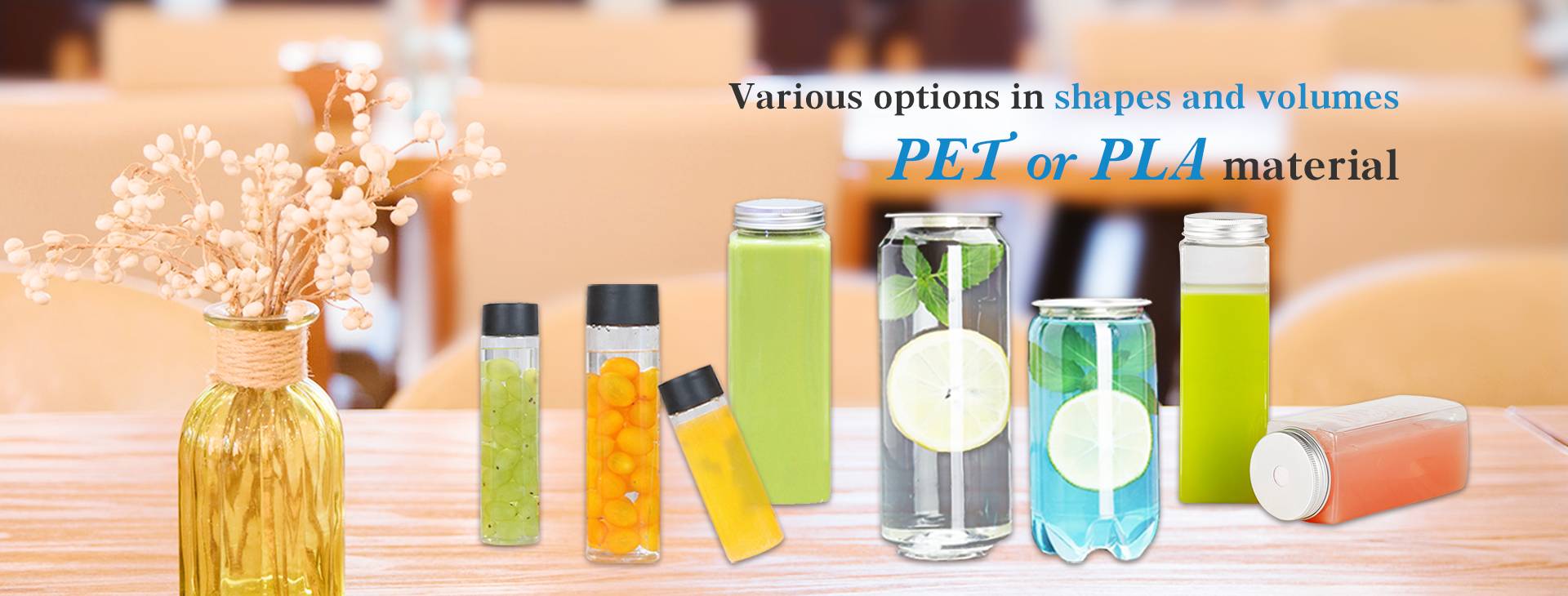
As a sourcing partner and proud founder of our {Manufacturer} in {China}, I present the {PET sauce jar}—a reliable choice for food brands eyeing scalable packaging. This jar is made from food-grade PET, lightweight yet sturdy, offering excellent impact resistance and clarity to showcase sauces from chili oils to creamy dressings. I offer a range of capacities and neck finishes, with tamper-evident seals and easy-to-use flip-top or screw caps. Our team runs QA tests for safety and odor control; durable caps minimize leaks during transport. We provide ODM/OEM options: custom printing, labeling, and color options to align with your brand identity. We keep tight QA with SGS or equivalent tests; lead times are short for B2B buyers who scale production in China or export. If you want high-volume, cost-effective packaging that reduces freight while protecting product, I’m here to help you select the right {PET sauce jar} solution for your market.


PET sauce jar Factory From Concept to Delivery
From initial concept to on-time delivery, a PET sauce jar factory streamlines every step to meet the needs of global buyers. Your idea is translated into optimized jar designs with CAD and rapid prototyping, followed by precision tooling and PET blow-molding. Options include multilayer barrier solutions, UV and aroma protection, tamper-evident neck finishes, custom closures, lightweighting for cost and carbon reduction, and full-surface or shrink-sleeve decoration to protect and elevate brand presentation. Production emphasizes food-contact safety and consistency through inline inspection, laboratory testing (drop, migration, OTR/CO2), and adherence to major international standards. Flexible MOQs, scalable capacity, coordinated filling partners, tailored secondary packaging, and experienced logistics planning ensure predictable lead times and secure shipment. Early collaboration shortens time-to-market, optimizes total landed cost, and preserves product integrity from prototype to shelf.
PET sauce jar Factory From Concept to Delivery
| Production Stage | Typical Duration | Machine / Process | Key Controls | Material Spec | Typical Jar Volumes (ml) | Wall Thickness (mm) | Cycle Time (s) | Typical Reject Rate (%) | Quality Standards | Sample Lead Time |
|---|---|---|---|---|---|---|---|---|---|---|
| Concept & Requirements | 1–2 weeks | Design (CAD), specification drafting | Functional fit, fill line, closure compatibility | Food‑grade PET, IV 0.70–0.85 dl/g | — (concept phase) | — | — | — | Design review within 3–7 days | |
| Prototype & Sampling | 2–4 weeks | 3D print, soft tooling, sample molds | Dimensional check, cap fit, user testing | Prototype materials: PETG/PLA or prototype PET | 120, 250, 500 | 0.6–1.6 | N/A (prototype) | Visual and dimensional tolerance ±0.2 mm | 7–21 days depending on complexity | |
| Tooling & Mold Making | 4–8 weeks | CNC, EDM, steel mold fabrication | Mold tolerance, cooling balance, cavity consistency | Hardened steel mold; surface finish Ra 0.8–1.6 μm | Supports planned volumes: 120–1000 | Design dependent, typical 0.7–1.6 | N/A | Mold tolerance ±0.05 mm per critical dimension | Mold trial samples: 10–14 days | |
| Pre‑production Run | 1–2 weeks | Pilot runs on production ISBM/SSM lines | First article inspection, process stability | Production PET, color masterbatch as specified | 120, 250, 500, 1000 | 0.8–1.5 | 2–4 s (single cavity); multi‑cavity effective per jar | 0.5–2.0 (initial) | Dimensional, leak & seal checks; FAI report | 5–10 days for pilot samples |
| Mass Production | Ongoing (per order schedule) | Injection Stretch Blow Molding (ISBM) / SSM | Inline vision, weight control, torque checks | Food‑grade PET, optional barrier layers (coating) | 120, 250, 500, 750, 1000 | 0.8–1.6 | 1.5–4 s depending on cavity count | 0.5–3.0 (steady state) | ISO 9001, food-contact compliance (FDA/EU), ASTM tests | Production samples: 3–7 days |
| Quality Control (Inline & Lab) | Continuous | Automated vision, leak testers, lab analysis | Leak rate, dimensional tolerances, barrier performance | Sampled material traceability, lot testing | Representative sizes across production range | Measured per sample, typical spec 0.8–1.6 | N/A | Target reject < 2%; corrective actions tracked | ISO 17025 lab methods; migration & tensile tests | Same‑day to 5 days for lab tests |
| Surface Treatment & Decoration | 1–3 days | Corona/flame, printing, silk‑screen, shrink sleeve | Adhesion tests, color match, registration control | Compatible inks & primers for PET food contact | All planned sizes | Surface treatment does not alter wall spec | N/A | Adhesion > specified threshold; color ΔE within tolerance | Adhesion/swatch samples: 2–4 days | |
| Cleaning & Sterilization (if required) | 1–2 days | Rinse, hot‑air drying, ozone or validated chemical rinse | Residue analysis, particulate monitoring | Validated agents compatible with PET and food use | All sizes | No change vs. production spec | N/A | Residue below acceptance limits; particle counts per spec | Verification samples: 24–72 hours | |
| Secondary Packaging & Palletizing | 1–2 days | Carton packing, shrink wrap, automated palletizing | Drop test, carton integrity, label accuracy | Protective materials: corrugated board, foam separators | Boxes sized to jar volume and fill configuration | N/A | N/A | Pallet safe loading; carton strength tests | Packing samples: 1–3 days | |
| Logistics & Delivery | 1–6+ weeks (depending on destination) | Sea/air/road transport; consolidated shipments | Documentation check, handling instructions, temperature control if required | Packaged product designed for normal transport conditions | All volumes | N/A | N/A | Transit damage target < 0.5%; claims process in place | Certificates & compliance documents prepared | Lead time varies by route: 3–42 days |
Related Products


PET sauce jar Where Service Meets Innovation Service Backed by Expertise
Top Selling Products



- Related Blog
- Reviews
- Reviews
