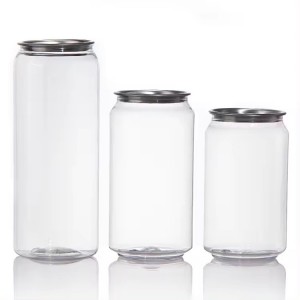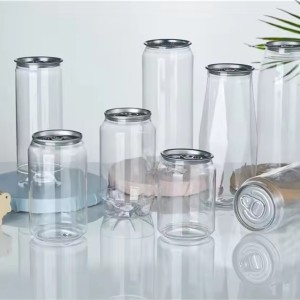


Ring pull PET soda can with EOE lid

Key Highlights for Beverage PET Cans
Beverage PET cans stand out as a versatile, consumer-centric, and sustainable packaging solution, with core advantages spanning functionality, branding, sustainability, and market adaptability. Below are the key highlights tailored to beverage manufacturers, brand owners, and global buyers:
1. Functional & User-Centric Advantages
- Lightweight & Unbreakable: Far lighter than aluminum/steel cans and glass bottles (30–50% weight reduction), reducing transportation costs and eliminating breakage risks—ideal for outdoor activities, vending machines, and convenience retail.
- Pressure Resistant: Can be engineered to withstand 3–4 bar internal pressure (for carbonated drinks like soda and sparkling water).
- Convenient for Multi-Serve Use: Compatible with resealable screw-on/flip-top lids or standard easy-open ends (EOE), catering to on-the-go consumption and reducing beverage waste compared to single-use packaging.
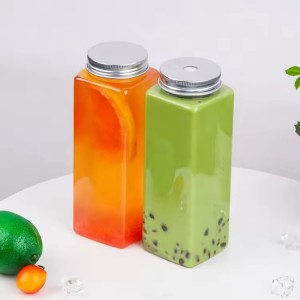
- Transparent & Visible: Crystal-clear PET showcases the natural color, texture, and purity of beverages (e.g., fruit juices, craft sodas), boosting consumer trust and product appeal on retail shelves.
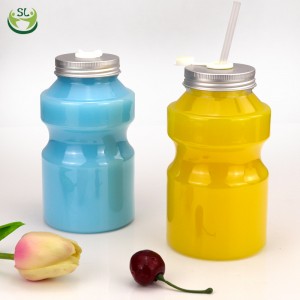
- Highly Customizable: Supports diverse molding (slim, tapered, square, or grip-friendly shapes) and high-definition food-safe printing, enabling brands to create unique, eye-catching designs that stand out from generic packaging.
- Regional Market Adaptability: Can be tailored to local consumption habits—e.g., 250ml small sizes for Southeast Asian affordability, 500ml on-the-go sizes for US/EU convenience stores, and 1L family packs for household use.
- Multi-Touchpoint Brand Exposure: Portable and reusable PET cans act as “mobile brand assets”—consumers carry them to gyms, offices, or picnics, extending brand visibility beyond retail shelves. Limited-edition themed designs further drive collectibility and social media buzz.
- 100% Recyclable & rPET Compatible: Food-grade recycled PET (rPET) can replace 30–100% of virgin PET feedstock, aligning with EU Single-Use Plastics Directive (25% rPET mandate by 2025) and US FTC Green Guides—critical for brands building ESG credentials.
- Low Carbon Footprint: Lightweight design cuts logistics-related emissions by 20–30% compared to glass/metal packaging. Monomaterial PET construction (no mixed materials like metal lids) improves recycling efficiency and reduces waste.
- Circular Economy Friendly: Supports advanced chemical recycling technologies that break down PET into original monomers for infinite reuse, avoiding downcycling and reducing reliance on fossil fuels. Bio-based PET (from sugarcane ethanol) is also an emerging low-carbon alternative.
- Compliant with International Standards: Food-grade PET is BPA-free, phthalate-free, and meets strict regulations (FDA GRAS, EU Regulation 10/2011, ANZFA) for food contact safety, eliminating consumer health concerns.
- Tamper-Evident & Freshness-Preserving: Optional tamper-proof seals and high-barrier coatings (e.g., EVOH) block oxygen and UV light, extending beverage shelf life (up to 12 months for pasteurized drinks) and meeting global food safety requirements.
- Multilingual Labeling Support: Can be printed with region-specific information (ingredients, recycling guides, certifications) in multiple languages, facilitating cross-border sales in EU, US, Asia, and other key markets.