



Paper Salad Bowls With Lids - China Manufacturer of Disposable Dishes
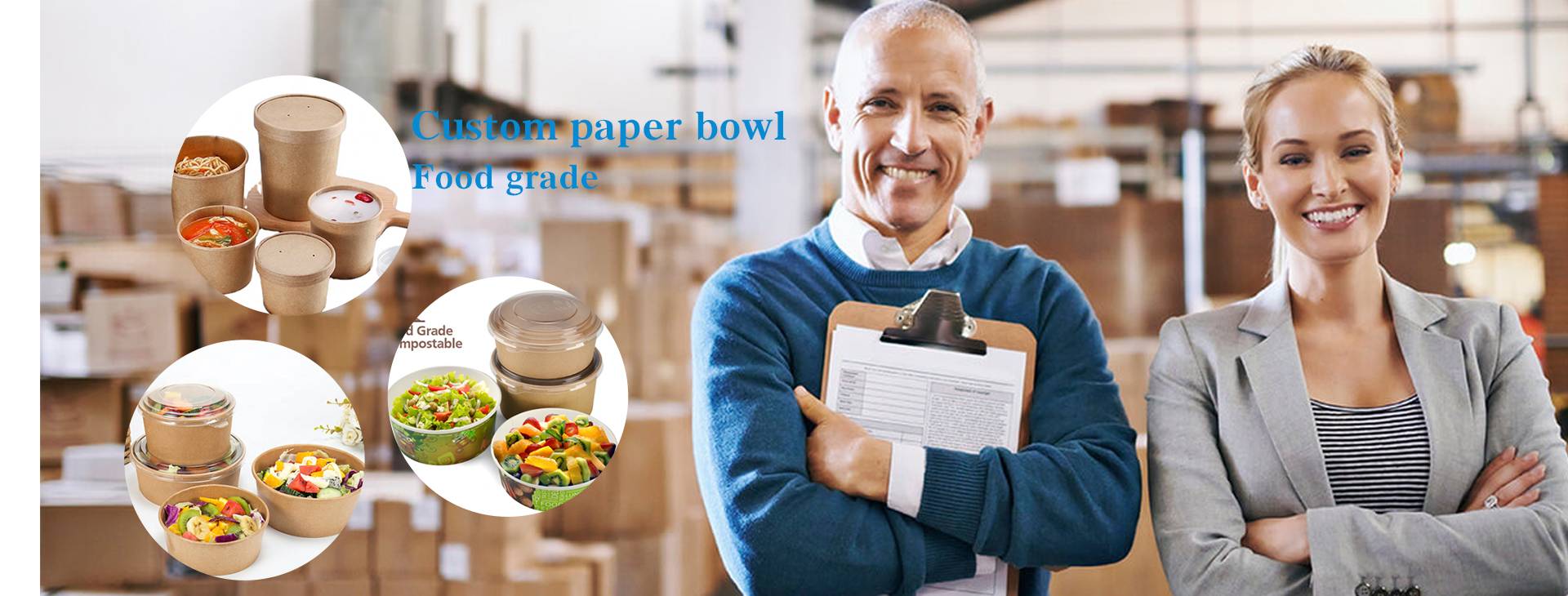
From my factory in China, I offer Paper Salad Bowls With Lids that meet the needs of foodservice buyers. As a Manufacturer, I know what B2B buyers want: strong packaging, reliable lids, and grease resistance. Our bowls are made from sturdy paperboard with leak-resistant lids. We supply in bulk to distributors and caterers, with customizable sizes, printing, and packaging. We ensure food-contact safety and eco-friendly coatings. Lead times are short and shipments arranged by ocean or air. Sourcing from a China manufacturer gives competitive pricing and steady quality. I oversee quality checks. Whether you need 5,000 or 500,000 units, we can scale to your schedule. Let me help you add value to your clients with Paper Salad Bowls With Lids.


Paper Salad Bowls With Lids Trusted by Pros Your End-to-End Solution
Durable paper salad bowls with secure lids are the practical choice foodservice professionals depend on for takeout, catering and events. Our kraft and white board bowls feature food-safe wet-strength linings (PLA or PE options), leak-resistant rims and snap-fit or domed transparent lids to keep salads fresh, dressings separate and presentations attractive. Lightweight yet sturdy, they stack efficiently, are microwave-safe in many formats, and meet compostable or recyclable expectations that matter to eco-conscious consumers. As an end-to-end partner we handle product development, custom sizes and printing, rigorous quality control and global logistics to ensure consistent supply, competitive pricing and timely delivery. Certified materials and scalable production support large-volume contracts for restaurants, meal-prep companies and event planners. Samples, MOQ flexibility and tailored packaging are available to simplify procurement—request a quote or sample to evaluate fit for your operation.
| Item Code | Product Description | Capacity (oz / ml) | Material & Lining | Lid Type | Compostability | Certifications | Leak Resistance (1-5) | Temp Range (°F / °C) | Weight / Unit (g) |
|---|---|---|---|---|---|---|---|---|---|
| PSB-12F | 12 oz shallow salad bowl with low-profile lid | 12 / 355 | Kraft paperboard, uncoated (home-compostable) | Snap-fit flat lid (paper) | Home & Industrial compostable | OK Compost HOME / EN 13432 | 3 | -20 to 200°F / -29 to 93°C | 10 |
| PSB-16S | 16 oz deep salad bowl with secure snap lid | 16 / 473 | Paperboard with PLA lining (industrial compostable) | Full snap-fit lid (PLA-lined) | Industrial compostable | BPI / ASTM D6400 | 4 | -20 to 200°F / -29 to 93°C | 14 |
| PSB-24D | 24 oz deli-style salad bowl with domed vented lid | 24 / 710 | Kraft paperboard with water-based grease barrier | Domed vented snap lid (paperboard) | Home compostable (coating water-based) | EN 13432 (where applicable) | 4 | -20 to 180°F / -29 to 82°C | 20 |
| PSB-32V | 32 oz vented bowl for hot salads and warm grains | 32 / 946 | White SBS paperboard with PLA lining | Vented domed lid (PLA-lined) | Industrial compostable | ASTM D6400 / BPI | 4 | 0 to 200°F / -18 to 93°C | 28 |
| PSB-48H | 48 oz heavy-duty bowl for large salads or group meals | 48 / 1420 | Thicker paperboard with plant-based barrier | Reinforced snap lid (plant-based lining) | Industrial compostable | EN 13432 / BPI | 5 | 0 to 212°F / -18 to 100°C | 42 |
| PSB-12C | 12 oz compostable bowl with integrated hinged lid | 12 / 355 | Single-material paperboard (hinge-friendly) | Hinged integrated lid (paper) | Home & industrial compostable | OK Compost HOME / EN 13432 | 3 | -10 to 180°F / -23 to 82°C | 12 |
| PSB-20R | 20 oz round bowl with raised lip for dressings | 20 / 591 | Bleached board with water-based grease barrier | Flat snap lid with sealing rim | Home compostable | EN 13432 (where applicable) | 4 | -20 to 200°F / -29 to 93°C | 18 |
| PSB-10N | 10 oz snack bowl with low-profile sealing lid | 10 / 295 | Recycled kraft paperboard, water-based barrier | Low-profile snap lid (paper) | Home compostable | OK Compost HOME | 3 | -20 to 180°F / -29 to 82°C | 9 |
| PSB-28P | 28 oz performance bowl for catering with spill rim | 28 / 828 | Double-wall paperboard with plant-based barrier | Reinforced snap lid (plant-based film) | Industrial compostable | BPI / EN 13432 | 5 | 0 to 212°F / -18 to 100°C | 30 |
| PSB-6M | 6 oz mini bowl for dressings/snacks with cling lid | 6 / 177 | Uncoated kraft paperboard | Tight-fit small lid (paper) | Home compostable | OK Compost HOME | 2 | -20 to 160°F / -29 to 71°C | 6 |
Related Products


Paper Salad Bowls With Lids Your Trusted OEM Partner Factory-Direct Excellence
Top Selling Products







- Related Blog
- Reviews
- Reviews
