



PLA Bottle In China | Leading Manufacturer for Eco Packaging
I am a China-based manufacturer who focuses on sustainable packaging, and I’m excited to offer you PLA Bottle In China that blends quality, safety, and cost-efficiency for your brand. Our bottles are molded from PLA, a compostable bioplastic, designed for beverages, cosmetics, or household products. I ensure tight tolerances, smooth finish, and reliable tamper-evidence while maintaining low carbon footprint. From sample to large-scale production, I provide full ODM/OEM options, customized cap colors, printing, and label-ready packaging. I work directly with logistic partners to offer timely shipment, competitive MOQs, and scalable lead times for B2B orders. If you’re sourcing in China or abroad, I can assist you with regulatory compliance, food-grade certifications, and sustainable branding that resonates with eco-conscious consumers. Let's align on specs, budgets, and packaging formats—so your product can hit shelves faster with PLA Bottle In China that meets your standards and your customers’ expectations.



PLA Bottle In China Manufacturer From Concept to Delivery
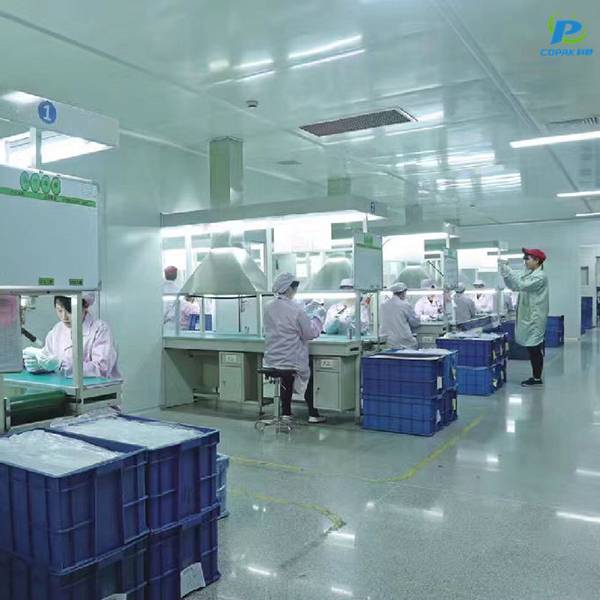
Sourcing PLA bottles from China offers a streamlined journey from concept to delivery: initial idea and specifications are refined with technical designers, rapid prototyping and mold development validate form and function, and food-grade PLA resin is processed via extrusion and blow-molding with in-line quality checks to ensure dimensional accuracy, barrier performance and printability. Finished bottles can be customized in size, color, finish and closure options, with options for compostable labels, printing, and secondary packaging suitable for retail or industrial use. For global buyers this means access to competitive unit costs, scalable production runs, flexible MOQs, and export-ready documentation and certifications (e.g., food-contact standards and international testing). Integrated logistics support, batch traceability and post-shipment service minimize risk and accelerate time-to-market, making China PLA bottle suppliers an efficient partner for sustainable packaging projects worldwide.
| Attribute | Typical Values | Notes / Standards |
|---|---|---|
| Product type | Monolayer PLA bottles produced by injection stretch blow molding or extrusion blow molding | Common for cold beverages, personal care, and light-duty liquid packaging |
| Typical capacities (mL) | 50, 100, 250, 500, 1000 | Sizes chosen according to market segment and fill-line compatibility |
| Wall thickness (mm) | 0.3 – 1.2 mm (dependent on size and strength requirements) | Optimized for weight, drop resistance and barrier needs |
| Typical bottle weight (g) | 8 – 45 g (varies with capacity and wall thickness) | Lower weights for lightweighting; must meet drop and transport tests |
| Material composition | PLA (polylactic acid) grades; monomer purity & additives vary by grade | Blends with PBS or additives may be used to improve toughness; select food-contact grades where required |
| Mechanical properties | Tensile strength ~45–60 MPa; elongation at break ~3–20% (grade dependent) | Properties vary with crystallinity and processing; impact resistance lower than PET |
| Thermal properties | Glass transition 55–65 °C; melting 150–170 °C | Not suitable for sustained hot-fill above ~50–60 °C unless special heat-stable grades used |
| Barrier performance | Moderate oxygen and moisture barrier; OTR higher than some engineered polymers | Barrier can be improved with coatings, liners or multilayer solutions (if required) |
| Manufacturing steps | Concept → CAD → Prototyping (3D print) → Tooling → Samples → Pre-production → Mass production → QC → Packaging | Iterative prototyping reduces risk; tooling accuracy crucial for neck finish and sealing |
| Typical lead times | Concept to prototype: 2–6 weeks; Tooling: 4–10 weeks; Sample approval: 1–3 weeks; Production run: 2–6 weeks | Total calendar time depends on complexity, number of cavities, and seasonal demand |
| Production capacity (per line) | Small bottles: up to 2,000–8,000 bottles/day; larger bottles: lower output per line | Throughput varies by machine, cavity count and cycle time |
| Yield & defect rates | Typical yield 92–99%; common defects: short shots, distortion, cosmetic marks | Higher complexity or thin walls increase defect risk; QC mitigates issues |
| Quality & compliance | Relevant standards: ISO 9001, ISO 14001; compostability: ASTM D6400 / EN 13432; food-contact compliance achievable | Certificates depend on selected material grade and testing labs |
| Sustainability metrics | Biobased content typically ~100% PLA; indicative cradle-to-gate CO2e ~1.5–3.0 kg CO2e/kg PLA | Values vary by feedstock, energy mix and process efficiencies; industrial compostability requires proper facilities |
| End-of-life | Industrial composting recommended; limited compatibility with conventional PET recycling streams | Chemical recycling and specialized PLA streams are emerging options |
| Testing & QC tests | Leak test, drop test, dimensional inspection, FTIR/DSC for material ID, compostability tests | Batch traceability and incoming material checks recommended |
| Packaging for shipment | Nested or layer-separated in cartons; pallets stretch-wrapped with edge protection | Temperature control advised in hot climates; protective packaging reduces transit damage |
| Typical tolerances | Dimensional tolerance ±0.2–0.5 mm; neck finish per customer specification (e.g., common 28 mm closure patterns) | Tighter tolerances impact tooling complexity and cost |
| Customer sample requirements | 2D drawings, 3D CAD/STEP, target material spec, expected fill temperature and shelf-life | Clear specs reduce iteration time and tooling revisions |
| Typical applications | Cold beverages, skincare and cosmetic liquids, dry goods and sample containers | Select grade and design according to barrier and durability needs |
Related Products


PLA Bottle In China Application Guarantees Peak Performance
Top Selling Products






- Related Blog
- Reviews
- Reviews
