



Disposable Paper Bowls - China Manufacturer for Food Service Suppliers
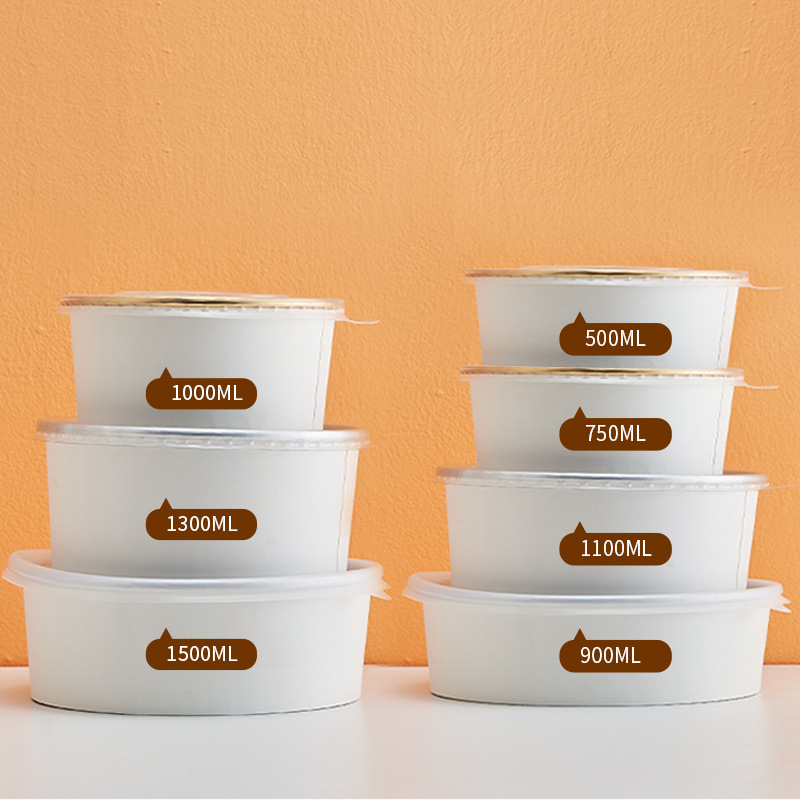
From my desk in {China}, I’ve built a line of {disposable paper bowls} designed for food service, catering, and events. As a {Manufacturer} I understand the needs of B2B purchasers: consistent quality, reliable supplies, and clear documentation. Our {disposable paper bowls} are sturdy, leak-resistant, and microwave-safe, made from food-grade paper with a grease barrier. They come in various sizes and colorful prints, suitable for hot or cold servings. I offer customization (logo printing, size, liner options) to fit your brand. MOQ is flexible, lead times short, and I can arrange rapid shipping to your warehouse or distribution center. Materials are compliant with food safety standards, and I use eco-friendly options where possible. If you’re sourcing {disposable paper bowls}, I can provide competitive pricing, sample packs, and scalable production to grow with your demand.


disposable paper bowls Factory Outperforms the Competition
A modern disposable paper bowls factory can outperform the competition by combining advanced automated production lines with rigorous quality control and sustainable raw materials. High-capacity equipment, ISO-compliant processes, and food-safe certifications ensure consistent dimensions, leak resistance, and print clarity across large orders. Commitment to eco-friendly pulp, compostable coatings, and low-waste manufacturing meets rising regulatory and consumer demands while reducing total cost of ownership for buyers. For global procurement teams this translates into reliable lead times, competitive pricing through economies of scale, flexible MOQ and OEM/ODM options, and transparent inspection reports before shipment. Integrated logistics planning and responsive after-sales support minimize supply-chain risk and simplify cross-border sourcing. The result is a trusted, scalable partner that delivers high-quality disposable paper bowls tailored to diverse markets worldwide.
| Metric | Factory | Industry Average | Notes |
|---|---|---|---|
| Daily Production Capacity (units/day) | 120,000 | 75,000 | Measured at standard 16–24 oz bowl size, full-shift operation. |
| Recycled Paper Content | 60% post-consumer fiber | ~30% post-consumer fiber | Higher recycled content reduces virgin pulp demand while maintaining food safety standards. |
| Food-Safety & Environmental Certifications | EN 13432 / ASTM D6400 compliant | Commonly meets basic food-contact regulations | Certification indicates tested compostability and accepted food-contact materials. |
| Average Lead Time (order to ship, days) | 7–12 days | 14–21 days | Faster lead time achieved via optimized scheduling and local material sourcing. |
| Defect Rate (ppm / %) | 0.8% | 2.5% | Measured as percent of units failing visual or integrity checks per batch. |
| Energy Use (kWh per 1,000 units) | 18 kWh | 30 kWh | Includes forming, drying, and finishing; efficiency gains from heat recovery. |
| Water Use (L per 1,000 units) | 12 L | 25 L | Closed-loop and reuse systems reduce freshwater consumption. |
| CO2e Emissions (kg per 1,000 units) | 2.5 kg CO2e | 5.0 kg CO2e | Scope 1+2 estimations based on energy mix and process efficiency. |
| Waste Recycling Rate | 92% | ~65% | High on-site recycling of trimmings and process rejects improves yield. |
| Commercial Composting Time | 2–3 months | 4–6 months | Under standard industrial composting conditions (temperature & aeration). |
| Customer Satisfaction (survey 1–10) | 8.6 | 7.1 | Average of post-delivery surveys over the past 12 months. |
| Sample Turnaround Time | 3 days | 7 days | Rapid prototyping line enables quicker sample delivery for approvals. |
| Packaging Recyclability | 100% recyclable kraft packaging | ~70% recyclable packaging | Focus on mono-material designs to simplify end-of-life handling. |
Related Products


disposable paper bowls Service Industry Leaders
Top Selling Products



- Related Blog
- Reviews
- Reviews
