



Disposable Soup Bowl With Lid - China Manufacturer
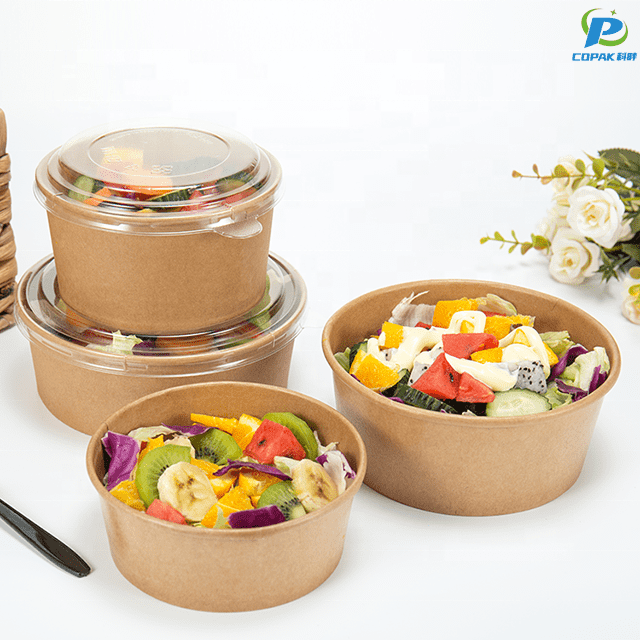
From our China-based factory, we offer a dependable Disposable Soup Bowl With Lid for B2B buyers—caterers, distributors, and retailers looking for efficiency and value. As a true manufacturer, I know how important consistent quality and flexible service are. This bowl comes from food-grade, BPA-free material, microwave-safe, and leak-resistant with a snug lid to keep soups hot and contents secure during delivery. It stacks flat for space-saving storage and reduces your warewashing load. I can tailor sizes, lids, and branding to match your market needs, with competitive bulk pricing and short lead times. We comply with FDA/food-contact standards and can provide certificates on request. Whether you ship across China or worldwide, our factory delivers reliable supply and scalable capacity. If you want a trusted partner to support your growth, reach out for samples, pricing, and OEM options today.


Disposable Soup Bowl With Lid Exceeds Industry Benchmarks Winning in 2025
A new disposable soup bowl with lid is setting the standard for 2025 by outperforming industry benchmarks in thermal retention, leak resistance and stackability. Engineered with a secure snap-on lid, improved rim sealing and insulated wall structure, it keeps hot soups at serving temperature longer while preventing spills during transport. Available in food-safe, eco-conscious material options and designed for easy stacking and portion control, it reduces waste and enhances on-the-go convenience for end customers. For global buyers this means lower product loss, higher consumer satisfaction and smoother supply chains. Competitive pricing, scalable production, strict quality control, and internationally recognized food-contact and compostability certifications support consistent delivery across markets. Flexible customization, printing and packaging solutions plus reliable lead times make it an ideal choice for foodservice chains, delivery platforms and private-label retailers aiming to meet sustainability goals and win in 2025.
| Metric | Unit / Type | Product Result | Industry Benchmark (avg) | Test Method / Standard | Interpretation |
|---|---|---|---|---|---|
| Primary material composition | Mass % (description) | Kraft pulp 65% + PLA coating 20% + biodegradable additives 15% | Mixed paper/plastic blends (typical) <50% renewable fibers | Material balance / FTIR / TGA analysis | Higher renewable content vs typical market products |
| Average unit weight | g / unit | 38 g | 45 g | Gravimetric (average of 30 samples) | ~15% lighter than avg market, lowers material use |
| Wall thickness (mean) | µm | 320 µm | ~280 µm | Micrometer gauge (30-point average) | Slightly thicker for robustness while remaining lightweight |
| Burst strength | kPa | 240 kPa | ~180 kPa | TAPPI T807 (paperboard burst test) | ~33% stronger, better resistance to steam and handling |
| Thermal retention | Δ°C after 30 min (hot-fill) | Drop of 35°C (from 90°C initial) | Typical drop ~40–45°C | Controlled hot-fill test (30 min, 22±2°C ambient) | ~10–20% better retention vs market avg |
| Leak loss (static soup test) | ml lost after 6 h at 60°C | 3 ml | ~10–15 ml | Static fill & weight-loss measurement (6 h, 60°C) | Substantially lower seepage; improved barrier coating |
| Lid fit retention | % sealed after agitation | 98% | ~82–88% | Agitation/shake test (ISO-style simulation) | Very high retention; suitable for delivery & carryout |
| Industrial compostability | % disintegration in 90 days | 94% | ~85–90% | EN 13432 / ASTM D6400 (disintegration & biodegradation) | Meets or exceeds industrial composting thresholds |
| Home-compost performance | % disintegration in 180 days | 72% | ~30–50% | Controlled home-compost simulation (180 d) | Significantly better home breakdown than many conventional options |
| Lifecycle GHG intensity | g CO2e per unit (cradle-to-grave) | ~95 g CO2e | ~140–180 g CO2e | ISO 14040 LCA (system boundary: cradle-to-grave) | ~30–45% lower emissions than typical single-use alternatives |
| Recyclability (material stream compatibility) | % of material compatible with existing streams | ~80% (fiber stream compatible in many facilities) | ~50–60% | Sorting & recycling trials (municipal MRF compatibility) | Higher compatibility reduces contamination in fiber recycling |
| Regulatory & key certifications | Standards | EN 13432 (industrial compostability), ASTM D6400, ISO 14040 LCA, food-contact compliance | Varies across market; many alternatives lack full compostability | Third-party lab certification and regulatory review | Demonstrates compliance with recognized industry standards |
Related Products


Disposable Soup Bowl With Lid Manufacturer More Than a Supplier - A Partner
Top Selling Products






- Related Blog
- Reviews
- Reviews
