



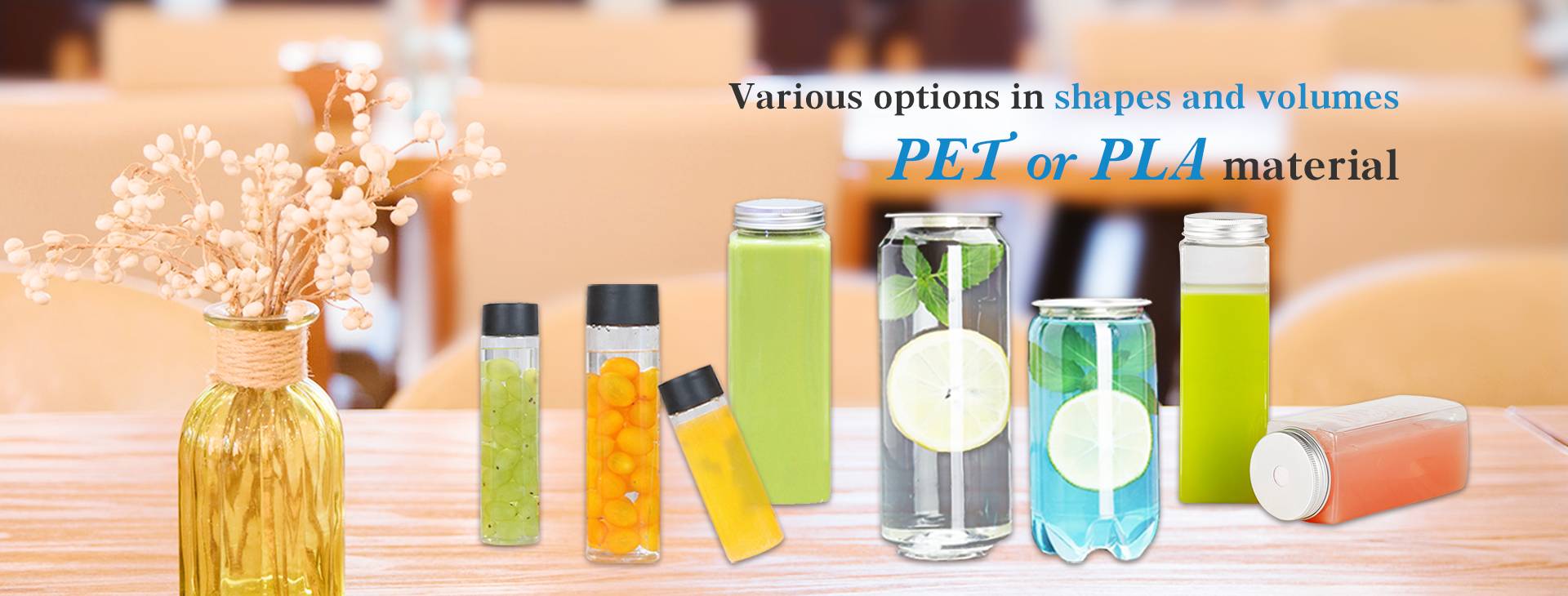
PET Bottle Company China Manufacturer for High-Quality PET Bottles
From the moment you contact a PET Bottle Company like ours, I understand what a B2B buyer needs: consistency, customization, and dependable delivery. Based in China, we are a manufacturer who ships durable PET bottles in various sizes and colors for beverage, cosmetics, and household products. I personally oversee injection molding quality, ensuring bottles withstand drops and hot-fill. We offer custom cap colors, logo printing, and 24/7 sample service to shorten your development cycle. Our factory uses Food-Grade PET, with compliance certificates and traceable batches. You can count on short MOQ, scalable production, and competitive pricing because we keep our overhead lean. If you want a reliable partner for private label, contract manufacturing, or white-label PET bottles, I’m ready to discuss your specs and provide quick quotes. Let me help your brand grow with China-made manufacturing excellence.


PET Bottle Company Now Trending Custom Solutions,
The global demand for tailored PET bottle solutions is accelerating as brands seek differentiation, sustainability and cost-efficiency. Custom options—from preform engineering and neck finishes to unique shapes, colors, barrier coatings and surface decoration—help buyers optimize packaging for product performance, shelf impact and brand storytelling. Lightweighting and rPET blends lower carbon footprint and freight costs while preserving clarity and barrier properties for liquids, personal care and food applications. Producers with in‑house tooling, automated production lines and strict quality control can offer rapid prototyping, flexible MOQs and dependable international logistics to support complex supply chains. Demonstrated compliance with food‑contact regulations, traceable QC and scalable output make bespoke PET bottles a strategic choice for manufacturers and retailers aiming to accelerate time‑to‑market, reduce costs and meet growing sustainability commitments.
{ PET Bottle Company Now Trending Custom Solutions,}
| Dimension | Metric / Example | Typical Values | Units / Conditions | Notes |
|---|---|---|---|---|
| Base Polymer | Typical material used | Polyethylene terephthalate (PET) | — | Widely used for beverages, personal care and food packaging |
| Resin Density | Typical bulk density | ~1.37–1.40 | g/cm³ | Depends on copolymerization and additives |
| Thermal Properties | Glass transition / melting | Tg: 67–81 ; Tm: 245–255 | °C | Processing windows vary with grade |
| Typical Bottle Volume Range | Common production sizes | 50 mL – 5 L (standard consumer sizes) | mL / L | Very small to multi-liter containers are feasible |
| Typical Wall Thickness | Bottle body | 0.20 – 0.60 | mm | Lightweighting reduces thickness while maintaining performance |
| Typical Bottle Mass | Example: 500 mL single-serve | ~18–30 | g | Varies with design, neck finish and label approach |
| Production Cycle Time | Blow molding cycle (high-speed lines) | ~0.8 – 3.0 | seconds per bottle | Depends on machine, cavity count and bottle size |
| Typical Energy Use | Production energy per 1,000 bottles | ~10 – 50 | kWh / 1,000 bottles | Wide range due to equipment efficiency and preform heating |
| Carbon Intensity | Cradle-to-gate CO2 emissions for PET resin | ~1.8 – 2.5 | kg CO2 / kg PET | Varies by feedstock, location and energy mix |
| Recycled Content | Typical rPET incorporation in bottles | ~10% – 30% (common consumer range) | % by weight | Higher contents achievable with sorting and barrier considerations |
| Post-consumer Collection | Regional variability | ~20% – 60% | collection / recycling rate | Wide regional differences; depends on local systems |
| Barrier Performance | Oxygen transmission rate (OTR) | ~1 – 5 | cm³/m²·day (23°C, specified RH) | Improved by coatings, liners or multi-layer constructions |
| Common Closure Types | Examples | Screw cap, sports spout, pump, tamper-evident | — | Choice affects neck finish and sealing specs |
| Mold Lead Time | Typical tool production | ~4 – 10 | weeks | Depends on cavity count, complexity and finishing |
| Decoration & Labeling | Common methods | Shrink sleeve, pressure-sensitive label, direct printing | — | Selection influences recyclability and brand appearance |
| Lightweighting Potential | Design improvements | ~10% – 40% | % reduction vs older designs | Achieved via geometry, preform optimization and material grades |
Related Products


PET Bottle Company in 2025 Ahead of the Curve
Top Selling Products



- Related Blog
- Reviews
- Reviews
