PET Bottles

PET condiment bottle Manufacturer in China | Reliable Supplier

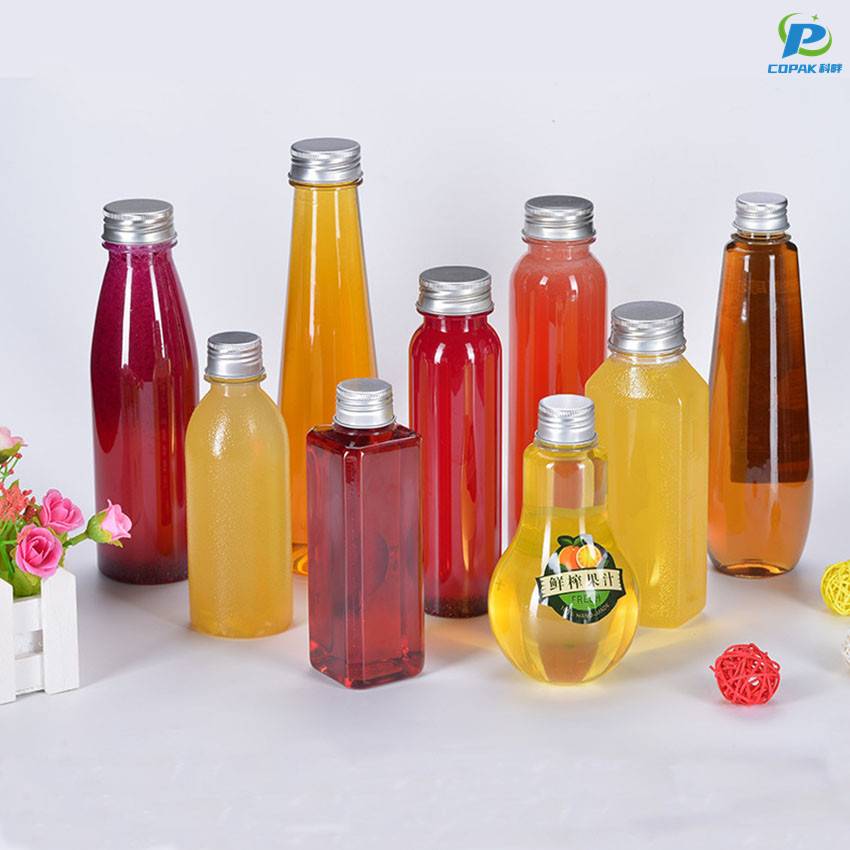
I’m a China-based Manufacturer who knows what B2B buyers want in a wide, reliable PET condiment bottle. Our bottles are food-grade PET, light yet sturdy, with crystal clarity and proven chemical resistance. They come with leak-proof caps and tamper-evident options, and the nozzle is designed for precise dispensing of ketchup, mustard, soy sauce, and other sauces. We offer multiple sizes from 50ml to 300ml, with matching caps and label-ready surfaces for easy branding. Customization is our strength: color options, integrated droppers, printed logos, and shrink sleeves, all supported by short lead times and flexible MOQs. Our supply chain is solid in China, with strict quality control at every step and compliance with food-contact regulations. If you’re sourcing for wholesalers, retailers, or chain stores, I’d be glad to discuss OEM/ODM solutions, packaging, and volume pricing to fit your market needs.

Hot Selling Product

PET condiment bottle Ahead of the Curve Sets the Industry Standard

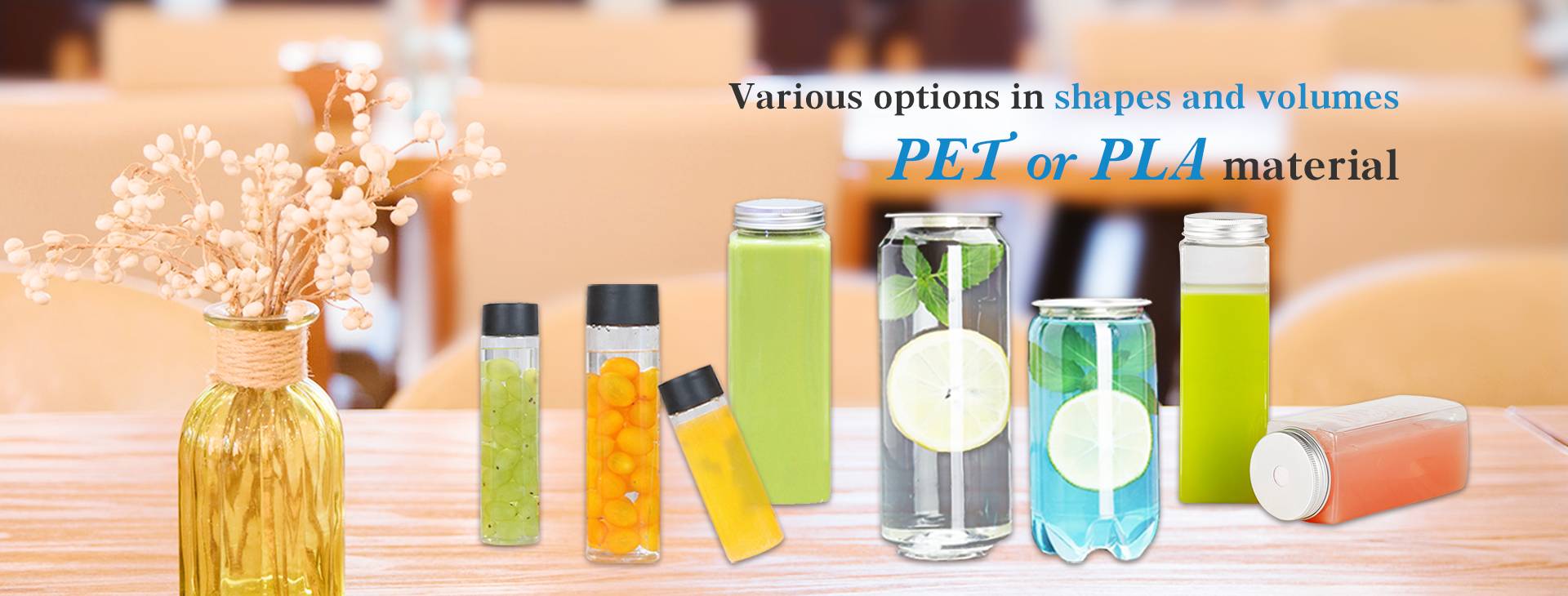
A next‑generation PET condiment bottle is redefining convenience and performance for global food and beverage brands. Engineered from high‑clarity, food‑grade PET, it combines lightweight durability with excellent barrier properties, leak‑resistant dispensing and full recyclability. Elegant shelf appeal, customizable shapes, neck finishes and print options help products stand out, while BPA‑free materials and compliance with international food‑safety standards give buyers peace of mind. For procurement teams seeking reliable partners, this solution delivers scalable production, competitive pricing and flexible OEM options. Advanced QA processes, rapid prototyping, low‑defect rates and optimized logistics support fast lead times and global distribution. From tamper‑evident seals to no‑drip caps and bespoke labeling, these bottles are built to meet modern supply‑chain demands and elevate condiment offerings worldwide.

{ PET condiment bottle Ahead of the Curve Sets the Industry Standard}
Characteristic Typical Specification Test Method / Standard Notes
Base material Polyethylene terephthalate (PET) homopolymer; food-contact grade Resin characterization per ISO 1628-5 Widely used for condiment packaging due to clarity and strength
Intrinsic viscosity (IV) 0.72 – 0.85 dL/g (typical range for beverage/condiment bottles) Measured by viscometry (ISO 1628 series) Controls mechanical properties & processability
Capacity range 50 mL – 1000 mL (common formats: 120, 250, 500 mL) Dimensional checks per internal gauge Sizes optimized for household condiment use
Wall thickness (body) 0.30 – 0.90 mm (dependent on capacity & drop resistance) Caliper measurement (digital micrometer) Thicker walls for squeezable/rigid balance
Typical bottle mass 15 – 40 g (varies by capacity & design) Weighed on calibrated balance (ISO 760) Lightweight designs reduce material use and transport emissions
Oxygen transmission rate (OTR) ~5 – 25 cc/m²·day·atm (varies with wall thickness & orientation) ASTM D3985 (Mocon/oxygen analyzer) Multilayer or barrier coatings used for oxygen-sensitive sauces
Water vapor transmission rate (WVTR) ~1 – 6 g/m²·day (typical PET range; decreases with thickness) ASTM F1249 (permeation meter) Important for moisture-sensitive dry seasonings or powders
Barrier enhancement options EVOH, SiOx/AlOx coatings, multilayer PET/PA/EVOH Permeation tests ASTM F1249 / ASTM D3985 Chosen based on required shelf life and cost trade-offs
Manufacturing process Injection Stretch Blow Molding (ISBM) or extrusion blow molding for larger necks Process validation per internal SOPs; dimensional inspection ISBM gives best clarity & mechanical performance for thin-walled bottles
Fill temperature compatibility Cold fill to short hot-fill up to ~85 °C (controlled dwell) Functional testing; dimensional stability checks Not suitable for prolonged autoclave sterilization (deformation risk)
Chemical compatibility Good with acidic condiments (vinegar, ketchup); moderate with oils Compatibility per practical soak tests at ambient temps Avoid strong solvents (ketones, chlorinated solvents) that attack PET
Regulatory compliance (food contact) Meets typical food-contact requirements EU Regulation 10/2011; US FDA 21 CFR 177.1630 Final compliance depends on finished article tests and formulation
Closure / cap types Screw caps, flip-top, disc-top, nozzle caps with tamper band options Torque checks per ISO 6789 where applicable Cap geometry chosen for dispense control and re-sealability
Recommended closure torque 100 – 350 N·cm (dependent on cap design & tamper band) Closure torque per supplier validation and assembly line checks Ensures seal integrity without over-stressing the neck finish
Drop / impact performance Pass typical single-drop 1.2 – 1.8 m (depends on fill level & design) ISTA protocols or internal drop testing Designs tuned to withstand distribution handling
Environmental profile Typical cradle-to-gate GHG: ~60 – 220 g CO2e per bottle (varies by mass & recycled content) Life cycle assessment (LCA) per ISO 14044 Increasing post-consumer rPET content reduces footprint; recycling code: Resin ID 1 (PET)
Labeling & decoration Pressure-sensitive labels, shrink sleeves, direct printing Adhesion testing per ASTM D3359; print adhesion checks Choose method based on marketing visibility and recycling stream
Note: values shown are typical ranges for PET condiment bottles and depend on final design choices, wall profiles, and process controls.

Related Products

PET Cups

PET condiment bottle Factory Trusted by Pros

Performance Scores of PET Condiment Bottle Profiles (Pro Evaluations)

This chart visualizes key performance dimensions for PET condiment bottles as evaluated by professional users. Four metrics are displayed for five common bottle profiles: Durability (measured by drop survival rate %), Fill Efficiency (seconds per 500ml fill), Cost Index (relative cost score where lower is better), and Dispense Precision (% of single-drop consistency). The bar chart stacks or groups values to allow direct comparison across bottle types. Professionals prioritize a balance of durability and dispense precision while keeping fill efficiency acceptable and cost manageable. The dataset shows that Profile A offers the highest durability at 92% and excellent dispense precision at 88%, but comes with a moderate cost index of 1.2 and average fill efficiency of 18 seconds. Profile B delivers the best fill efficiency at 14 seconds and a low cost index of 1.0, but falls behind in precision (75%) and durability (78%). Profile C represents a balanced option with strong precision (82%) and durability (85%) at a slightly higher cost index of 1.3 and fill efficiency of 16 seconds. Profile D emphasizes low cost (0.9) and fast filling (13 seconds) but sacrifices precision (70%) and durability (72%). Profile E targets premium performance, showing top dispense precision (91%) and excellent durability (90%) with fill efficiency of 15 seconds and cost index of 1.5. Use this visualization to match production choices to priorities: choose premium profiles for applications demanding accuracy and robustness, balanced profiles for general-purpose use, or low-cost profiles for high-volume, low-criticality products. The chart’s dimensions focus on making inter-profile comparisons intuitive for procurement and design teams. Additionally, the dataset can be filtered by ingredient viscosity, cap type, and recycling grade to refine choices for specific product lines, enabling stakeholders to model trade-offs quantitatively and reduce costly iterations during packaging development. This supports faster, data-driven packaging decisions across production teams globally.

Top Selling Products

Subscribe To Our Newsletter

For inquiries about our products or pricelist, please leave your email to us and we will be in touch within 24 hours.

Follow Us

on our social media
  • whatsapp (1)
  • instagram
  • youtube