



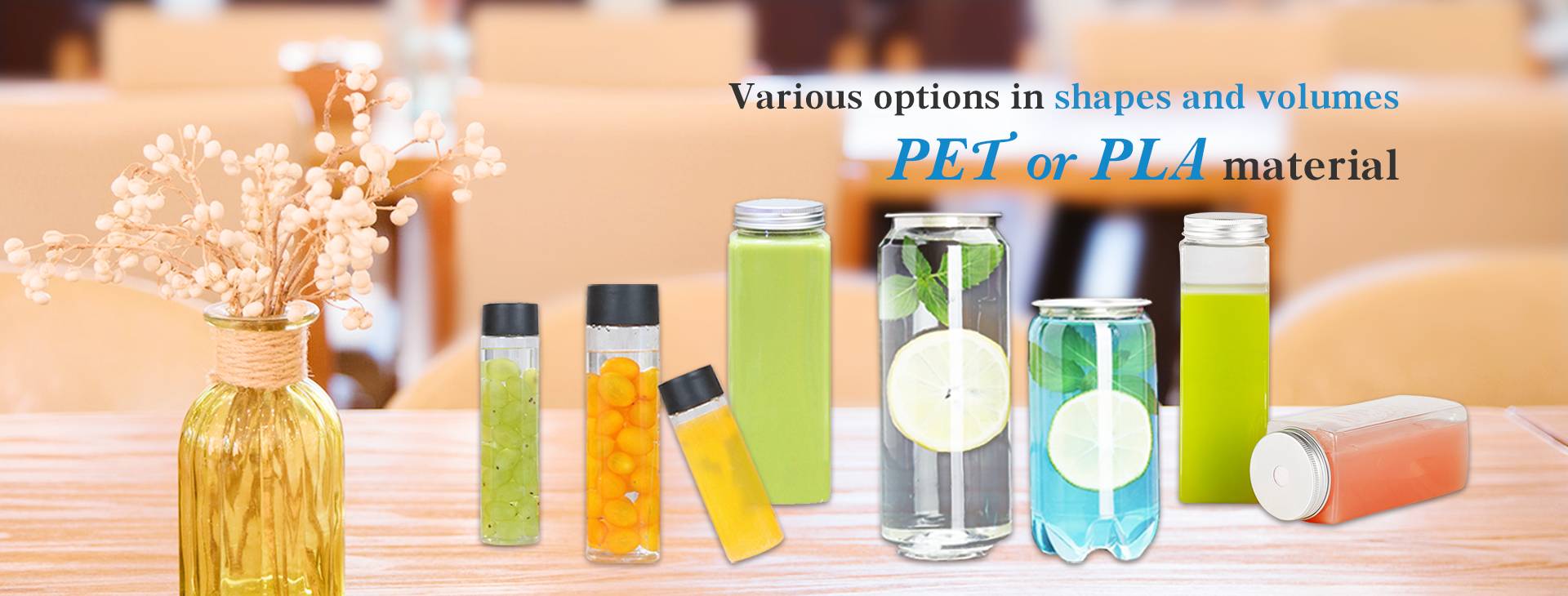
PET Drink Container China Manufacturer - Trusted Global Supplier
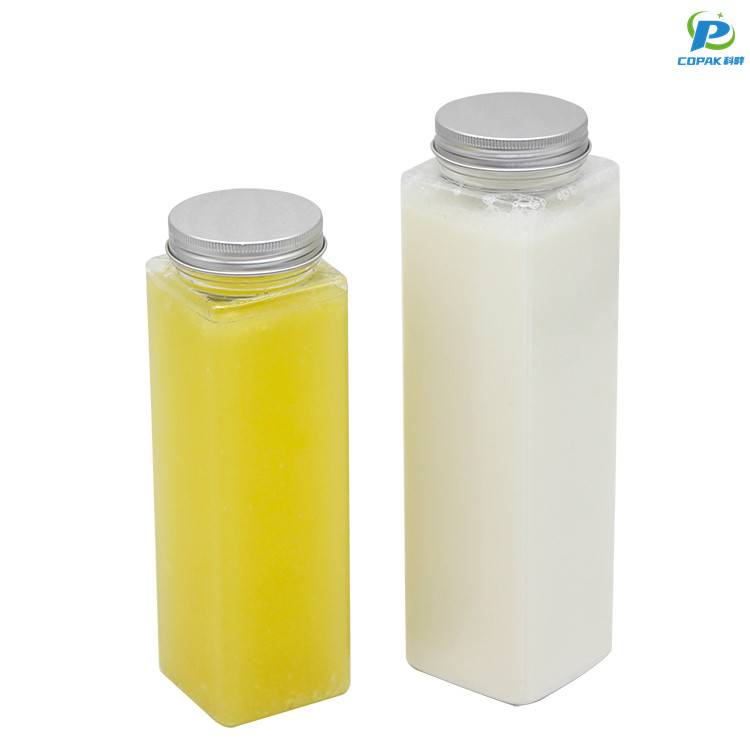
As a product specialist, I know what B2B buyers in China look for in a PET drink container. We are a reliable Manufacturer focusing on safe, durable, and stylish solutions for shelves and online shops. Our PET drink container is lightweight, impact resistant, BPA-free, food-grade, and fully recyclable. It comes in various capacities from 300ml to 1000ml, with leak-proof screw cap, a wide mouth option, and tamper-evident seal. We offer customization: push-on lid, logo printing, color options, and neck finishes to fit your brand. The containers stack easily, ship efficiently, and meet international food-contact standards. For retailers and distributors in China, these PET drink containers enable fast turns, lower freight, and better margins. I’m here to help you select the right size, lid, and printing method, and to coordinate certificates and MOQ with you. If you want a dependable PET drink container partner, I’m ready to talk.


PET drink container Delivers Unmatched Quality Service Backed by Expertise
High-performance PET drink containers combine precision engineering, food-grade safety and thoughtful design to meet the exacting demands of global buyers. Backed by decades of technical expertise, our production lines deliver consistent dimensional accuracy, barrier performance and lightweight solutions that reduce shipping costs and environmental impact. Every batch undergoes rigorous quality control, certification alignment with international regulations and traceability from resin to finished product. Our service model pairs flexible customization with reliable lead times and scalable capacity to support small brands and multinational rollouts alike. From prototype tooling and color matching to sustainable rPET options and efficient global logistics, we provide transparent communication, quick sampling and technical support to ensure your beverage packaging performs on shelf and in market.
{ PET drink container Delivers Unmatched Quality Service Backed by Expertise}
| Specification | Description | Typical Value / Range | Test / Standard | Notes |
|---|---|---|---|---|
| Base Material | Polyethylene terephthalate (PET) for clear, lightweight drinks containers | PET (IS0 resin classification) | ASTM D7611 / ISO 14021 | Widely recyclable; food-contact suitable when processed to standards |
| Capacity Range | Typical consumer sizes for beverage packaging | 100 ml – 2000 ml (common: 330 / 500 / 750 / 1000 ml) | Industry sizing conventions | Formats adaptable for single-serve and multipacks |
| Wall Thickness | Average sidewall thickness after stretch-blow molding | 0.18 – 0.60 mm (typical consumer bottles: 0.20–0.40 mm) | Measured by micrometer / ISO 1183-1 for density | Optimized for weight vs. stiffness |
| Typical Weight (empty) | Mass of container without closure or label (varies by size) | 10 g (150 ml) – 35 g (1 L) typical | Weighing scale / ISO 2933 | Optimized low-mass designs reduce transport footprint |
| Density | Material bulk density at room conditions | ~1.38 g/cm³ | ISO 1183 | Typical for PET homopolymer |
| Tensile Strength | Mechanical resistance of molded PET | 50 – 75 MPa (depending on orientation & processing) | ASTM D638 / ISO 527 (test specimen dependent) | Higher with stretch orientation |
| Elongation at Break | Measure of ductility | 50% – 300% (process dependent) | ASTM D638 / ISO 527 | Orientation during molding increases elongation |
| Oxygen Transmission Rate (OTR) | Barrier to oxygen ingress (typical for clear PET) | ~3–10 cc/m²·day (23°C, 0% RH; increases at thinner walls) | ASTM D3985 | Sufficient for many beverages; barrier coatings used for high-oxygen-sensitive products |
| Water Vapor Transmission Rate (WVTR) | Moisture barrier characteristics | ~0.5–5 g/m²·day (varies with thickness & RH) | ASTM F1249 | Low moisture permeability compared to many films |
| Recycled Content (PCR) | Post-consumer recycled PET fraction commonly used | 0% – 30% (typical commercial usage); up to 100% for specialty items | ISO 14021 verification recommended | Higher PCR may affect clarity and mechanicals; food-contact approvals required |
| Recyclability | Ease of recovery in established collection streams | Widely recyclable in PET stream | Local recycling program dependent | Caps and labels may need separation for optimal recycling |
| Manufacturing Method | Common forming technology for beverage containers | Injection stretch blow molding (ISBM) | Industry standard process | Enables orientation for strength and clarity |
| Production Yield (Quality) | Good manufacturing practice targets | > 98% acceptable units after inline QC | Inline visual & leak testing | Scrap and regrind managed to maintain material specs |
| Shelf Life (filled product) | Storage stability for typical non-carbonated beverages | 6 – 24 months (product-dependent) | Shelf-life studies per product | Carbonated beverages may require specific closures and pre-forms |
| Temperature Range | Safe handling and typical use window | -40°C to +70°C (short-term exposures vary) | Thermal cycling tests | Not recommended for sustained hot-fill without special design |
| Sterilization / Sanitation | Methods compatible with PET containers | Chemical sanitation, cold sterilants, UV; limited heat tolerance | Validated per product & regulator | Steam autoclave not typically used for finished PET bottles |
| Certifications / Compliance | Typical regulatory clearances for food contact | FDA food-contact compliance, EU food contact regs (when validated) | Regulatory test reports | Specific certifications depend on region and application |
| Carbon Footprint (typical) | Lifecycle GHG emissions for a typical 500 ml PET bottle (empty, material + production) | ~90 – 160 g CO2e per 500 ml bottle (varies by PCR and process) | LCA studies (ISO 14044) | Using PCR and light-weighting reduces footprint |
| Fill-line Compatibility | Which beverage processes the container typically supports | Cold-fill, aseptic-fill (with design adjustments), carbonated (with appropriate pre-form) | Fill-line validation required | Hot-fill above ~60°C generally limited for PET without special treatment |
Related Products


PET drink container Supplies the World\u2019s Top Brands More Than a Supplier - A Partner
Top Selling Products



- Related Blog
- Reviews
- Reviews
