



Salad Paper Bowl - China Manufacturer of Eco-Friendly Paper Bowls
From our China-based factory, I supply Salad Paper Bowl solutions designed for busy foodservice operators. As a Manufacturer, I know what you need: reliable performance, consistent sizing, and cost-effective packaging. Our Salad Paper Bowl uses compostable paper and a grease-resistant coating, keeping soups, oils, and dressings contained while staying sturdy in transport. I offer multiple sizes, customizable printing, and private-label options to reinforce your brand. Lead times are tight thanks to integrated production lines in China, and I can scale with your volume. I provide samples, flexible MOQs, and supportive logistics to simplify procurement. If you’re sourcing a dependable Salad Paper Bowl from a trusted Manufacturer in China, I’m ready to discuss your specs, packaging, and timeline. Our company detail: {}

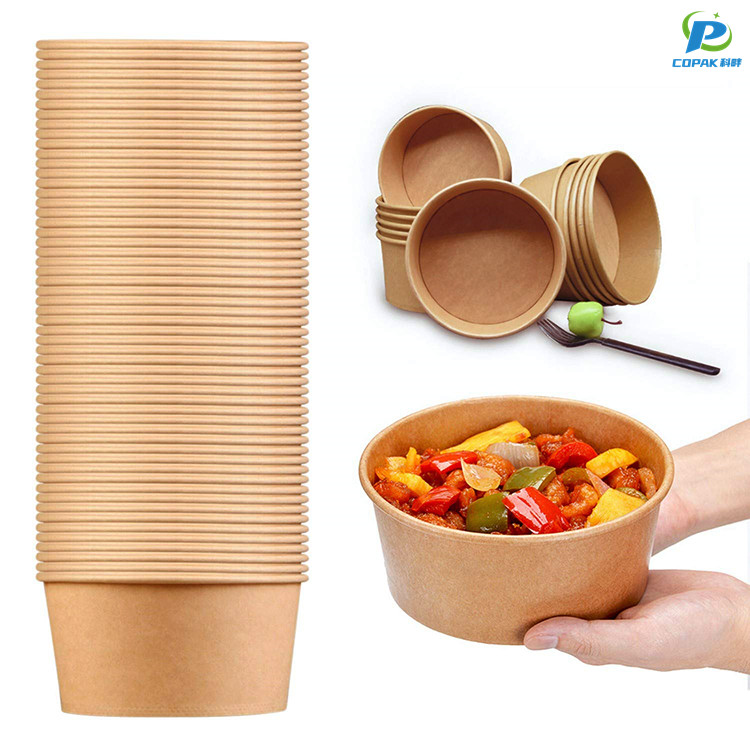
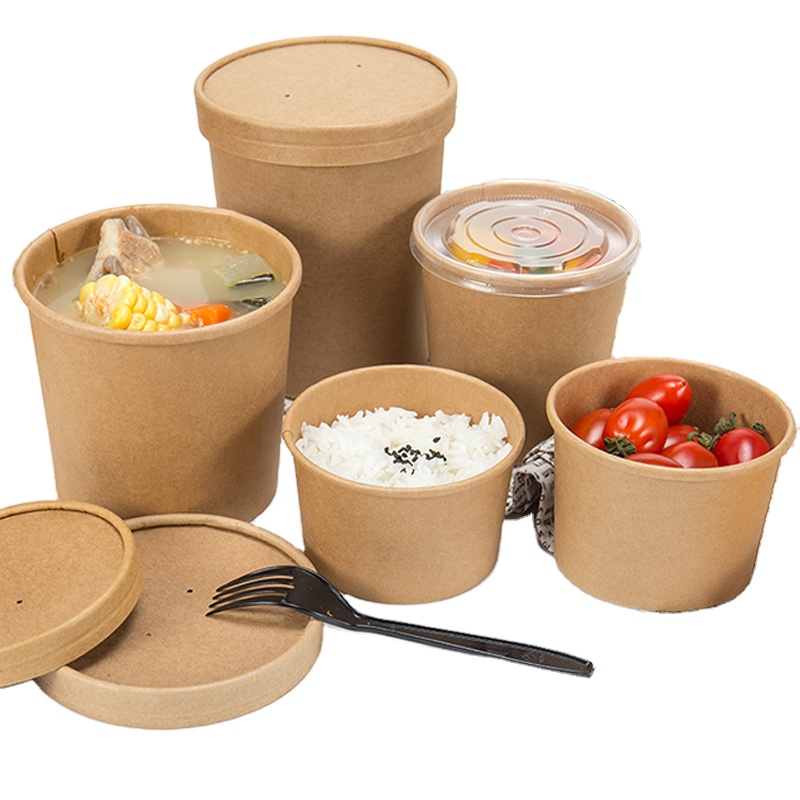
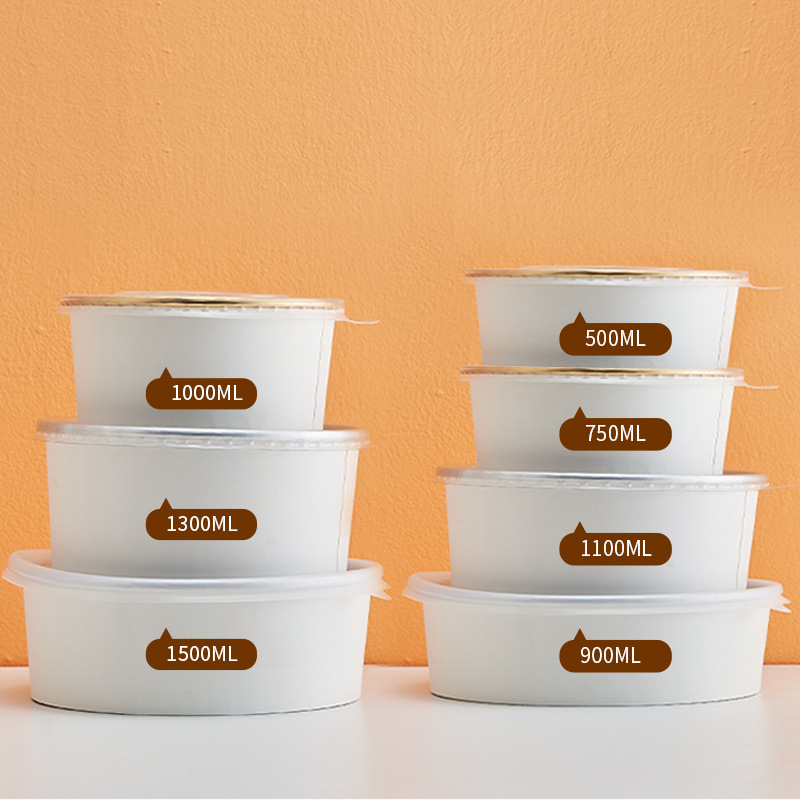
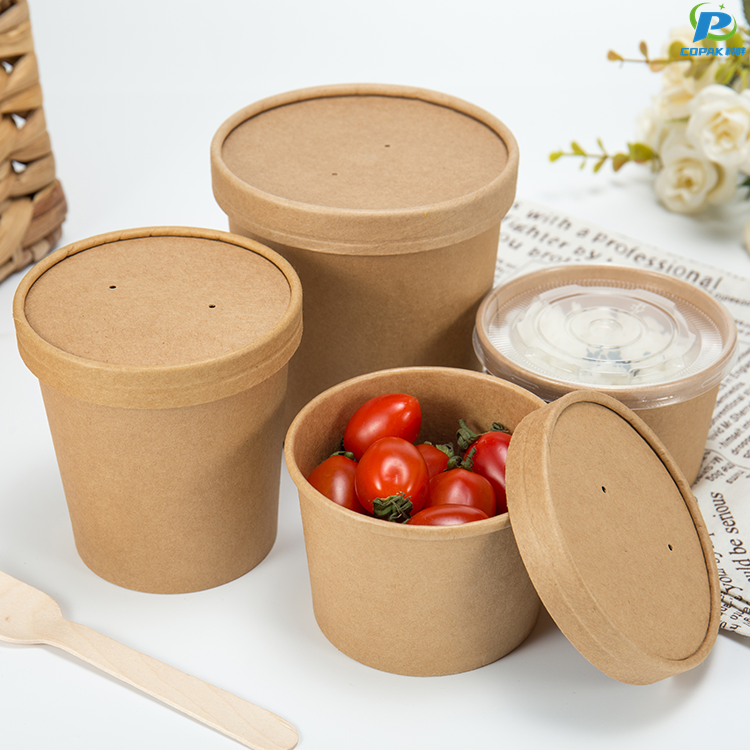
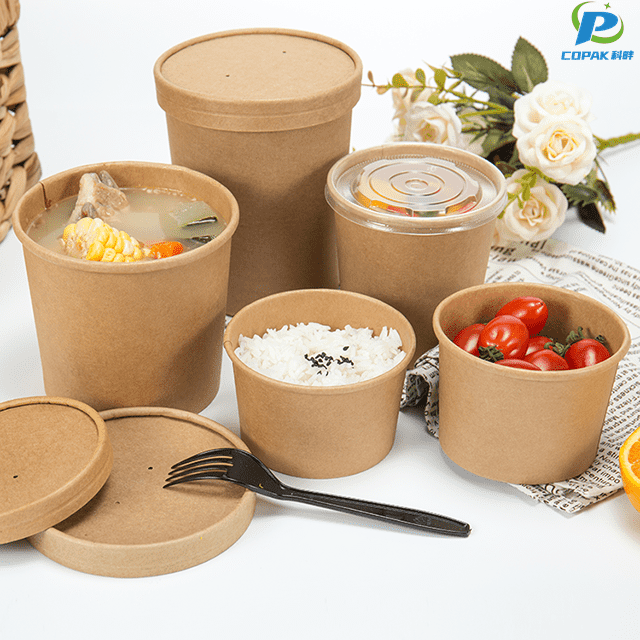
Salad Paper Bowl Supplies the World\u2019s Top Brands Outperforms the Competition
Trusted by leading foodservice and retail brands worldwide, our salad paper bowls combine premium food-safe materials with advanced barrier technology to outperform common alternatives. Leak-resistant coatings, sturdy walls and a variety of sizes and lids ensure salads stay fresh, crisp and presentable from prep to consumption. Certified for compostability and compliance with major food safety standards, these bowls meet sustainability goals without sacrificing durability or shelf appeal. With high-volume production capacity, rigorous quality control and flexible private-label options, we deliver competitive pricing, reliable lead times and tailored printing to fit global procurement needs. Buyers seeking a scalable, eco-conscious disposable bowl solution can request samples and specifications to verify superior performance and cost-efficiency compared to current suppliers.
{ Salad Paper Bowl Supplies the World’s Top Brands Outperforms the Competition}
| Variant | Capacity (oz / ml) | Material Composition | Liner Type | Grammage (gsm) | Grease Resistance (Kit) | Suitable Use / Temp | Certifications / Standards | Industrial Compost (days) | Home Compost? | Typical Lead Time (days) | Est. Carbon Footprint (g CO2e / bowl) |
|---|---|---|---|---|---|---|---|---|---|---|---|
| Compact | 10 oz / 295 ml | 100% recycled paperboard (min. 90% fiber) | PLA (compostable) | 230 | 10 | Cold salads, room-temp dressings; up to ~40°C | FSC Mix, ASTM D6400 / EN 13432 (lining) | 90–120 | Limited (PLA often needs industrial compost) | 14–21 | 25–45 |
| Standard | 12 oz / 355 ml | Virgin/recycled blend paperboard | Aqueous barrier (may be recyclable where accepted) | 250 | 9 | Cold & room-temp salads; dry toppings | PEFC, ISO 14001 (manufacturing) | Not fully (aqueous liners vary) | No (depends on facility) | 14–28 | 30–50 |
| Large | 16 oz / 473 ml | Virgin-fiber paperboard (higher stiffness) | PLA (compostable) | 280 | 11 | Large salads, dressings; room-temp to warm (~45°C) | FSC Mix, ASTM D6400 | 90–180 | Limited (industrial preferred) | 21–35 | 35–60 |
| Family | 24 oz / 710 ml | High-strength paperboard (reinforced) | PLA reinforced (improved liquid hold) | 300 | 12 | Heavier dressings, room-temp service; short hot-hold if specified | FSC Mix, EN 13432 | 90–180 | Limited (industrial facilities recommended) | 28–42 | 50–80 |
| Economy | 32 oz / 946 ml | Heavy-duty board with aqueous barrier | Aqueous barrier (not compostable in many cases) | 320 | 10 | Large orders, dry/cold salads; best for non-hot liquids | PEFC, ISO 14001 (process) | Not typically compostable | No | 21–42 | 60–100 |
Notes: Values shown are typical ranges for paper bowl constructions and widely referenced industry standards. Actual performance may vary with specific formulations and local processing/composting facilities.
Related Products
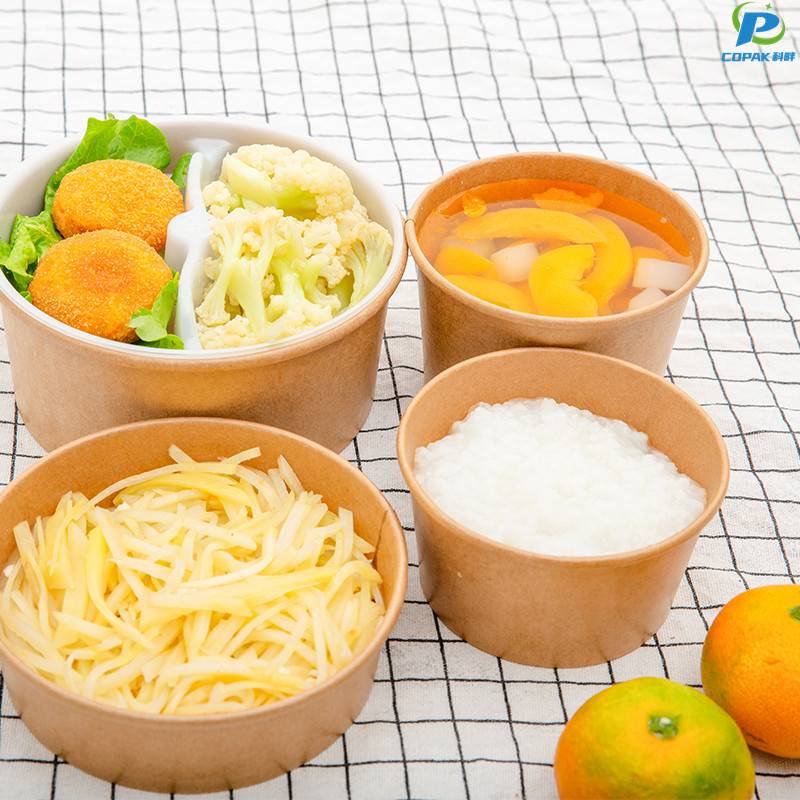


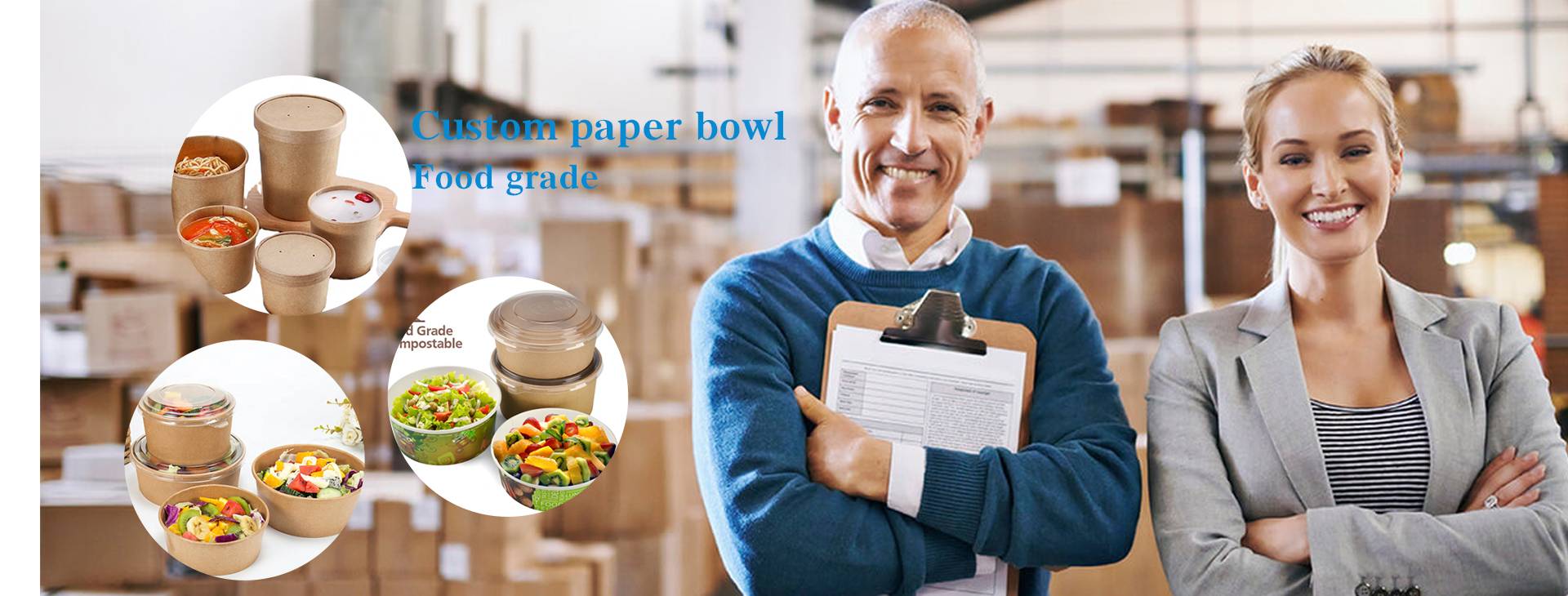
Salad Paper Bowl Trusted by Pros Where Innovation Meets 2025
Pro Kitchen Adoption Index for Compostable Salad Bowls (2020–2025)
From 2020 through 2025 the chart tracks three complementary indicators that summarize professional kitchen trends around compostable salad bowls: Adoption Rate (percentage of surveyed pro kitchens using compostable bowls), Innovation Score (an index 0–100 representing material and design improvements), and Average Unit Cost in USD. Adoption Rate rises steadily from 22% in 2020 to 78% in 2025, reflecting accelerating operational acceptance driven by regulatory pressure, customer demand for sustainability, and proven supply reliability. The Innovation Score climbs from 40 to 88 across the same period, indicating substantial improvements in material performance, heat and moisture resistance, and scalable manufacturing processes. Unit Cost shows a modest decline—from $1.20 to $0.85—demonstrating economies of scale and material optimization even as technical features improve. Together, these three series suggest a classic technology diffusion curve in a professional setting: product improvements (Innovation Score) reduce friction and help drive adoption, while rising volumes and process refinements compress unit costs, further reinforcing the adoption path. For operators and procurement teams, the data implies that waiting for lower prices may forego operational and marketing benefits tied to early adoption; instead, staged adoption coupled with supplier partnerships can capture improvements while managing cost risk. For product developers and supply chain managers, prioritizing material durability and cost-efficient production processes accelerates market penetration. Policymakers and sustainability program managers can use the demonstrated relationship between innovation and adoption to justify incentives that lower early-stage cost gaps and speed broader environmental benefits.
Top Selling Products





- Related Blog
- Reviews
- Reviews
