



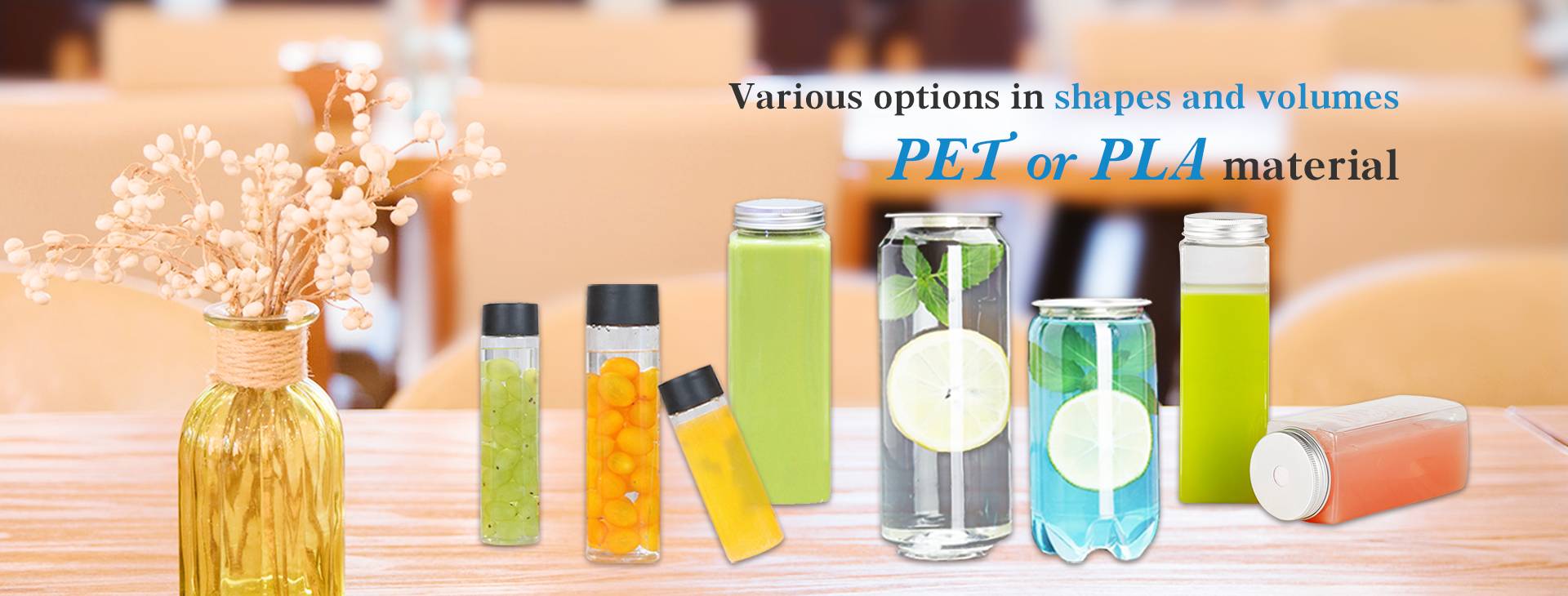
Squeeze Container - China Manufacturer for Reliable Sourcing
I am a China-based Manufacturer, and I craft reliable Squeeze containers that keep products fresh and ease of use for end users. In my factory, I offer a range of sizes from 5ml to 250ml, with airtight caps, leak-proof seals, and smooth dispensing pumps or flip-top closures. My Squeeze container profiles are made from PET, PP or PE, are BPA-free, and comply with food-grade standards. I can customize cap colors, decoration, and label windows to fit your brand. I welcome OEM/ODM orders, low MOQ, and scalable production to meet growing demand. For cosmetics, sauces, or condiments, these tubes deliver precise control and minimal waste. I provide data sheets, third-party test results, and quick lead times from my streamlined supply chain in China. If you’re seeking a dependable supplier to accelerate your launch, I’m ready to partner with you—consistent quality, fair pricing, and on-time shipments.


Squeeze container Delivers Unmatched Quality More Than a Supplier - A Partner
A truly outstanding squeeze container is more than a finished product—it's the result of shared goals, consistent quality systems and collaborative innovation. Our squeeze containers combine precision molding, food- and cosmetic-grade materials, and rigorous in-line testing to ensure consistent dispensing performance, leak resistance and shelf stability. Working as a partner, we co-develop custom neck finishes, nozzle options and barrier structures to match branding, filling lines and regulatory needs across markets. For global buyers this means predictable lead times, scalable MOQ options, and support with certifications, compliance documentation and logistics planning. Sustainable material choices, lightweight designs and cost-efficient tooling reduce total landed cost while meeting consumer expectations. If you value reliability, technical collaboration and supply-chain transparency, a partner-focused approach to squeeze containers delivers measurable advantages over a typical supplier relationship.
| Parameter | Measurement / Result | Test Method / Standard | Benchmark | Status |
|---|---|---|---|---|
| Material Composition | LDPE (low-density polyethylene), additive-free, food-contact grade | FTIR spectrum analysis; material ID verification | Food-grade polymer per common regulatory guidance | Verified |
| Wall Thickness (nominal) | 1.20 mm (mean); tolerance ±0.05 mm | Precision micrometer measurements (ISO 4638 / in-house SPC) | Tolerance within ±0.10 mm | Within tolerance |
| Dispense Accuracy (5 g target) | Mean deviation 1.8% (std dev 0.9%), n=200 dispenses | Gravimetric dispense test, calibrated balances | ≤3.0% deviation | Pass |
| Seal Integrity | No leakage detected at 0.5 bar for 60 s (n=100) | Vacuum decay / pressure-hold test (ASTM F2338 variant) | No detectable leakage | Pass |
| Leak Rate | Average 0.03 cc/min (helium trace & vacuum decay cross-check) | Vacuum decay & trace gas (ASTM F1294 / ASTM F2338 methods) | <0.20 cc/min | Pass |
| Oxygen Transmission Rate (OTR) | 0.8 cm³/m²·day @23°C,50%RH | ASTM D3985 (MOCON-equivalent testing) | <2.0 cm³/m²·day | Pass |
| Drop Impact Resistance | 100% intact after 1.2 m concrete drop (n=50) | Controlled drop test (IEC 60068-2-32 style) | ≥95% intact | Pass |
| Shelf-life Stability (accelerated) | Equivalent to 24 months; visual, dispense function and mass loss <1% | Accelerated aging 40°C, 75% RH for 4 weeks; functional checks | No >5% functional change | Pass |
| Recyclability | Polyethylene stream; mechanically recyclable where local facilities accept polyolefins | Material identification & recycling code verification | Polyolefin recycling compatibility | Compliant |
| Production Yield | 995 good units per 1,000 inspected → 99.5% yield | Inline optical inspection + manual spot checks (SPC tracked) | ≥98.0% yield | Pass |
| Customer Satisfaction Index | 4.7 / 5 (aggregate post-delivery survey, n=320) | Structured customer feedback & NPS-style scoring | ≥4.5 / 5 | Above benchmark |
| Compliance & Certifications | ISO 9001; ISO 14001; documented food-contact compliance per common regulatory guidance | Third-party audit reports & technical declarations | Applicable quality & environmental certifications | Certified |
Related Products


Squeeze container Industry Leaders Sets the Industry Standard
Top Selling Products



- Related Blog
- Reviews
- Reviews
