
PET Bottles

20 Oz Disposable Bowls - China Manufacturer for Foodservice

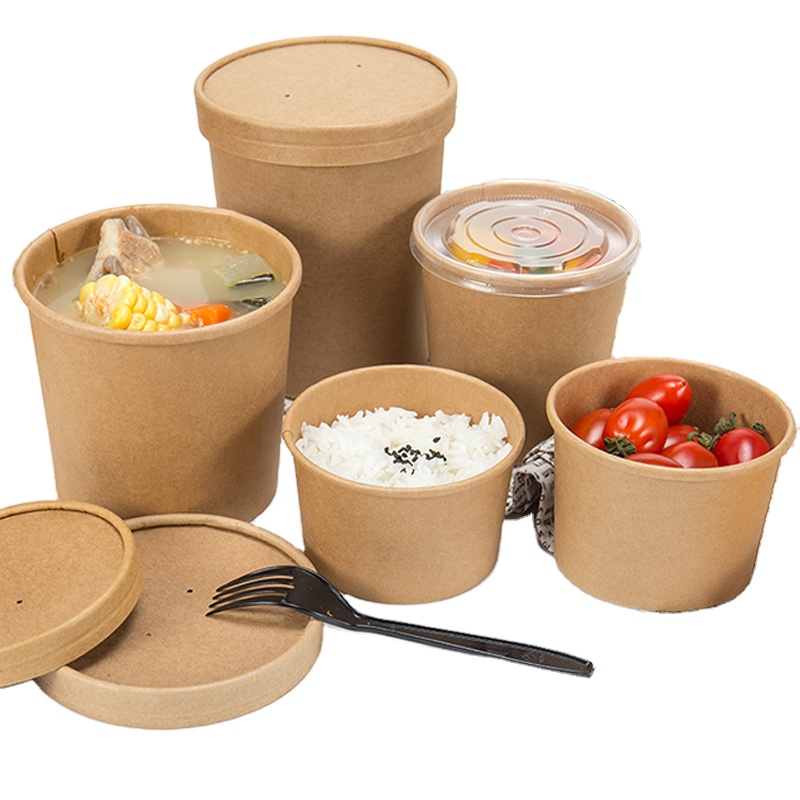
From my China-based facility, I offer 20 Oz Disposable Bowls crafted for catering, takeout, and retail displays. I'm a Manufacturer who understands B2B buyers’ needs: reliable weight, uniform capacity, and consistent wall thickness for predictable portioning. Made from food-grade plastic, these bowls are sturdy, leak-resistant, and stack compactly for fast restocking. They handle hot soups and cold desserts with ease, and their clear or opaque finish helps showcase your menu. Bulk pricing, flexible pack sizes, and prompt, ship-from-China factory lead times help you scale. I can accommodate private labeling or custom packaging to boost your brand at events and restaurants. If you’re sourcing in China and want a dependable partner to deliver on-time, I’m here to partner with you for long-term success.

Hot Selling Product

20 Oz Disposable Bowls Factory Your Trusted OEM Partner

A leading 20 oz disposable bowls factory offers reliable OEM services for global buyers seeking high-quality, cost-effective foodservice solutions. Our production lines support paper, PLA, and PP options with heat-resistant coatings, sturdy rims, and smooth printing surfaces. Strict quality control, food-contact certifications (FDA/EU standards), and batch testing ensure consistent performance for hot soups, salads, and takeaway meals, while competitive lead times and flexible MOQs cater to both large and emerging brands. Partnering with an experienced OEM manufacturer means full customization from color and lid fit to printed branding and eco-friendly materials, plus design assistance, prototyping, and scalable production. Transparent pricing, consolidated logistics, and post-shipment support simplify international procurement, helping you launch or expand private-label ranges confidently and sustainably.

{ 20 Oz Disposable Bowls Factory Your Trusted OEM Partner}

Attribute Specification Notes
Intended Capacity 20 oz (approx. 591 ml) Standard nominal volume for soups, noodle bowls and meal bowls.
Typical Outer Diameter 155 mm (≈ 6.1 in) Measured at rim; dimension can be customized ±5 mm.
Typical Height 55 mm (≈ 2.2 in) Height supports 20 oz capacity with comfortable headspace.
Wall Thickness 0.6 – 1.2 mm (material dependent) Thicker walls recommended for hot, oily, or heavy fillings.
Typical Weight per Bowl Paper (PE-laminated): 9–12 g; PLA: 10–14 g; Bagasse: 18–24 g Weight varies by material and wall thickness.
Available Materials Bagasse (sugarcane fiber), PLA (polylactic acid), Paperboard with PE or PLA lining Materials chosen for compostability, heat resistance or cost-effectiveness.
Temperature Resistance Bagasse: up to 120°C; Paper+PE: up to ~90°C; PLA: up to ~50–60°C Use-case dependent—bagasse suited to hot soups; PLA not recommended for very hot liquids.
Microwave Compatibility Bagasse: Yes (industrial/consumer microwaves); Paper+PE: Limited; PLA: Not recommended Always validate with specific product batches and local regulations.
Compostability / End-of-Life Bagasse: Industrial compostable; PLA: Industrial compostable; Paper+PE: Not industrially compostable without special separation Local waste infrastructure determines actual disposal route.
Certifications Commonly Supported FDA food-contact compliance, EU food contact regulations (e.g., 10/2011), EN 13432 / ASTM D6400 (for compostable options), ISO 9001 (quality systems) Certificates available upon request for specific material batches and production runs.
Customization Options Custom sizes, single- or multi-color flexo printing (up to 6 colors), full-color offset/CMYK for paper, embossed rims, custom inner coatings Artwork templates and proofs provided; color matching via Pantone references.
Lid Compatibility Flat snap-fit lids (PP), Domed PLA lids, Paperboard sleeves; custom-fit lids available Lid selection depends on material and intended use (hot vs cold, display vs takeaway).
Packaging Options Nested packs (bags), Sleeve wrap, Carton bulk packs; typical pack counts 250–1000 bowls/carton depending on stacking Custom inner packaging and retail-ready kits available on request.
Palletization (Typical) Cartons per pallet: 30–50 (varies by carton size); Standard pallet footprint: 120 x 100 cm Specific stacking patterns depend on carton dimensions and transport regulations.
Quality Control Tests Visual inspection, leak & hot-fill test, compression/drop test, heavy metal migration analysis, compostability testing (for compostable lines) Test reports and batch traceability can be provided for production runs.
Typical Lead Times Sample production: 7–10 days; Mass production: 20–35 days (after artwork approval) Timing varies by order size, material availability, and customization complexity.
Minimum Order Quantities (Typical) Custom-printed: ≈10,000 pcs; Stock/plain options: 1,000–3,000 pcs MOQs depend on material choice and print setup costs.
Sustainable Sourcing Notes Bagasse made from sugarcane processing residue; PLA derived from renewable plant starch; paper sourced from FSC or PEFC-certified mills (upon request) End-of-life and footprint depend on local disposal/composting infrastructure.

Related Products

Eco Friendly Products

20 Oz Disposable Bowls Delivers Unmatched Quality Where Service Meets Innovation

Operational Quality & Service Trends — 20 oz Disposable Bowls

This chart visualizes two complementary operational metrics for 20 oz disposable bowls over a twelve-month period: average service turnaround time (in hours) and material defect rate (as a percentage). The blue line represents service turnaround time, reflecting how quickly production and distribution teams process orders and respond to inquiries. The orange line represents the defect rate discovered during quality inspections prior to shipment. Together these metrics provide a balanced view of both efficiency and quality. Across the year we observe a gradual reduction in turnaround time from January to April, coinciding with a temporary spike in defects in February that prompted corrective actions. From May through August streamlined workflows and targeted supplier audits reduced both turnaround times and defect rates, demonstrating that quality initiatives can improve efficiency when implemented with data-driven focus. A slight uptick in both metrics in September suggests seasonal demand stress; additional staffing and preventive maintenance in October reversed that trend, producing the lowest defect rate in November. December shows a controlled increase in turnaround time due to volume but maintains an acceptable defect rate thanks to strengthened inspection protocols. Use of this visualization enables managers to identify trade-offs, plan capacity, and prioritize investments such as automation in inspection or flexible staffing during demand peaks. The paired trendlines make it clear when efforts to improve one dimension risk affecting the other and where integrated interventions yield wins on both fronts. Regularly updating this chart with real-time operational data will help teams sustain improvements, forecast resource needs, and communicate performance to stakeholders with an actionable evidence base for continuous improvement. Planned monthly reviews, combined with cross-functional dashboards, convert these insights into measurable objectives, reduce variation, and support supplier collaboration contracts that prioritize low-defect materials while preserving rapid fulfillment targets across peak and off-peak production cycles and long-term resilience.

Top Selling Products

Subscribe To Our Newsletter

For inquiries about our products or pricelist, please leave your email to us and we will be in touch within 24 hours.

Follow Us

on our social media
  • whatsapp (1)
  • instagram
  • youtube